Ecuador’s Babahoyo Declares Flood Emergency
Four rivers are over their banks, several roads are cut and the vote is three days away.

Ecuador: Floods
Rivers around Babahoyo, a city in Ecuador’s Los Ríos province, were still spilling over their banks on Thursday 26 November 2026. The National Secretariat for Risk Management (SNGR), Ecuador’s disaster-response agency, listed four overflowing rivers in the canton.
The city’s emergency committee, known as the COE, declared a 90-day state of emergency on Monday 23 November 2026. Floodwater now reaches the final days before the local vote, which was brought forward to Sunday 29 November because of El Niño, the Pacific warming pattern behind the rain.
Key Facts
- What. The COE, Babahoyo’s emergency committee, declared a 90-day emergency on 23 November; four rivers still overflow.
- Where. Los Ríos province held 16 of Ecuador’s 25 river-overflow reports on 25 November.
- When. The local vote is Sunday 29 November; the emergency runs to about 21 February 2027.
- Power Index Ecuador ranks 8th of 14 in The Rio Times Latin America Power Index, with 37.2 points (November 2026 edition).
- As of Thursday 26 November 2026, 18:30 GMT.
Four rivers are over their banks, several roads are cut and the vote is three days away.
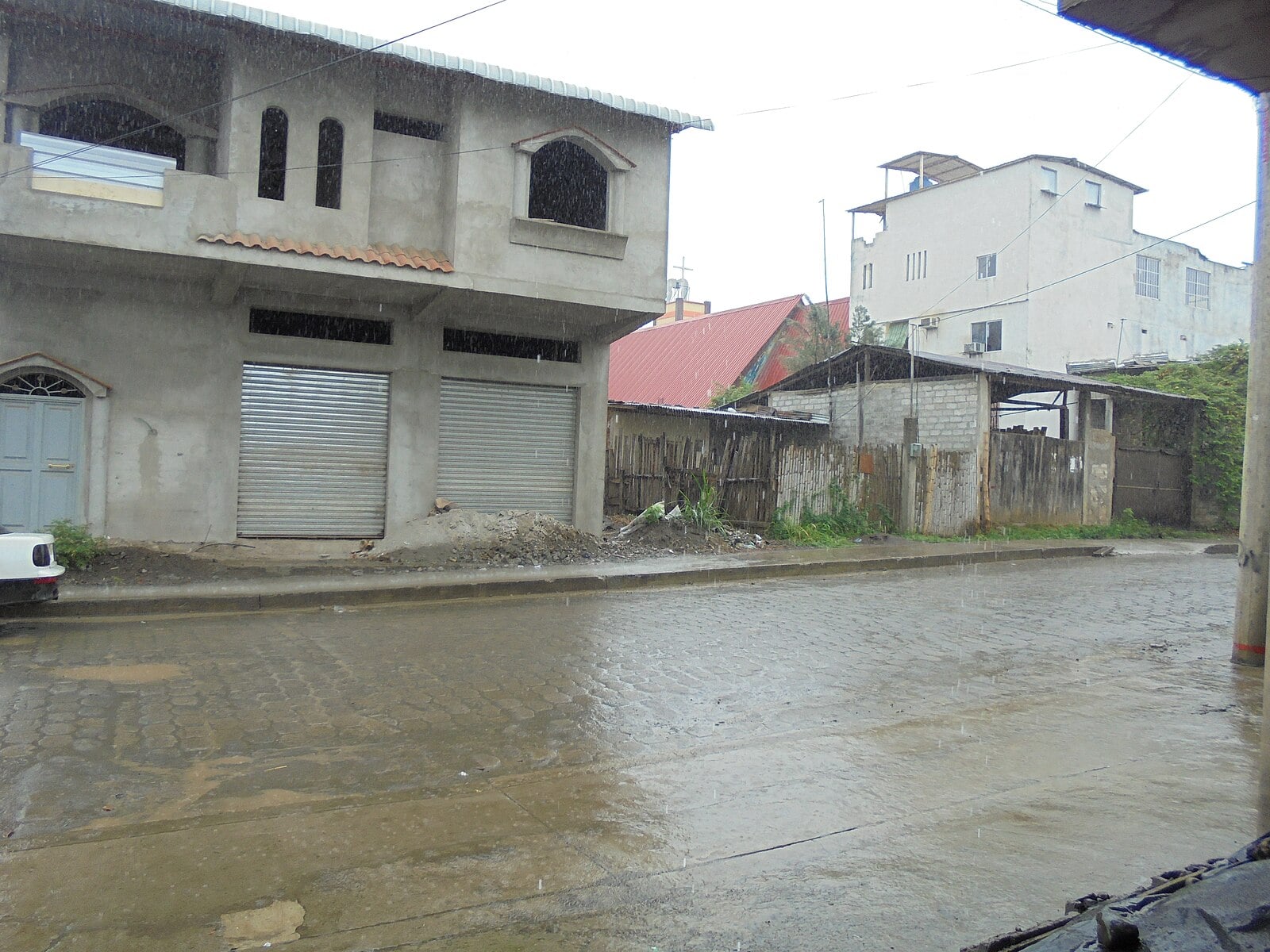
Babahoyo has flooded before this year. On 12 October 2026 the SNGR said about 150 families were affected after the Chilintomo river overflowed.
The COE declared the emergency on 23 November 2026 for 90 days. Counted from that date it runs to about 21 February 2027.
The emergency committee moved schools to virtual education while roads and streets stay under water. Classes in Los Ríos stay non-presential on Thursday 26 November.
On Wednesday 25 November 2026 the Babahoyo municipality said the Babahoyo river reached 7.36 metres above sea level and water stood in at least nine sectors. The mayor’s office called it “un nuevo dato histórico”, a new historic record.
The municipality has not published a damage total. It has not said when it expects the river to fall.
The SNGR’s 19:00 bulletin on 25 November listed 25 overflow reports in four provinces: 16 in Los Ríos, six in Guayas, two in Esmeraldas and one in Manabí. That puts nearly two thirds of the national count in one province.
The rivers over their banks are the San Pablo, Chilintomo, Babahoyo and La Clementina. ECU 911, Ecuador’s emergency service, shows standing water on Avenida Universitaria, La Réplica, Barreiro and El Salto.
On the Babahoyo-Quevedo road, also at La Chorrera, travellers ride about two kilometres by canoe to reach buses, the municipality said on 25 November. The entrance to Babahoyo from the Guayaquil side is also flooded, the same statement said.
The Jujan road is open only to heavy transport and interprovincial buses. The Babahoyo-Montalvo road has five flooded stretches but remains open to traffic, the municipality said.
Ecuador is a popular destination for US travellers and retirees, many of whom live on the coast. Closures between Babahoyo and Guayaquil or Quevedo make road journeys there uncertain.
The wider region is also under heavy strain from the rain. At 04:00 on Wednesday 25 November a landslide in Mocache canton, Los Ríos, buried several homes, killing two people and leaving one missing, the SNGR said.
In Bucay, in Guayas province, the Limón river collapsed two bridges and cut off four communities of about 5,000 people. Those deaths and cut-off villages lie outside Babahoyo, but they come from the same rain.
The National Electoral Council (CNE), which runs Ecuador’s elections, and the government denied any political motive for moving the vote up from February. Critics noted that the shorter calendar benefited the governing party, Acción Democrática Nacional (ADN).
The CNE moved the local vote up from February because of El Niño. We found no CNE statement on polling stations in flooded Babahoyo parishes as of writing.
More rain would keep Babahoyo cut off, because four rivers already sit over their banks. The emergency is the municipality’s framework for the response, and the election date stays 29 November unless the CNE says otherwise.
No damage total for Babahoyo canton has been published, and no deaths are confirmed in Babahoyo itself. No forecast says when the river levels will fall again.
The next dated step is the vote on Sunday 29 November 2026, three days after the latest SNGR count. The emergency stays in force to about 21 February 2027 if counted from 23 November.
Frequently Asked Questions
How long does the Babahoyo emergency last?
It was declared for 90 days, so it runs into February 2027.
Will the 29 November vote go ahead?
The electoral council has not announced a change of date. It has also not addressed polling stations in flooded parishes.
Why is Babahoyo flooding?
Heavy rain has pushed several rivers over their banks. The rain is linked to El Niño, a Pacific warming pattern.
More: Ecuador news
Sources: National Secretariat for Risk Management (SNGR) bulletin of 25 November 2026, gestionderiesgos.gob.ec; Babahoyo municipality statement of 25 November 2026; ECU 911, 26 November 2026; Babahoyo cantonal emergency committee (COE), 23 November 2026; National Electoral Council (CNE) decision to advance the vote.
This article was produced by The Rio Times’ automated AI newsroom. Editorial responsibility: Matthias Camenzind, Publisher and Editor-in-Chief. The Rio Times also runs Ask Rio Times, which answers from 100,000+ of our own articles, the daily Latin America Power Map, and prediction-market odds on elections and markets.. How we use AI · Report an error