ExxonMobil Says AI Cuts Guyana Oil Field Analysis From Months to Days
Key Facts
ExxonMobil says artificial intelligence has cut the time it needs to read seismic data from Guyana’s offshore oil fields. Work that once took months now takes days, the company’s head of exploration told an industry conference.
The claim matters because Guyana has become one of the fastest-growing oil producers on earth in six years. What the company has not published is any figure for money or drilling days saved.
Who Said It, and Where
The statement came from John Ardill, ExxonMobil’s vice-president of exploration. He spoke on Tuesday 6 May at the Offshore Technology Conference in Houston, and Reuters reported his remarks.
Ardill described the methods in plain terms as deep learning, classification and reinforcement learning. His point was about speed rather than about replacing people.
Ardill said “we can turn those tools around in just a few days” at the Houston conference. The interpreter then receives “a prioritized list of anomalies to go effectively validate”, he added.
Reuters also reported that ExxonMobil plans to apply the same approach to a block it holds offshore Trinidad and Tobago. Ardill said the technique lets the company look at prospects that were harder to evaluate before.
What the Tools Are Doing
Three different jobs are bundled inside the word artificial intelligence here. The first is seismic imaging and interpretation, the reading of sound-wave surveys that map rock thousands of metres below the seabed.
The second is reservoir monitoring, which watches how oil moves underground once a field is producing. ExxonMobil describes combining that with four-dimensional seismic imaging, meaning repeated surveys of the same rock over time.
The third is drilling itself. At the same conference he said one Guyana well was drilled through the reservoir section with no driller touching the controls.
ExxonMobil said the automated system placed the well better than conventional methods did. It has not published the well’s name, its depth or how long it took.
What It Has Found So Far
The concrete claim arrived in August. The trade publication World Oil reported that ExxonMobil had used the tools to identify four new exploration opportunities in the Stabroek block.
The company fed historical discoveries, drilling results and subsurface data into deep learning and machine learning models. High-performance computing and advanced seismic imaging did the rest.
The Guyanese outlet Fueled traced the disclosure to ExxonMobil’s second-quarter earnings presentation in early August. That presentation credited advanced subsurface technologies with more than US$2 billion of added project value through better reservoir management and recovery.
That figure covers the whole toolkit, not artificial intelligence alone. Four opportunities identified is also not four discoveries, because only a drill bit settles whether oil is there.
Why It Matters for Guyana
Guyana is a country of fewer than a million people that pumped almost nothing until 2019. Gross output from the Stabroek block averaged more than 900,000 barrels a day in the first half of 2026.
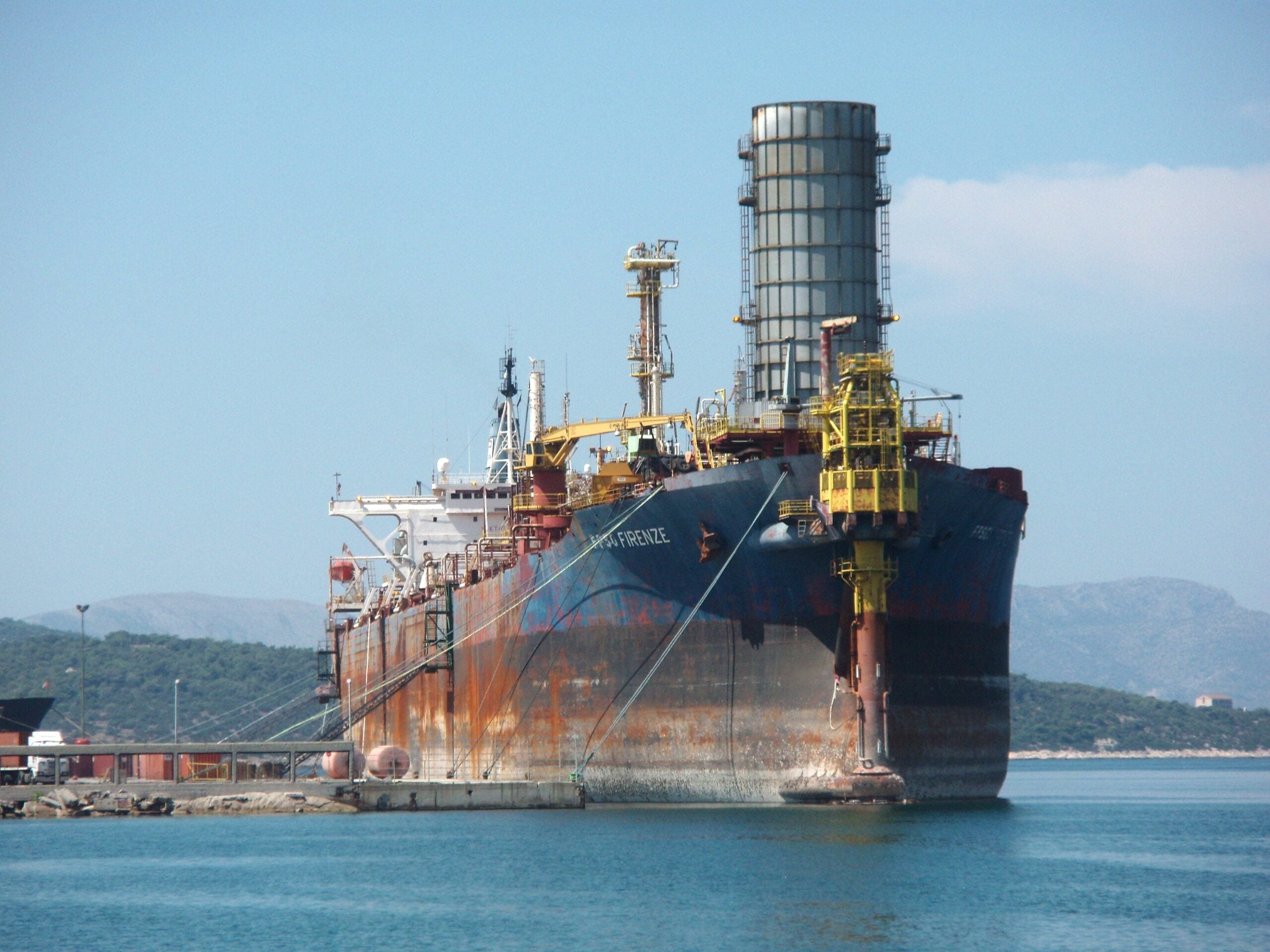
Four floating production vessels do that work, named Liza Destiny, Liza Unity, Prosperity and One Guyana. A fifth, Errea Wittu, is due to start on the Uaru field and would add about 250,000 barrels a day.
ExxonMobil operates the block with 45 percent, Hess holds 30 percent as a Chevron subsidiary, and the Chinese state company CNOOC holds 25 percent. Guyana’s own take is a 2 percent royalty on all oil plus half the profit oil.
That produced about US$2 billion for the country’s Natural Resource Fund between January and June, of which US$218.4 million was royalty. Faster exploration means more of that, sooner, which is why Georgetown listens when Exxon talks about speed.
The Sceptical Reading
None of this has been independently measured. ExxonMobil has published no before-and-after processing times, no drilling-cycle reduction in days, and no cost saving attributable to the software.
Nor has it named the system or shown that any commercial barrel was found by a machine. The claims that exploration gets faster and cheaper are the company’s own, repeated by industry publications.
The industry’s own technical literature is more careful. The seismic contractor Fairfield Geotechnologies argues that algorithms excel at pattern recognition, while geological context is still needed to validate what they produce.
That is also what Ardill described, a ranked list handed to a person to check. The honest version of the story is a faster shortlist, not a machine that finds oil.
What to Watch
The first thing to watch is whether any of the four opportunities becomes a well. Exploration wells offshore Guyana are drilled in batches, and results are usually disclosed with the quarterly figures.
The second is the production path. ExxonMobil has said it expects capacity of about 1.7 million oil-equivalent barrels a day by 2030 from eight developments.
The third is Chevron, which now owns the Hess stake and has its own view on how fast to drill. Partners that pay 55 percent of the bill have a say in what the operator accelerates.
The fourth is Guyana itself, where the speed of drilling is already contested at home. Critics of the government have argued for years that regulation has not kept pace with the industry it oversees.
Frequently Asked Questions
Who at ExxonMobil said this?
John Ardill, the company’s vice-president of exploration, speaking at the Offshore Technology Conference in Houston on 6 May. Reuters reported his remarks.
What does the AI actually do?
It processes seismic surveys and other subsurface data to produce a ranked list of anomalies for a geoscientist to check. ExxonMobil also says automated systems have drilled and steered a well in Guyana.
Has it found any oil?
It has flagged four new exploration opportunities in the Stabroek block, which is not the same as four discoveries. Only drilling establishes whether oil is present in commercial quantities.
How much oil does Guyana produce?
Gross output from the Stabroek block averaged more than 900,000 barrels a day in the first half of 2026, from four floating production vessels. A fifth vessel is due to start this year.
What does Guyana earn from it?
Under the Stabroek production-sharing agreement the country takes a 2 percent royalty on all petroleum and half the profit oil. About US$2 billion reached its Natural Resource Fund between January and June 2026.
This article was produced by The Rio Times’ automated newsroom system. How we use AI · Report an error
Read More from The Rio Times