Foreign Money Returns to Brazil’s Stock Market After Two Months of Outflows
Markets · Brazil
Key Facts
—The turn. Foreign flows into Brazil’s B3 exchange turned positive in July after two months of outflows.
—The tally. By 21 July, foreigners had bought a net R$4.2 billion (about US$780 million) in Brazilian equities.
—The pace. The first half of July showed a positive balance of R$2.35 billion, with inflows in eight of twelve sessions.
—The trigger. The strongest day was 10 July, after inflation data (IPCA) came in below expectations.
—The caution. JPMorgan called the rebound temporary, titling a report “A Respite That Won’t Last.”
Foreign investors have started buying Brazilian stocks again in July after two months of pulling money out, a tentative turnaround that has helped steady the market even as analysts warn the relief may not last.
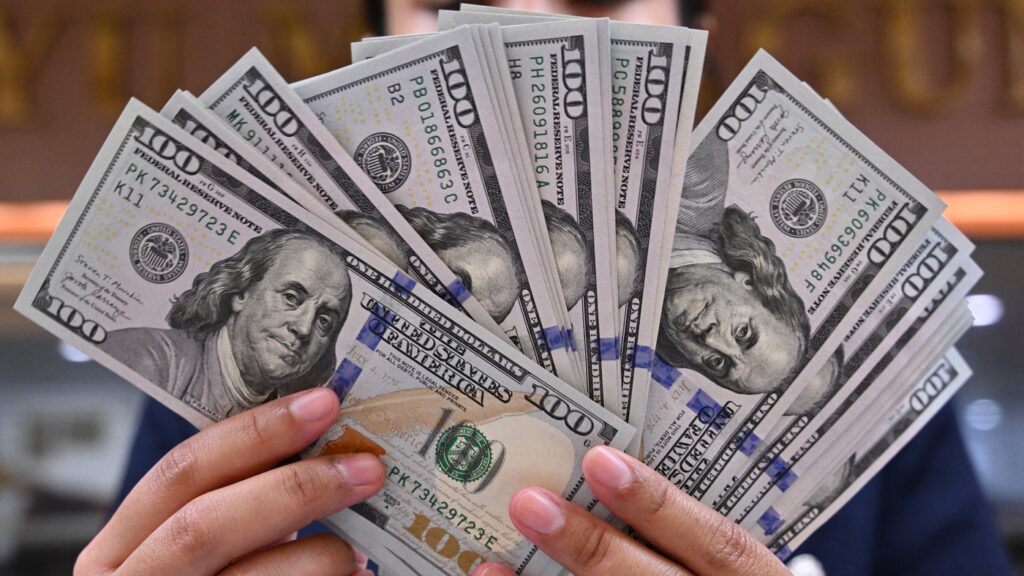
A Welcome Reversal
After two months of steady selling, overseas investors returned as net buyers of Brazilian shares in July. By 21 July they had put in a net R$4.2 billion, roughly US$780 million.
In a market as sensitive to foreign flows as Brazil’s, that swing matters. It has helped stabilize the Ibovespa after a bout of outflows.
For readers outside Brazil, the B3 is the country’s main stock exchange, headquartered in São Paulo. It is one of the largest exchanges in the Americas and the primary venue where shares of Brazilian companies are traded.
The Ibovespa, often shortened to Ibov, is its benchmark index, much like the S&P 500 in the United States or the FTSE 100 in the United Kingdom. When foreign money flows in, the index tends to rise because overseas investors account for a large share of daily trading volume.
When they pull back, the market often falls, making these flows a closely watched barometer of international confidence in Brazil.
What Turned the Tide
The clearest catalyst was inflation. The strongest inflow day, 10 July, followed an IPCA reading that came in below expectations, easing fears about the rate path.
Momentum built steadily rather than in one leap. Eight of the month’s first twelve trading sessions saw net foreign buying, lifting the first-half balance to R$2.35 billion.
The IPCA, or Índice Nacional de Preços ao Consumidor Amplo, is Brazil’s official inflation gauge. It is the number the Central Bank of Brazil watches most closely when deciding whether to raise, hold, or cut the benchmark Selic interest rate.
When inflation comes in cooler than expected, it reduces pressure on the central bank to keep rates high. Lower rates, in turn, make stocks more attractive relative to fixed-income investments and can boost corporate earnings by lowering borrowing costs.
That logic helps explain why a single data release can trigger a sharp swing in foreign buying.
Live Market IntelligenceBrazil — Live Market Board
Rio Times · Live Market Intelligence
Brazil — Live Market Board
-2.50%
167,874.64
-2.50%
66,438.58
-0.75%
11,128.56
-1.25%
3,022,485
-3.19%
2,423.37
+2.14%
59,693.55
-1.60%
| Instrument | Last | Change | YoY | Prev. | High | Low | Volume |
|---|---|---|---|---|---|---|---|
| IBOV | 167,874.64 | -2.50% | +24.22% | 172,179.93 | 172,386 | 168,470 | — |
| USD/BRL | 5.16 | +1.01% | -5.00% | 5.11 | 5.17 | 5.10 | — |
| SELIC | 14.00% | — | — | — | — | — | |
| PETR4 | 41.35 | -2.08% | +34.47% | 42.23 | 42.50 | 41.24 | 28,374,600 |
| VALE3 | 74.56 | +0.89% | +34.72% | 73.90 | 76.70 | 74.56 | 12,047,000 |
| ITUB4 | 39.42 | -2.47% | +8.83% | 40.42 | 40.55 | 39.37 | 12,667,600 |
| BBDC4 | 16.90 | -1.63% | +6.16% | 17.18 | 17.25 | 16.85 | 18,365,800 |
| BBAS3 | 19.55 | -2.40% | +2.25% | 20.03 | 20.11 | 19.52 | 6,469,200 |
| B3SA3 | 14.29 | -2.59% | +11.91% | 14.67 | 14.75 | 14.24 | 15,801,500 |
| ABEV3 | 15.04 | -1.51% | +22.01% | 15.27 | 15.30 | 14.97 | 15,421,700 |
| WEGE3 | 47.12 | -1.07% | +26.60% | 47.63 | 47.94 | 46.93 | 2,317,000 |
| PRIO3 | 59.37 | -3.05% | +51.73% | 61.24 | 61.73 | 59.30 | 2,873,100 |
| SUZB3 | 40.61 | -1.65% | -24.94% | 41.29 | 41.50 | 40.59 | 2,005,100 |
| RENT3 | 35.00 | -3.58% | +1.16% | 36.30 | 36.53 | 34.89 | 7,480,500 |
| AZZA3 | 16.45 | -1.79% | -50.70% | 16.75 | 16.95 | 16.39 | 608,900 |
| CSNA3 | 4.28 | -4.04% | -41.05% | 4.46 | 4.58 | 4.27 | 10,546,900 |
| GGBR4 | 24.29 | -3.80% | +48.50% | 25.25 | 25.01 | 24.26 | 6,866,700 |
| ENEV3 | 24.66 | -2.61% | +77.35% | 25.32 | 25.39 | 24.62 | 2,582,400 |
Why the Caution
Not everyone is convinced the shift will hold. JPMorgan warned in a note pointedly titled “A Respite That Won’t Last” that the return of foreign money looks temporary.
Brazil’s market is highly sensitive to marginal flows, so small changes in sentiment move prices. That cuts both ways, amplifying rebounds and reversals alike.
The broader significance here is that foreign capital often acts as the marginal buyer that sets the price in emerging markets. When global fund managers grow cautious on developing economies, Brazil is typically among the first places they trim because it is one of the world’s most liquid emerging markets and easy to exit.
A temporary return of foreign money can lift the Ibovespa, but if the underlying reasons for caution remain, the rally can unwind just as quickly. This dynamic makes the sustainability of any inflow cycle a central question for anyone with exposure to Brazilian assets.
The Investor Read-Through
For 2026 as a whole, foreigners remain net buyers of Brazilian stocks, with inflows around R$36.7 billion year-to-date. July’s turn fits that broader, if choppy, pattern.
For investors, the signal is that global appetite for Brazilian risk is intact but fragile. The next inflation and rate data points will likely decide whether the inflows persist.
What to watch next is whether the positive flow continues through the end of July and into August, a period that often brings thinner trading volumes and sharper moves. Another open question is how the Central Bank of Brazil’s next policy statement interprets the same inflation data that drew foreign buyers back.
If the bank signals it remains worried about underlying price pressures, the rate-cut narrative that fueled the July inflows could weaken. Finally, global conditions matter enormously: any shift in appetite for emerging-market risk driven by US. interest-rate expectations or commodity prices could override the local inflation story entirely.
Frequently Asked Questions
Did foreign investors return to Brazil’s stock market?
Yes. Foreign flows into the B3 turned positive in July after two months of outflows, with net purchases of about R$4.2 billion (roughly US$780 million) by 21 July.
What drove the return of foreign money?
The turnaround was helped by a July inflation reading (IPCA) that came in below expectations, easing concerns about Brazil’s interest-rate path.
Will the foreign inflows last?
Analysts are cautious. JPMorgan called the rebound temporary in a report titled “A Respite That Won’t Last,” noting Brazil’s market is highly sensitive to marginal flows.
Sources
Connected Coverage
Sources: JPMorgan.
This article was drafted with automated assistance and reviewed before publication. How we use AI · Report an error
Read More from The Rio Times