Brazil’s Supreme Court Justice Clears Welfare Rise Before Vote
Key Facts
Brazil’s government raised payments under its main anti-poverty programme weeks before a presidential election, and rivals went to court. A single Supreme Court justice has now declared the rise lawful, but the legal and political fight is not over.
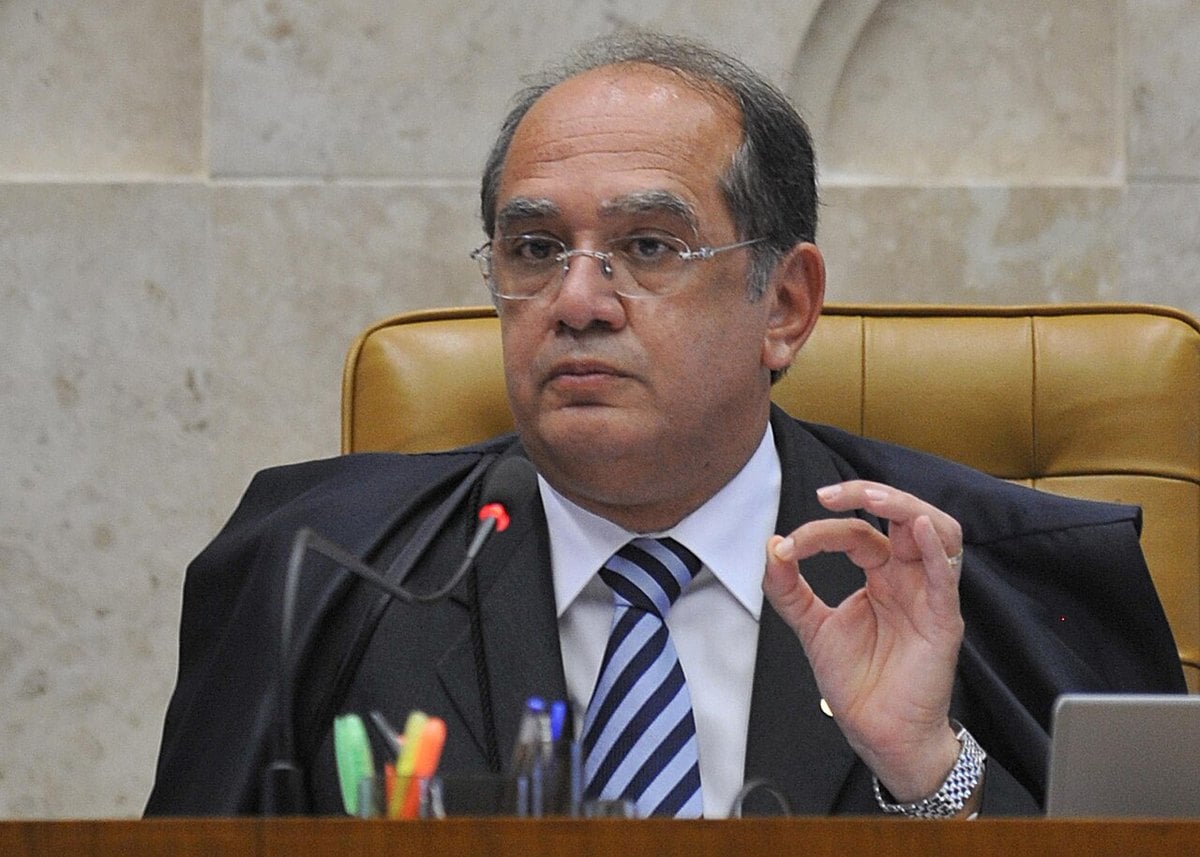
Gilmar Mendes, a Supreme Court (STF) justice since 2002, ruled on 18 September 2026 that the benefit rise breaks no electoral law. Challenges at the federal audit court and the electoral court remain open before the first round on 4 October.
Why This Matters Beyond Brazil
Bolsa Familia is Brazil’s flagship cash-transfer programme for low-income families, re-created by a 2023 law. It reached 19.3 million households in September 2026, Terra reported, with an average payment of R$678.18 (about US$131).
The government spends about R$13.04 billion (US$2.5 billion) a month on those payments, according to the same report. On 17 September, President Luiz Inácio Lula da Silva raised the benefits by 15.04%, with the new amounts applying from October.
Lula, of the left-wing Workers’ Party (PT), seeks re-election on 4 October, with a possible runoff on 25 October. His rivals include Senator Flavio Bolsonaro of the right-wing Liberal Party (PL), son of former president Jair Bolsonaro.
Brazilian electoral law bars public officials from handing out free goods, money or benefits during an election year. The electoral court’s own guidance lists three exceptions: public calamity, a state of emergency, and established social programmes.
Those programmes must be authorised by law and already funded in the previous year’s budget, according to that guidance. The legal question is therefore whether a 15% rise is a routine update or a new pre-election handout.
For investors, the rise adds an estimated R$5.8 billion (about US$1.1 billion) to federal spending this year. For voters, the rulings decide whether millions of families keep the higher payment through the election.
Live Market IntelligenceBrazil — Live Market Board
Rio Times · Live Market Intelligence
Brazil — Live Market Board
-0.41%
185,229.17
-0.41%
63,375.93
-0.78%
11,381.18
+1.30%
3,021,926
-1.29%
2,548.22
+1.05%
60,023.65
-1.13%
| Instrument | Last | Change | YoY | Prev. | High | Low | Volume |
|---|---|---|---|---|---|---|---|
| IBOV | 185,229.17 | -0.41% | +21.85% | 185,992.03 | 168,310 | 167,142 | — |
| USD/BRL | 5.16 | +0.01% | -5.13% | 5.16 | 5.18 | 5.14 | — |
| SELIC | 14.00% | — | — | — | — | — | |
| PETR4 | 41.64 | -0.05% | +35.19% | 41.66 | 41.97 | 41.15 | 41,499,400 |
| VALE3 | 72.97 | +0.83% | +30.75% | 72.37 | 73.54 | 72.66 | 17,658,000 |
| ITUB4 | 38.60 | -1.03% | +4.57% | 39.00 | 39.34 | 38.39 | 29,487,800 |
| BBDC4 | 16.85 | +0.36% | +3.50% | 16.79 | 16.90 | 16.67 | 19,416,900 |
| BBAS3 | 19.37 | +0.47% | +0.73% | 19.28 | 19.44 | 19.16 | 11,069,200 |
| B3SA3 | 14.26 | -0.21% | +12.73% | 14.29 | 14.47 | 14.11 | 33,037,800 |
| ABEV3 | 14.89 | -0.80% | +21.91% | 15.01 | 15.07 | 14.81 | 16,453,100 |
| WEGE3 | 47.59 | +0.49% | +29.99% | 47.36 | 48.08 | 47.36 | 3,364,600 |
| PRIO3 | 59.14 | -0.19% | +50.67% | 59.25 | 59.81 | 58.74 | 3,325,600 |
| SUZB3 | 41.33 | +2.35% | -23.55% | 40.38 | 41.48 | 40.35 | 3,914,900 |
| RENT3 | 34.68 | -0.09% | +0.84% | 34.71 | 34.96 | 34.35 | 7,979,100 |
| AZZA3 | 15.89 | -2.63% | -53.76% | 16.32 | 16.42 | 15.82 | 1,330,300 |
| CSNA3 | 4.30 | +0.47% | -42.65% | 4.28 | 4.41 | 4.26 | 10,076,100 |
| GGBR4 | 24.69 | +2.19% | +51.38% | 24.16 | 24.85 | 24.18 | 7,047,600 |
| ENEV3 | 24.21 | -1.38% | +70.49% | 24.55 | 24.64 | 23.99 | 9,297,000 |
What Gilmar Mendes Decided
Gilmar, appointed to the court in 2002 by former president Fernando Henrique Cardoso, signed the decision on Friday, 18 September. He ruled in a case known as MI 7300, and the STF said the rise continues a 2021 ruling on basic income.
He wrote that the measure creates no new benefit, changes no eligibility rule and adds no beneficiaries. He described it as merely an update of existing payments using an objective criterion of monetary correction.
The 15.04% figure is the accumulated INPC, a consumer inflation index, which he called “not a real increase”. On that basis he concluded that the decree does not breach the restrictions of electoral law.
The Rio Times reported the rise itself and its first fiscal and electoral-court fallout on 17 and 18 September. This article covers the ruling and the legal and Senate fight that has followed it.
The 2021 Ruling Behind the Case
MI 7300 is a writ of injunction, a Brazilian action used when missing regulation blocks a constitutional right. The Federal Public Defender’s Office, the DPU, filed it in 2020 over the basic citizen income law of 2004.
In April 2021 the STF ruled on the merits and ordered the government to implement the programme from 2022. In December 2022 Gilmar ordered the benefit held at R$600 (about US$116) as it faced a cut.
Congress then passed Law 14,601 of 2023, which re-created Bolsa Familia and provided for corrections at most every 24 months. Gilmar’s new decision treats this month’s rise as a mechanism for implementing the original 2021 order.
How the Case Was Reopened
The DPU filed a new petition in the case at 6.50pm on 16 September, the newspaper Estadao reported. It asked Gilmar to notify the government about updating benefits and suggested a 15-day deadline.
Estadao reported that the case had been archived since August 2024, and that court president Edson Fachin sent it to Gilmar. The government announced the rise the next morning, through Decree 13,120 of 17 September.
On 17 September Gilmar ordered the Attorney General’s Office, the AGU, which defends the government in court, to respond. The AGU replied on 18 September that the decree applies INPC inflation from March 2023 to August 2026.
It asked the court to recognise that the measure does not breach electoral law, as it creates no new benefit. Gilmar also accepted a DPU proposal for a dialogue table within the AGU to monitor the programme.
The Accusation of a Manoeuvre
Maria Claudia Bucchianeri, a lawyer for Flavio Bolsonaro’s presidential campaign, told Estadao the government manoeuvred inside the court. She argued that a case with a final judgment should be closed, calling the procedure “an immense anomaly”.
She said the parties were choosing their judges and bypassing rules on random allocation, jurisdiction and admissibility. According to Estadao, she alleged the government acted with the DPU because Gilmar is aligned with the presidential palace.
The DPU had not responded when Estadao asked for comment, and no court has examined her claim. Estadao reported the campaign prefers not to challenge the rise, and Bucchianeri said it is not a party to the case.
Two Suspension Requests Still Open
The first request sits with the TCU, the federal audit court that checks government spending for Congress. Lucas Rocha Furtado, a deputy prosecutor-general at the audit court’s public ministry, asked for the decree’s suspension.
His filing, reported on 18 September, says the decree lacks a financial impact estimate and a funding source. It also cites a “founded concern” of political and electoral deviation because of the September timing, CNN Brasil reported.
He sought an injunction and 15 days for Lula and the signing ministers to justify the decree. At the electoral court (TSE), Renan Santos, presidential candidate of the Missao party, filed an action on 17 September.
InfoMoney reported that he seeks suspension, a fine, and cancellation of Lula’s registration or diploma if elected. Justice Andre Mendonca, appointed in 2021 by Jair Bolsonaro, sits on both the STF and the TSE and was drawn as rapporteur.
Neither the TCU nor Mendonca had ruled on these requests by the morning of 19 September. Any injunction could still change the payments before the first round on 4 October.
Why the Ruling Weighs on the Electoral Case
Estadao wrote that the decision shielded the government from a possible adverse ruling at the electoral court. The Santa Catarina outlet ND+ described it as creating legal pressure on Mendonca, who must decide the Santos case.
Mendonca had already dismissed a similar action by federal deputy Ze Trovao on 17 September for lack of standing. That dismissal did not address whether the rise itself was lawful, the news portal G1 reported.
The Impeachment Request Against Mendonca
Lawyer Ivan Pereira de Souza Duarte filed an impeachment request against Mendonca with the Senate on 17 September. It alleges a breach of impartiality, abuse of authority and misconduct, citing the Constitution and the 1950 impeachment law.
The request centres on the Banco Master investigations into Brazil’s largest bank failure, not on Bolsa Familia. It questions a March 2025 meeting with banker Daniel Vorcaro and the finances of Instituto Iter, founded by Mendonca.
The allegations are the petitioner’s own, and no Senate body has examined them. Over his handling of police findings, Mendonca had said he expected reactions and attempts at intimidation.
How Senate Impeachment Works, and Marinho’s Change
Under Brazil’s 1950 impeachment law, any citizen may file a complaint against a Supreme Court justice with the Senate. The Senate president currently decides whether to act, with no deadline, so requests can sit indefinitely.
Senator Rogerio Marinho of the PL, the opposition leader, filed draft resolution PRS 54 of 2026 on 18 September. It would give the Senate president 30 business days to decide on a complaint, after which the board decides.
Rejection would be allowed on four grounds only, including missing formal requirements or facts that are not impeachable offences. Nine senators could appeal a rejection, and 49 of 81 votes would send the complaint to a special committee.
The outlet O Bastidor labelled the plan the “impeachment facil”, or easy impeachment, bill. It reported that more than 100 requests against justices have built up, and that Marinho coordinates Flavio Bolsonaro’s campaign.
What It Means If You Live in Brazil or Hold Brazilian Assets
For beneficiaries, the ruling strengthens the legal footing of the new amounts, which apply from October. The floor becomes R$691 (about US$134) and the average payment R$777 (about US$151), on government figures.
Conversions use the Banco Central do Brasil PTAX selling rate of R$5.1575 per dollar on 18 September 2026. The TCU filing and the TSE action could still produce injunctions before the first round on 4 October.
Official estimates put the cost at R$5.8bn (about US$1.12bn) in 2026 and R$22.7bn (about US$4.40bn) in 2027. Marinho has presented himself as a candidate for Senate president in February 2027, O Bastidor reported.
What Is Not Yet Known
It is not known when Mendonca will rule on the Santos action, or how he will treat Gilmar’s decision. The TCU has not said whether it will consider the request for a precautionary suspension.
It is unclear whether any party with standing will ask the full STF to review Gilmar’s decision. The DPU had not publicly answered Bucchianeri’s allegation when Estadao published her remarks.
Senate president Davi Alcolumbre has not acted on the Mendonca request, and O Bastidor reported he opposes such changes. No date has been reported for a Senate vote on PRS 54 of 2026.
Frequently Asked Questions
Why does this ruling matter?
Bolsa Familia reaches 19.3 million households, and the rise arrives weeks before Lula seeks re-election. The ruling strengthens the legal footing of the higher payments while other challenges remain open.
Did the full Supreme Court approve the Bolsa Familia rise?
No, it was an individual decision by Justice Gilmar Mendes as rapporteur of MI 7300. The STF published it as a court statement, but no plenary vote has been reported.
Can the Bolsa Familia rise still be suspended?
Two suspension requests remain open, one at the federal audit court and one at the electoral court. Neither had produced a ruling by the morning of 19 September.
Is the impeachment request against Andre Mendonca about Bolsa Familia?
No, it concerns his conduct in the Banco Master investigations and his links to Instituto Iter. Those are the petitioner’s allegations and have not been examined by the Senate.
Sources: STF, Gilmar Mendes decision on Bolsa Familia rise in MI 7300, Estadao, Flavio Bolsonaro campaign lawyer on the STF procedure, Consultor Juridico, analysis of the Gilmar decision, CNN Brasil, MP-TCU request to suspend the rise, InfoMoney, Renan Santos action at the TSE, Diario de Sao Paulo, impeachment request against Andre Mendonca, Poder360, Marinho’s PRS 54 of 2026 explained, O Bastidor, the impeachment facil bill, Terra, Bolsa Familia reaches 19.3 million households in September, TSE, election-year ban on free distribution of benefits, Wikipedia, 2026 Brazilian general election, Tribuna do Sertao, which presidents appointed each STF justice, Banco Central do Brasil, PTAX dollar rate
This article was produced by The Rio Times’ automated newsroom system. How we use AI · Report an error
Read More from The Rio Times