Investing in El Salvador as a Foreigner 2026: Property, Bitcoin Rules and the New Security Premium
GUIDES · EL SALVADOR
Key Facts
- —What it is A standing guide to putting money into El Salvador as a foreigner: property, companies, bitcoin and the rules around them.
- —Who it’s for Investors, home buyers and retirees from the US, Canada, the UK and Europe weighing a dollar economy with a new security record.
- —The rules Foreign investors get equal treatment by law. Rural land depends on reciprocity, and property transfers carry a 3 percent tax above US$28,571.43.
- —Why it matters Official homicides fell to 82 in 2025, growth is near 4 percent and a US$1.4 billion IMF programme is back on track.
- —The catch The security gains rest on emergency powers extended 55 times, and presidential term limits ended in 2025.
- —What is still open IMF board approval of about US$140 million, the 28 February 2027 election and the future of the state bitcoin reserve.
Investing in El Salvador in 2026 means a dollar economy, a new safety record, a smaller Bitcoin role and highly concentrated power.
Investing in El Salvador looks very different from five years ago. Official murder counts are down about 98 percent since 2017, and tourism is near record levels. An IMF deal has rolled back the Bitcoin experiment, and the price of safety is a long suspension of civil rights.
How investing in El Salvador works in a dollar economy
El Salvador has used the US dollar as its currency since the Monetary Integration Law of 2001. The dollar accounts for nearly all cash in circulation, the US State Department says, so dollar investors carry no exchange-rate risk.
For euro or sterling investors, the risk is their own currency against the dollar. On 25 September 2026 the rate was about 0.88 euros per US dollar and 0.76 pounds per US dollar, according to open.er-api.com.
The economy is small. The International Monetary Fund (IMF) puts 2025 output at about US$37.3 billion for 6.4 million people, roughly the population of Missouri. That is about US$5,840 per person, around one-fifteenth of the US figure.
Money sent home by Salvadorans abroad is the largest source of dollars. The Central Reserve Bank (BCR), the central bank, recorded a record US$9.99 billion in remittances in 2025, about a quarter of GDP.
Growth has picked up. Fitch Ratings puts 2025 real growth at 3.9 percent, and IMF staff forecast 4.5 percent for 2026.
All three major agencies rate El Salvador well below investment grade. S&P and Fitch say B-, and Moody’s says B3 with a positive outlook.
The IMF deal and what is left of Bitcoin
El Salvador made bitcoin legal tender in September 2021, the first country to do so. Businesses had to accept it, and the state launched a digital wallet called Chivo.
That changed with a 40-month Extended Fund Facility (EFF) from the IMF, approved on 26 February 2025. It is worth about US$1.4 billion, close to 4 percent of annual GDP, and targets lower debt, larger reserves and cleaner governance.
The Legislative Assembly, El Salvador’s single-chamber congress, amended the Bitcoin Law on 29 January 2025. It voted minutes after President Nayib Bukele sent the bill, Reuters reported.
Acceptance became voluntary, taxes can no longer be paid in bitcoin, and the state gave up its role in bitcoin payments.
The amended text still calls bitcoin “curso legal”, but only private parties who agree may use it. The exemption from capital gains tax on bitcoin exchanges stayed in the law.
What remains is a state reserve. The Bitcoin Office’s public tracker showed about 7,785 bitcoin on 25 September 2026, still rising by one coin a day. At a price near US$85,000, that is roughly US$660 million, about 1.8 percent of GDP.
The IMF says the new coins involve no public money. On 3 September 2026 its staff said documents showed that bitcoin added since June 2025 came from private donations. They added that no accumulation beyond those documented donations is expected.
The same statement said majority ownership and control of Chivo had passed to a private operator. The government keeps a minority stake and custody of customer assets.
That day, IMF staff also reached a staff-level agreement on the overdue second and third reviews. If the Executive Board approves, about US$140 million would be released, on top of about US$231 million already paid out.
For investors, bitcoin is now a private choice rather than a state mandate. The Investment Banking Law, in force since 10 September 2025, lets licensed investment banks offer bitcoin services to wealthy clients. These “sophisticated investors” need at least US$250,000 available.
Live Market IntelligenceCrypto — Live Market Board
Rio Times · Live Market Intelligence
Crypto — Live Market Board
-0.26%
| Instrument | Last | Change | YoY | Prev. | High | Low | Volume |
|---|---|---|---|---|---|---|---|
| BTC | 63,384 | -0.26% | -47.24% | 63,552 | 64,346 | 63,305 | 22,774,743,040 |
| ETH | 1,886 | +0.26% | -58.90% | 1,881 | 1,920 | 1,879 | 7,916,475,392 |
| SOL | 75.89 | -0.40% | -60.44% | 76.20 | 76.99 | 75.39 | 1,473,821,056 |
| XRP | 1.01 | -1.15% | -69.07% | 1.02 | 1.02 | 1.01 | 1,144,044,416 |
| BNB | 609.60 | -1.12% | -26.81% | 616.50 | 619.30 | 609.23 | 1,266,706,432 |
| ADA | 0.18 | -1.98% | -78.22% | 0.19 | 0.19 | 0.18 | 238,085,632 |
| DOGE | 0.07 | -1.56% | -70.00% | 0.07 | 0.07 | 0.07 | 553,256,192 |
| AVAX | 6.38 | +1.04% | -74.11% | 6.32 | 6.42 | 6.21 | 248,470,560 |
| LINK | 8.77 | -0.06% | -62.73% | 8.77 | 8.87 | 8.68 | 317,054,880 |
| DOT | 0.78 | -0.75% | -81.11% | 0.79 | 0.80 | 0.78 | 43,490,492 |
| LTC | 45.08 | -0.85% | -65.45% | 45.47 | 45.59 | 44.98 | 143,727,712 |
| BCH | 213.85 | +0.10% | -65.44% | 213.64 | 215.69 | 212.54 | 137,956,688 |
| TRX | 0.34 | +0.28% | -4.73% | 0.33 | 0.34 | 0.33 | 436,576,064 |
| XLM | 0.16 | -1.33% | -64.46% | 0.16 | 0.16 | 0.16 | 89,559,864 |
| HBAR | 0.07 | -0.53% | -74.67% | 0.07 | 0.07 | 0.07 | 22,546,186 |
| NEAR | 1.65 | +2.42% | -40.55% | 1.62 | 1.68 | 1.61 | 187,591,264 |
| ATOM | 1.40 | -2.36% | -70.15% | 1.44 | 1.44 | 1.40 | 18,626,964 |
| AAVE | 89.06 | +0.93% | -72.33% | 88.24 | 90.20 | 88.19 | 129,099,704 |
Buying property in El Salvador as a foreigner

Foreigners can buy urban homes, apartments and commercial property on the same terms as Salvadorans. Property can change hands without government permission, but only registration gives a valid title, the State Department’s 2025 Investment Climate Statement says.
Rural land is the exception. Article 109 of the constitution bars foreigners from owning rural land if their country denies Salvadorans the same right. Land for industrial plants is exempt.
The State Department reads this as no restriction unless Salvadorans face limits in the buyer’s country. The constitution also caps any single owner, local or foreign, at 245 hectares (605 acres).
Deeds are drawn up by a Salvadoran notary and recorded at the National Registry Centre (CNR). The buyer pays a 3 percent transfer tax on the value above US$28,571.43. On a US$300,000 home, that is about US$8,140.
The risks are practical. The State Department warns that property disputes can take years in court. Zoning maps are often not public, and squatters in “good faith” can eventually gain title.
The state may also expropriate land for public use, paying compensation before or after the fact. Expropriations of land for the planned Pacific Airport began in 2024.
Rental law tends to favour tenants, the same report notes. Anyone investing in El Salvador property to let should budget for slow evictions and pay a lawyer to check the title history.
Investment-law incentives and tax breaks
The Investment Law gives foreign and domestic investors equal treatment, and the government does not screen foreign investment. The one limit covers micro businesses with 10 or fewer staff and sales up to US$175,930 a year.
Foreign owners starting that small must present plans to add jobs to the Ministry of Economy’s National Investment Office. Profits, capital and royalties can be sent abroad without restriction.
Several special regimes cut taxes further, according to the State Department. Under the Free Trade Zone Law, exporters pay no income or municipal tax on assets for 15 years. The break runs 20 years outside greater San Salvador.
The International Services Law of 2007 extends similar breaks to service exporters. The basic entry bar is US$150,000 invested in the first six months and at least 10 permanent employees.
The Tourism Law rewards projects of at least US$25,000 with a 10-year income tax waiver. It also removes VAT and land acquisition taxes on buying the property.
A 2023 technology law grants new tech companies a 15-year exemption from income and capital gains taxes. They must spend at least 5 percent of their operating budget on research and development.
The 2023 Digital Assets Law exempts digital-asset income from all taxes, once firms register with the National Digital Assets Commission (CNAD). A 2024 law gives a 15-year income tax exemption to new buildings of 35 floors or more.
Each regime carries conditions on jobs, exports, location or spending. Companies already operating in the country must set up a new entity to use the technology regime.
Taxes on foreign investors
El Salvador taxes income by where it is earned. Income from abroad generally falls outside its net, for companies and individuals, according to PwC’s tax summaries.
Companies pay 30 percent corporate income tax, or 25 percent when taxable income is US$150,000 or less. Dividends carry a 5 percent withholding tax, rising to 25 percent when paid to a listed tax haven.
Resident individuals pay progressive rates up to 30 percent, with the first US$6,600 of annual net income exempt. Non-residents pay a flat 30 percent on Salvadoran income, and many payments to them face 20 percent withholding.
Capital gains on assets held more than 12 months are taxed at 10 percent, while quicker gains count as ordinary income. VAT is 13 percent, housing rent is exempt, and there is no net wealth tax.
A March 2024 reform stopped taxing money brought into the country, such as capital to open a business. Profits later earned on that money are taxed normally.
PwC lists only one double-taxation treaty, with Spain. US citizens remain taxable at home on worldwide income, so home-country rules often matter more than local exemptions.
The security premium and its human cost
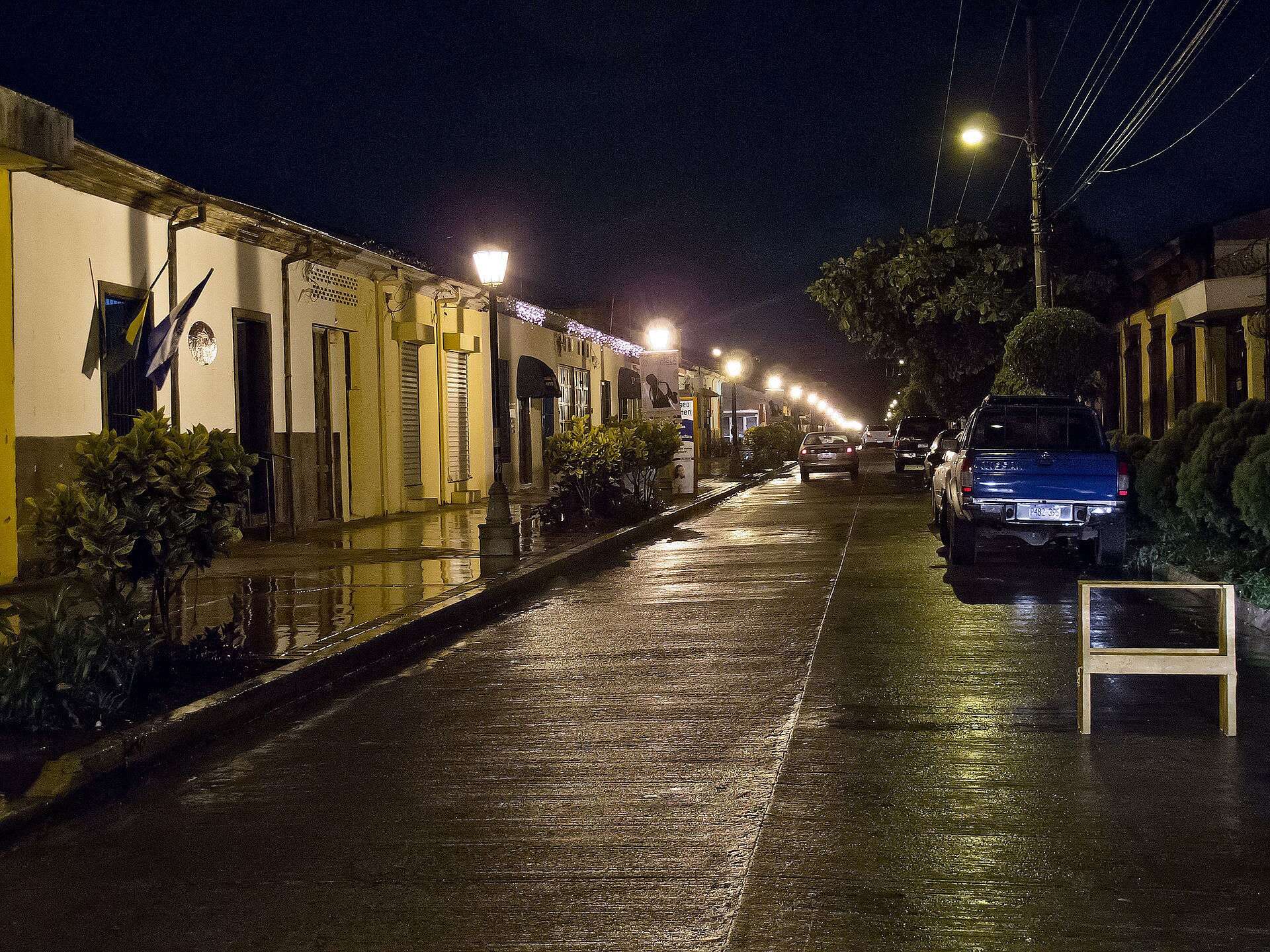
The security change is the main reason investors are looking again. Officially, homicides fell from 3,962 in 2017 to 82 in 2025, a rate of 1.3 per 100,000 people.
The US State Department rates El Salvador at Level 1, “exercise normal precautions”, the lowest of its four levels. Its advisory of 25 June 2026 says gang activity has fallen dramatically since 2022.
Visitors have followed. The Ministry of Tourism counted 4.1 million international visitors in 2025 and more than US$3.6 billion in tourism income. IMF staff say growth has been underpinned by better security and rising investor confidence.
The official murder count is narrower than in most countries. InSight Crime, a research group on organised crime, says it excludes bodies found in clandestine graves. It also leaves out deaths at police hands and killings in prison.
Since 27 March 2022, the gang crackdown has run under a state of exception. It suspends the right to a defence, the normal time limit on police detention and the privacy of correspondence.
The Legislative Assembly approved its 55th extension on 23 September 2026, running until 27 October. The government reports more than 93,000 arrests since 2022, about one resident in 70.
Rights groups document the cost. Socorro Jurídico Humanitario, a Salvadoran legal-aid group, counted 564 deaths in state custody by late August 2026. Amnesty International says the abuses could amount to crimes against humanity.
Human Rights Watch says most detainees are held incommunicado in pre-trial detention. The State Department warns that several US citizens have been detained under the measure and have yet to face trial.
The premium has not yet shown up in foreign direct investment, which Fitch says fell 27.3 percent in 2025. For an investor, the security gain is real but rests on emergency powers whose end date has not been set.
Political risk after the end of term limits
On 31 July 2025 the Legislative Assembly voted 57 to 3 to allow indefinite presidential re-election. It also lengthened terms from five to six years and abolished the run-off.
The reform cut Bukele’s current term to end on 1 June 2027 instead of 2029. Presidential, legislative and municipal elections now fall together on 28 February 2027.
Bukele won his Nuevas Ideas party’s nomination in July 2026. Candidate registration runs from 1 October to 19 November 2026, and the presidential campaign opens on 27 October.
His party holds 54 of the Assembly’s 60 seats, and Fitch cites approval ratings above 90 percent. For investors, that means policy continuity and a strong executive, but few institutional checks.
Critics point to the costs. Human Rights Watch reported in January 2026 that anti-corruption lawyer Ruth López and lawyer Enrique Anaya, arrested in 2025, were held incommunicado. Transparency International ranked El Salvador 120th of 182 countries for perceived corruption in its 2025 index.
The State Department says Salvadoran courts have historically been slow and judgments hard to enforce, though some investors report improvement. US investors can also use arbitration under the CAFTA-DR trade agreement, in force since 2006.
The Freedom Visa and practical steps

The Freedom Visa, launched with the stablecoin company Tether on 7 December 2023, offers residency and then citizenship. It requires US$1 million in bitcoin or the USDT stablecoin, with a non-refundable US$999 deposit credited to the total.
The programme is capped at 1,000 people a year, and applicants must pass know-your-customer (KYC) checks. The foreign ministry said in 2023 it could raise US$1 billion a year if every place were filled.
The government has not published how many visas it has granted. The official portal was still online in September 2026, and ordinary residence permits cost far less.
For most people, investing in El Salvador starts with a local lawyer. For property, ask the notary to pull the CNR registry record for liens and title history before paying any deposit.
To form a company, use the government’s Miempresa portal, which the State Department says can register a business within three days. The same portal issues the company’s tax identification number.
Check which incentive regime fits before you commit money, because each has entry conditions and some require registration first. Keep records of funds brought in from abroad, since the 2024 exemption applies to that capital.
Finally, match your timetable to the calendar. Watch the IMF board vote, the 30-day renewals of the state of exception and the February 2027 election.
Connected Coverage
Buying Property in El Salvador as a Foreigner 2026 — Rules, Costs and Real Risks
Taxes in El Salvador for Expats 2026 — What You Owe and What Stays Untaxed
Bukele Holds 6494 Bitcoin as IMF Deal Ends Compulsory Acceptance
El Salvador Residency Visa 2026 — Income, Papers, Timelines
Is El Salvador Safe for Expats in 2026: What the Level 1 Rating Leaves Out
Sources: IMF, El Salvador’s Bitcoin Office and Ministry of Justice and Security, the Supreme Electoral Tribunal calendar, the 1983 constitution, the US State Department, PwC, Fitch, S&P, Moody’s, Amnesty International, Human Rights Watch, InSight Crime, Reuters and EFE, all accessed 25 September 2026. El Salvador uses the US dollar; euro and sterling rates are from open.er-api.com on 25 September 2026.
- IMF — staff-level agreement on the combined second and third EFF reviews, 3 September 2026.
- IMF — Executive Board approves the 40-month EFF, 26 February 2025.
- IMF — 2025 Article IV and first EFF review, 27 June 2025.
- IMF — World Economic Outlook data for El Salvador.
- National Bitcoin Office — public tracker of state bitcoin holdings.
- Reuters — lawmakers rush bitcoin reform after IMF deal, 29 January 2025.
- El Diario de Hoy — text of the Bitcoin Law reform, 29 January 2025.
- Constitution of the Republic of El Salvador (1983), Article 109.
- US State Department — 2025 Investment Climate Statement: El Salvador.
- US State Department — El Salvador travel advisory, 25 June 2026.
- PwC Worldwide Tax Summaries — El Salvador, reviewed 26 February 2026.
- Ministry of Justice and Security — 2025 homicide balance.
- Diario El Mundo — official homicide series 2017–2025.
- InSight Crime — homicide round-up and El Salvador methodology.
- EFE via Infobae — 55th extension of the state of exception, 23 September 2026.
- Diario El Mundo — arrests and deaths in custody, 26 August 2026.
- Amnesty International — the human cost of the state of exception, July 2026.
- Human Rights Watch — World Report 2026: El Salvador.
- Reuters — El Salvador scraps presidential term limits, 31 July 2025.
- Supreme Electoral Tribunal calendar for the 2027 elections.
- EFE — Bukele wins his party’s 2027 nomination, 13 July 2026.
- Fitch Ratings — El Salvador sovereign report, May 2026.
- S&P Global Ratings — El Salvador B-/B affirmed, 27 August 2026.
- Dinero.com.sv — Moody’s B3 rating with positive outlook, citing SECMCA, July 2026.
- EFE via El Diario de Hoy — BCR remittance data for 2025.
- Diario El Mundo — Ministry of Tourism figures for 2025.
- Tether — Freedom Visa programme announcement, 7 December 2023.
- La Prensa Gráfica — Investment Banking Law in force, September 2025.
What Is Not Known
Whether the IMF Executive Board will approve the combined reviews, and when, is not known. The staff-level agreement of 3 September 2026 also depends on prior actions that the IMF has not spelled out publicly.
How the state reserve fits the IMF’s expectation is not clear. The Bitcoin Office tracker kept adding one coin a day through late September 2026. The donors that the IMF says funded additions since June 2025 have not been named.
No end date for the state of exception has been announced. The homicide count under the broader international definition is not published either. The official series leaves out several categories of death.
The number of Freedom Visas granted since December 2023 has not been made public. Neither has any breakdown of where the contributions went.
How El Salvador will cover rising pension-bond interest from 2027, when a grace period expires, has not been spelled out, Fitch notes. A parametric pension reform is promised to the IMF for 2027, and its effect on taxes is unknown.
Frequently Asked Questions
Can foreigners buy property in El Salvador?
Yes, on the same terms as Salvadorans for urban homes, apartments and commercial property. Under Article 109, rural land is barred only to foreigners whose country denies Salvadorans that right, except industrial land. Buyers pay 3 percent transfer tax above US$28,571.43 and register the deed with the National Registry Centre (CNR).
Is bitcoin still legal tender in El Salvador?
Not in the old sense: a January 2025 reform made acceptance voluntary and ended tax payments in bitcoin. The state still held about 7,785 bitcoin on 25 September 2026, per the Bitcoin Office tracker. The IMF says coins added since June 2025 came from private donations.
What taxes do foreign investors pay in El Salvador?
Companies pay 30 percent income tax, or 25 percent on taxable income up to US$150,000, plus 5 percent withholding on dividends. Capital gains on assets held over 12 months are taxed at 10 percent. Non-residents pay a flat 30 percent on Salvadoran income, VAT is 13 percent, and income earned abroad is generally not taxed.
How much does the El Salvador Freedom Visa cost?
The Freedom Visa, launched with Tether on 7 December 2023, requires US$1 million in bitcoin or the USDT stablecoin. A non-refundable US$999 deposit is credited to the total, and applicants must pass KYC checks. The programme is capped at 1,000 people a year, and the government has not published how many visas it has granted.
Is El Salvador safe for investors in 2026?
Official homicides fell to 82 in 2025, or 1.3 per 100,000 people, and the US rates the country Level 1. The gains came under a state of exception declared in March 2022 and extended for the 55th time on 23 September 2026. The government reports more than 93,000 arrests, and a Salvadoran rights group counted 564 deaths in custody by late August 2026.
Can Nayib Bukele run for president again?
Yes. On 31 July 2025 the Legislative Assembly voted 57 to 3 for indefinite re-election and six-year terms, and scrapped the run-off. Bukele’s current term now ends on 1 June 2027, and he won his party’s nomination for the election on 28 February 2027.
This article was produced by The Rio Times’ automated newsroom system. How we use AI · Report an error
LatAm Markets: Live Signals → — real-time movers, turnover leaders and FX across Latin America.
Read More from The Rio Times