Chile Is Back, President Kast Tells the UN General Assembly
Chile · United Nations
Key Facts
- The country — Chile is a South American country of about 20 million people and the world’s largest copper producer. It has built its wealth on open trade and on the international institutions that protect it.
- The president — José Antonio Kast is a conservative lawyer who took office on 11 March 2026. He won the runoff of 14 December 2025 with 58.2% against Jeannette Jara of the Communist Party, and succeeded the leftist Gabriel Boric.
- What changed — Six months in, Kast is selling a change of direction abroad. He says Chile is now safer, more competitive and less bureaucratic, while conceding the economy has still not taken off.
- What happened — Kast addressed the UN General Assembly in New York on Tuesday 22 September 2026, his first speech there as president. He told delegates his country was back, then said the world body had not risen to the challenges of our times.
- The numbers he cited — The 18-minute address put the homicide rate down 11.5% in the first half of 2026, according to the Santiago daily La Tercera. His border plan, Escudo Fronterizo, cut irregular entries by 86%, he said, though unemployment remains high.
- What it means for you — If you invest in or trade with Chile, the government is openly courting you and says it has cut red tape. It also admits growth and jobs have not turned yet, so treat the pitch as a promise rather than a result.
- Still open — Kast gave no timetable for the recovery he says is coming. He asked the United Nations for less bureaucracy, suspension of non-priority agendas and reform of a Security Council designed in 1945, none of which is in his gift.
Chile’s new president used his first turn at the General Assembly to sell his country to investors. Then he told the United Nations, from its own podium, that it had fallen short.
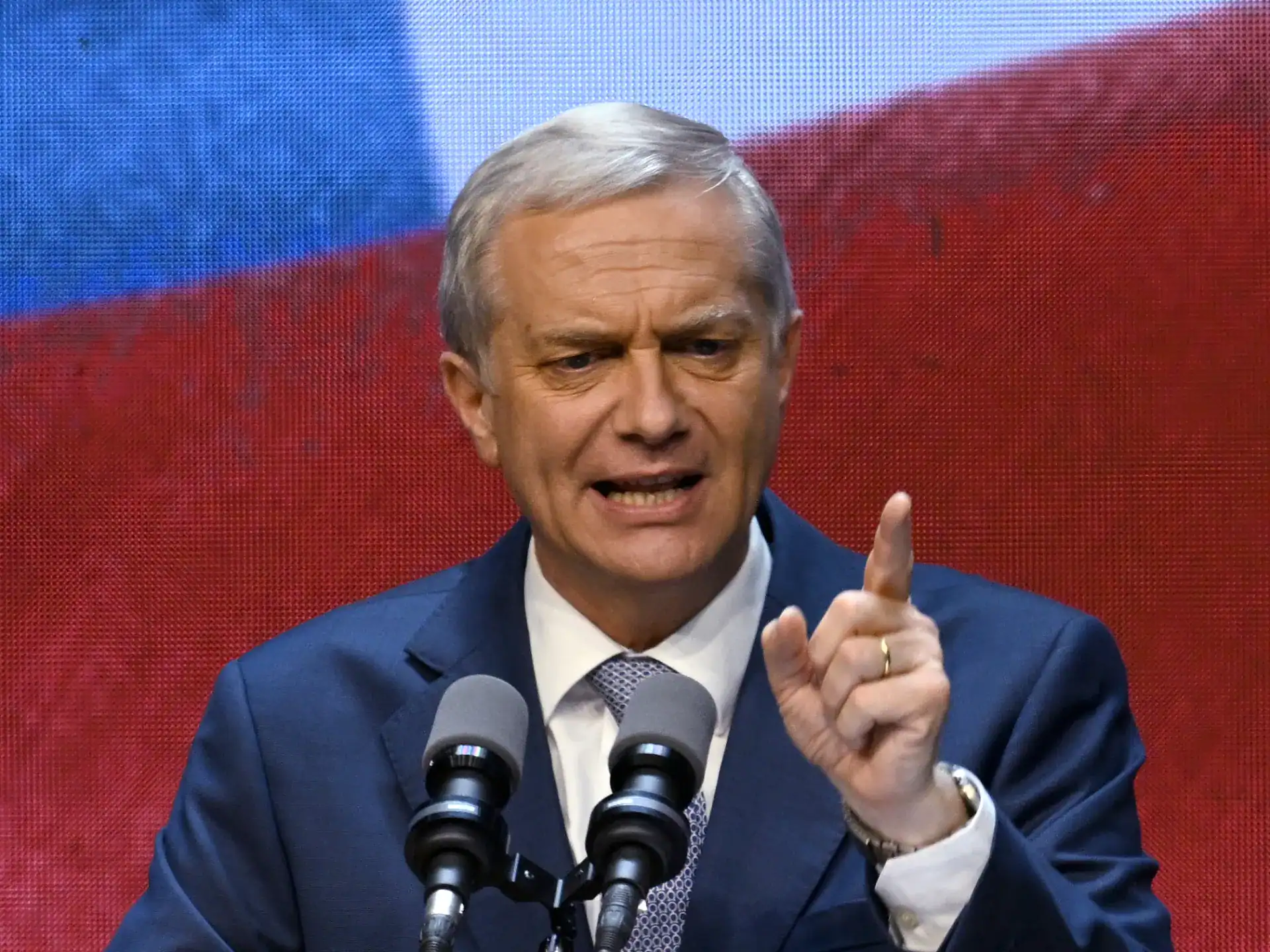
The Kast UN speech put Chile back on the General Assembly stage on Tuesday 22 September 2026. President José Antonio Kast told the assembled world leaders that his country was back.
“He venido hasta este foro a contarles que Chile está de vuelta”, he said. In English: I have come to this forum to tell you that Chile is back.
Then came the sting. He told the world body, from its own podium, that it had fallen short.
A conservative president marking six months in office
Kast is a conservative lawyer who took office on 11 March 2026. He won the runoff of 14 December 2025 with 58.2% of the vote.
He beat Jeannette Jara of the Communist Party, who took 41.8%. He succeeded Gabriel Boric, the leftist who had governed Chile since 2022.
The address ran 18 minutes, according to La Tercera, a Santiago daily. He spoke after Peru’s president, Keiko Fujimori, BioBioChile reported.
The numbers he put on the record
Kast said Chile is now “un país más seguro, un país más competitivo y un país con menos burocracia”. That is a safer country, a more competitive one, with less bureaucracy.
“Llevamos seis meses, y estamos ordenando la casa”, he said. We have been here six months, and we are putting the house in order.
He told delegates the homicide rate fell 11.5% in the first half of 2026. His border plan, Escudo Fronterizo, cut irregular entries by 86%, he said.
Expulsions rose 50% on the year before, he added. Those are his own government’s figures, delivered from the rostrum.
On the economy he cited a company tax cut from 27% to 23%. Applications worth more than US$44 billion entered the environmental permitting system in six months, he said.
More than US$33 billion of projects were approved, some after years of waiting, he told the hall. A further US$17 billion had been unblocked at the environmental stage, he said.
He also conceded the obvious. Chile’s economy “aún no despega”, he said, and unemployment “se mantiene alto”.
In English: the economy has still not taken off, and unemployment stays high. “El cambio va a llegar”, he added, promising that the change will come.
Unemployment was 9.5% in the May to July moving quarter. That figure comes from Chile’s National Statistics Institute, published on 28 August 2026.
The uncomfortable part
Kast then turned on his hosts. “Esta organización no ha estado a la altura de los desafíos de nuestros tiempos”, he said.
In English: this organisation has not risen to the challenges of our times. He introduced the passage as the most uncomfortable thing he had come to say.
“No es posible mantener vigente el orden mundial del año 1945 en un mundo del 2026”, he added. The world order of 1945 cannot stay in force in 2026, he meant.
He put three proposals to the organisation. Cut the bureaucracy, suspend agendas that are not priorities, and reform the Security Council.
That council is the body of 15 states that can order sanctions and peacekeeping missions. Five of them hold permanent seats and a veto.
Wars, Venezuela and artificial intelligence
Kast asked the assembly to end the world’s wars, without naming a single one. “Las guerras deben cesar”, he said: the wars must cease.
Conflict raises the price of bread, transport and harvests far from the fighting, he argued. Chile imports practically all the oil it consumes, he reminded delegates.
Chile is resuming relations with Venezuela under its new leadership, he told the hall. On that change he offered a middle course.
Some would have Chile refuse to recognise it, he noted, and others would have it align unconditionally. “Chile no hace ni una cosa ni la otra”, he said: Chile does neither.
Venezuela has a historic chance to rejoin its democratic traditions, he said. He then turned to artificial intelligence, calling it an ethical and geopolitical question.
The most powerful technology humanity has built is appearing, and nobody is governing it, he told the hall. He proposed a Chilean approach he called “ritmo responsable”, a responsible pace.
The pitch to investors
El Mostrador, a Santiago news site, had written that morning that tariffs and an anti-crime pact would shape his agenda. Only the pact reached the podium, as the Acuerdo de Santiago, a South American security deal.
Trade reached the speech mainly as an invitation. “Elijan Chile para invertir”, Kast said, telling the assembled leaders to choose Chile to invest.
He promised rules that do not change overnight, courts that work and contracts that hold. He offered Chile’s minerals and the Strait of Magellan as assets for world trade.
Why it matters beyond Chile
Chile is a mid-sized trading economy that has long specialised in not making enemies. A Chilean president publicly grading the United Nations is a change of register.
The timing is delicate. Michelle Bachelet, a former Chilean president, quit the race to be UN secretary-general on 19 September 2026.
Kast told reporters in New York on Monday 21 September 2026 that he felt “el mayor respeto” for Bachelet. That is the greatest respect, for her as a person and as a former president.
He added that his government had never intended to back her bid and would support no other candidate. His speech the next day made no mention of her candidacy.
He closed on the region rather than on himself. “América Latina puede ser el continente de la próxima década”, he said: Latin America can be the continent of the next decade.
More: Chile coverage, every day from The Rio Times.
Frequently Asked Questions
Who is José Antonio Kast?
He is the president of Chile, sworn in on 11 March 2026. Born in Santiago on 18 January 1966, he is a lawyer and a former member of the Chamber of Deputies, where he sat from 2002 to 2018. He founded the Republican Party and ran for president three times, in 2017, in 2021 and in 2025. He belongs to the populist right and won the December 2025 runoff with 58.2% of the vote.
What did the Kast UN speech demand of the United Nations?
Three things. He asked the organisation to cut its bureaucracy and concentrate its budget where lives are at stake. He asked it to suspend agendas that are not priorities. And he asked for reform of the Security Council, which he said still mirrors the politics of 1945 rather than those of 2026.
Is Chile’s economy improving under Kast?
Not yet, on his own account. He told the General Assembly that the economy has still not taken off and that unemployment remains high, while arguing that his reforms are already under way. Chile’s National Statistics Institute put unemployment at 9.5% for the May to July moving quarter, in figures published on 28 August 2026.
What is the Acuerdo de Santiago?
It is the regional agreement Kast promoted to coordinate South American governments against transnational organised crime. He cited it at the United Nations as proof of closer regional coordination, alongside a border plan he says has cut irregular entries sharply. Chile is also bidding for Valparaíso to host the secretariat of the High Seas treaty.
Sources: La Tercera on the 18-minute address, Cooperativa on the themes of the speech, Cooperativa on Venezuela and artificial intelligence, El Mostrador on the criticism of the United Nations, The Clinic on the debut, BioBioChile on the order of speakers, Chile’s statistics institute on unemployment, El País on Michelle Bachelet leaving the race, BioBioChile on what Kast said about Bachelet, the United Nations record of the address
This article was produced by The Rio Times’ automated newsroom system. How we use AI · Report an error
Read More from The Rio Times
- Chile-Australia Strategic Partnership Begins Without a Signature as Foreign Ministers Meet at the United Nations on 22 September 2026
- Kast Approval Falls to 25% in Chile’s September 2026 Survey, 11 Points Below August, Though the Same Pollster Had the President at 26% in May
- Chile Market Regulator Fines a Santiago Trading Firm US$1.08 Million for 34,038 Fake Share Orders, Decision Dated 10 September 2026