LatAm Pre-Open — Wednesday, September 2, 2026
Key Facts
- Asia sold off hard overnight,with Japan’s Nikkei 225 down roughly 2–3% and Seoul’s KOSPI opening more than 3% lower as chip names tumbled
- Oil extended its surge,with West Texas Intermediate crude trading around US$90–92 per barrel, stoking fresh inflation concerns globally
- The dollar stayed firm,pressuring emerging-market currencies across Latin America before the open
- Brazil’s industrial production,due at noon local time, gives the first domestic growth read of the session
- Colombia’s exports data,released this afternoon, lands just as the region digests a cautious external session
Today’s Focus
The mood is nervous across Latin America this morning. A sharp slide in Asian chipmakers overnight collides with a fresh spike in oil prices and a firmer US dollar, the classic defensive cocktail that hits regional stocks and peso-denominated assets hardest.
Brazil’s Ibovespa closed higher in the last session, a rare decoupling from Wall Street’s retreat, but that outperformance faces serious pressure at today’s open. Mexico, Chile and Colombia enter the session with their currencies under scrutiny as US bond yields hover near 4.8%.
Industrial production figures from Brazil land at noon, offering a domestic anchor amid all the external noise. Colombia’s export report arrives later in the day, just as traders weigh whether commodity strength can offset the regional market drag.
The story is not uniformly negative: higher oil prices support Petrobras, the Brazilian state oil giant, and some Andean exporters. But the broader tilt this morning is toward defence, not aggression.
What matters today. Whether Latin America’s decoupling from the US stock session — led by Brazil’s ten-session winning streak in the Ibovespa — can survive a chip-led Asian slide and $90 oil.
| Instrument | Level | Session |
|---|---|---|
| Ibovespa (Brazil) | 179,722 | +1.30% |
| S&P 500 (US) | 7,631 | -0.71% |
| USD/BRL | 5.1558 | -0.54% |
| USD/MXN | 16.9956 | +0.01% |
| USD/CLP | 937.35 | +0.33% |
| USD/COP | 3,209 | +0.22% |
| USD/ARS | 1,513 | +0.27% |
Latin American markets — Source: RT close, 2026-09-01. Figures rendered directly from the feed.
01 The overnight tape in one read
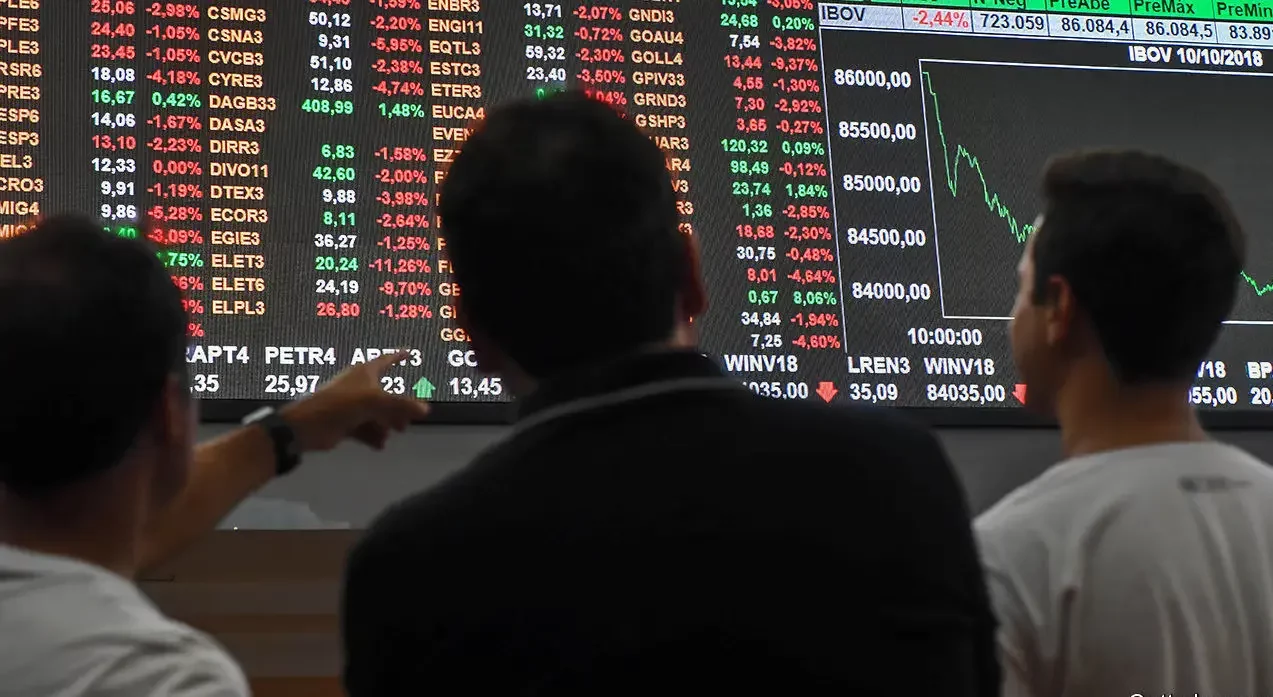
The three-day losing streak on Wall Street finally caught up with Asia. Japan’s Nikkei 225, the country’s main stock index, fell more than 2% at the open on Wednesday, dragged by chipmakers like SoftBank and Kioxia.
South Korea’s KOSPI, Seoul’s blue-chip benchmark, opened down more than 3% as Samsung Electronics and SK Hynix — two of the world’s largest memory chipmakers — shed roughly 3–4% apiece.
The culprit is the same one haunting global markets all week: oil. West Texas Intermediate crude, the US benchmark, firmed above US$90 per barrel, feeding inflation worries and pushing the US 10-year Treasury yield back toward 4.8%.
That higher-yield, higher-dollar backdrop is precisely the environment where Latin American risk assets struggle — foreign investors get paid more for parking money in safe US government debt, and emerging-market currencies face selling pressure.
The evidence leans toward a defensive regional open. Asian technology names fell sharply, US bond yields are elevated near 4.8%, and the dollar index is holding firm at just under 99.73 — all of which typically sap appetite for emerging-market exposure. Oil’s rise above US$90 per barrel complicates local inflation outlooks, especially in Brazil where the central bank has been cutting the Selic rate, its benchmark interest rate.
Against that, Brazil’s industrial production report could renew confidence in the domestic growth story, and oil’s climb is a genuine tailwind for Petrobras, Vale and Andean commodity exporters. The variable to watch is whether the real and the Mexican peso can hold their recent ground — if they begin to slip with the dollar’s strength, the market slide has further to run.
02 The board before the open
| Instrument | Level | Change | Read |
|---|---|---|---|
| Ibovespa | 179,722 | +1.30% | Brazil’s main index closed higher for a tenth straight session, decoupling from the S&P 500’s −0.71% slide |
| IPC (Mexico) | 64,514 | −0.82% | Mexico’s benchmark fell, failing to join Brazil’s rally, failing to join Brazil’s rally |
| Merval (Argentina) | 3,049,455 | +0.51% | Argentina’s index edged up, supported by local flows despite dollar strength |
| COLCAP (Colombia) | 2,470 | +1.86% | Colombia’s index posted the strongest regional gain, boosted by oil strength |
| USD/BRL | 5.1558 | −0.54% | The real strengthened slightly against the dollar in the prior session |
| Gold (spot) | US$4,325/oz | −2.86% | Precious metals sold off hard — a classic caution signal |
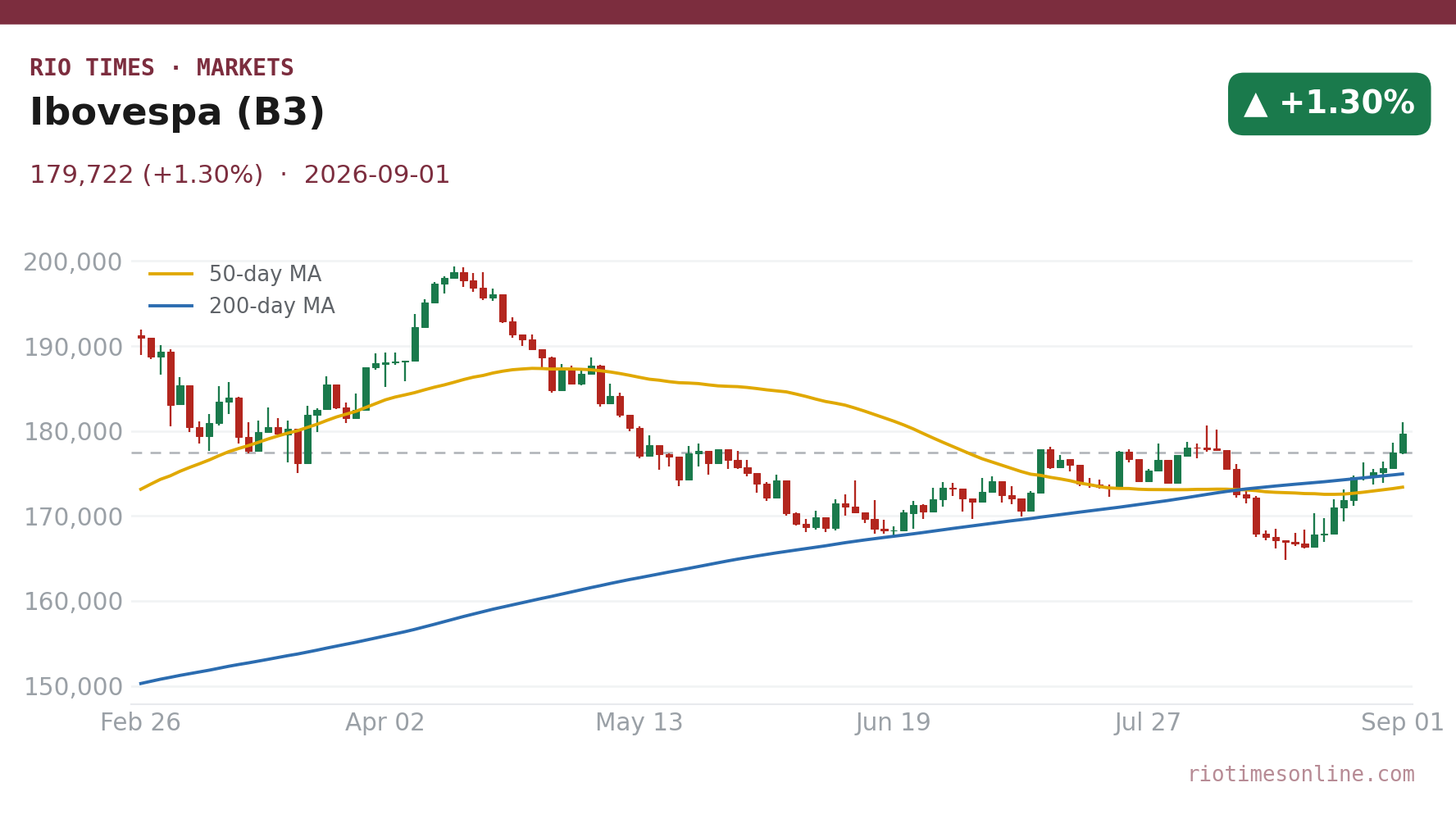
The board captures a region that was still shaking off last week’s turbulence when the closing bell rang. Brazil’s Ibovespa — the main stock index of B3, the Brazilian exchange — defied Wall Street’s slide and rose for a tenth straight session, the strongest momentum signal in months.
Colombia’s COLCAP outperformed on oil strength, while Mexico’s IPC lagged as the peso held near 17 to the dollar. The gold decline of nearly 3% signals investors are not rushing into traditional havens — they are selling risk broadly, not rotating defensively.
That makes this morning’s Asian session all the more relevant. If the Nikkei and KOSPI slide deepens into Europe’s open, the cushion Latin America built this week will look thin. Rio Times · Live Market Intelligence
Live Market IntelligenceLatin America — Cross-Market Board
Latin America — Cross-Market Board
Instrument Last Change YoY Prev. High Low Volume
IBOV
183,150.19
+1.91%
+21.85%
179,722.48
168,310
167,142
—
IPSA
11,315.26
-1.14%
—
11,445.90
11,210
10,984
1,513,213,483
IPC MEX
64,514.25
-1.40%
+12.17%
65,430.32
66,121
65,405
108,886,187
MERVAL
3,057,915
+0.28%
+30.51%
3,022,485
3,042,365
2,991,150
—
COLCAP
2,483.01
+0.52%
—
9.04
9.05
9.02
4,133
BVL PERÚ
59,515.48
+0.86%
—
—
—
—
—
USD/BRL
5.16
+0.01%
-5.13%
5.16
5.18
5.14
—
EUR/BRL
5.95
+1.01%
-5.83%
5.89
5.98
5.94
—
USD/MXN
17.06
-0.24%
-8.58%
17.10
17.08
17.01
—
USD/CLP
913.98
+0.04%
-5.67%
913.65
915.11
906.68
—
USD/COP
3,140
+0.03%
-22.04%
3,139
3,141
3,105
—
USD/PEN
3.36
-0.66%
-4.82%
3.38
3.38
3.35
—
USD/ARS
1,493
+0.10%
+12.96%
1,491
1,494
1,480
—
USD/UYU
40.27
+1.24%
+1.80%
39.77
40.27
40.23
—
USD/PYG
5,939
+1.68%
-19.54%
5,841
5,939
5,925
—
USD/BOB
11.64
-0.76%
+72.04%
11.73
11.72
11.64
—
USD/DOP
58.34
+1.25%
-3.44%
57.62
58.34
58.04
—
USD/CRC
445.92
+0.89%
-9.71%
441.97
448.50
445.92
—
03 What the data shows — Brazil decoupled, but the rotation was narrow
| Stock | Move | Turnover | Note |
|---|---|---|---|
| PETR4 (Petrobras) | +1.30% | R$2,326m | The oil major was the most-traded B3 name — elevated crude supports cash flows and the payout story |
| VALE3 (Vale) | +1.30% | R$1,232m | Iron ore miner tracked the commodity’s stability and the index-wide inflow |
| ITUB4 (Itaú) | +1.30% | R$1,077m | Brazil’s largest private bank rallied with the broader market, a sign of domestic conviction |
| BOVA11 (Bovespa ETF) | +1.30% | R$996m | Passive flows into the main ETF confirm broad-based buying, not just single-stock bets |
| B3SA3 (B3 exchange) | +1.30% | R$918m | The exchange operator itself is a barometer of trading activity — its rise signals strong turnover |
| SOJA3 (Boa Safra) | +11.3% | R$15m | The agri-input firm led gainers, though thin turnover makes the move less reliable |
The B3 most-traded list tells a story of breadth. Petrobras — ticker PETR4 — dominated turnover with over R$2.3 billion changing hands, supported by stubbornly high crude oil prices.
Banks like Itaú and Bradesco continued to attract flows even as global yields rose, suggesting local investors are less worried about the Selic, Brazil’s benchmark rate, than their US counterparts are about the Federal Reserve.
The standout gainer, agricultural input supplier Boa Safra, jumped 11.3% on tiny turnover of just R$15 million — a reminder that the most dramatic moves are not always the most consequential.
04 Brazil and the currencies
The real enters the session with a modest tailwind from the prior close, having strengthened slightly against the dollar. But the dollar’s broader firmness, with the DXY index hovering just below 100, threatens to stall that momentum.
Higher US Treasury yields — the 10-year sits near 4.8% — narrow the interest-rate gap that has made Brazilian assets attractive. The Selic has been on a cutting path, and if US rates stay elevated, carry-trade flows into the real could slow.
Industrial production data due at noon in Brasília is the key domestic catalyst. Economists expect a rebound from the prior month’s decline, but any disappointment would compound the external pressure on the real.
Colombia’s export report this afternoon offers a similar test for the peso. With oil above US$90, a strong export print could provide some insulation for the COLCAP against the global slide.
05 The regional setup
| Index | Country | Change |
|---|---|---|
| COLCAP | Colombia | +1.86% |
| Ibovespa | Brazil | +1.30% |
| Merval | Argentina | +0.51% |
| BVL Peru | Peru | +0.11% |
| IPC | Mexico | −0.82% |
The regional board shows a clear commodity-versus-rates split. Colombia and Brazil, both heavy commodity exporters, led the prior session, while Mexico — more tied to US manufacturing — lagged.
Mexico’s consumer confidence report this morning could add colour to that divergence. Expectations point to another soft reading, which would reinforce the bearish bias for the IPC.
Argentina’s Merval keeps defying gravity, up again despite triple-digit inflation and a crawling peso peg. But with local yields deeply negative in real terms, the index’s rise is more about hedging local risk than genuine foreign demand.
Peru’s market was barely changed, the calm before what could be a choppy regional session.
06 The technical picture
The Ibovespa is still nearly 10% below its 52-week high of 198,657, but the ten-session winning streak has pushed it well off the low of 139,864. The trend is constructive, yet the index now sits just below 180,000 — a level that acted as resistance earlier in the cycle.
Cross-referencing the S&P 500, which is only about 2% below its record, highlights how much room Latin American stocks still have to recover. The question is whether the external backdrop allows that gap to close.
The VIX, Wall Street’s fear index, jumped nearly 10% in the prior session, a signal that option traders are bracing for more volatility. If the VIX pushes above 18 this week, history suggests emerging-market beta — the sensitivity to global moves — becomes a liability rather than an opportunity.
07 What to watch
- Brazil industrial production (noon): A rebound would support the local growth narrative and could keep the Ibovespa decoupling from Wall Street alive
- Colombia exports (afternoon): With oil above $90, a strong print would cushion the COLCAP and the peso against the global slide
- US ISM Services PMI (10:00 ET): A number above consensus would push Treasury yields higher and strengthen the dollar further, hurting LatAm currencies
- Mexico consumer confidence (morning): Another weak print would give traders another reason to stay short the IPC relative to Brazil
Frequently Asked Questions
Why is the LatAm market under pressure today?
A sharp slide in Asian chip stocks, oil trading near $92 per barrel, and a firmer US dollar have combined to create a defensive environment that makes emerging-market assets less attractive.
Did Brazil really rise while Wall Street fell?
Yes — the Ibovespa gained 1.30% in the prior session, its tenth straight advance, defying the S&P 500’s 0.71% decline. That decoupling is the key tension this morning.
Who benefits from higher oil in Latin America?
Petrobras in Brazil is the biggest direct beneficiary, with cash flows improving and the stock drawing heavy turnover. Colombia’s oil exporters also benefit, which helps explain the COLCAP’s recent outperformance.
Is the Real at risk of weakening?
The real firmed slightly on Tuesday, but the dollar’s broader strength and US yields near 4.8% are headwinds. Any dovish surprise from today’s industrial production data could accelerate depreciation.
Market data: RT
This article was produced by The Rio Times’ automated newsroom system. How we use AI · Report an error
LatAm Markets: Live Signals → — real-time movers, turnover leaders and FX across Latin America.
Read More from The Rio Times