Brazil’s Lula Warns on Election Meddling; Trump Turns to Iran

Brazil · United States · Diplomacy
Key Facts
- The country — Brazil is Latin America’s largest economy and a major food exporter, with about 210 million people. By tradition it speaks first at the UN General Assembly, a habit dating to 1955.
- The friction — New United States duties imposed since July hit about 23 percent of Brazil’s exports to the US, according to Brazil’s trade ministry.
- Why now — Brazil elects its president on Sunday 4 October 2026, and Lula’s main rival, Senator Flávio Bolsonaro, was received by Trump in May.
- What happened — On Tuesday 22 September 2026 Lula opened the General Assembly debate and condemned foreign interference in elections and tariffs used as coercion, without naming Trump. Trump spoke immediately after him.
- What was said — Lula, 80 and seeking a fourth term, said Brazil fits in nobody’s backyard. Trump said he was weighing whether to “annihilate” Iran, while predicting a deal after the US midterm elections.
- What it means for you — If you trade with or invest in Brazil, duties on roughly a quarter of its US-bound exports are the live risk. Nothing said at the UN suggested they will ease.
- Still open — The two leaders did not meet before their speeches, unlike in 2025, when they briefly embraced. No talks on the duties were announced, and Brazil votes on 4 October.
Brazil’s president opened the world’s biggest diplomatic stage with a warning against outside meddling in elections. The American president followed him to the lectern, and the two men did not meet backstage.
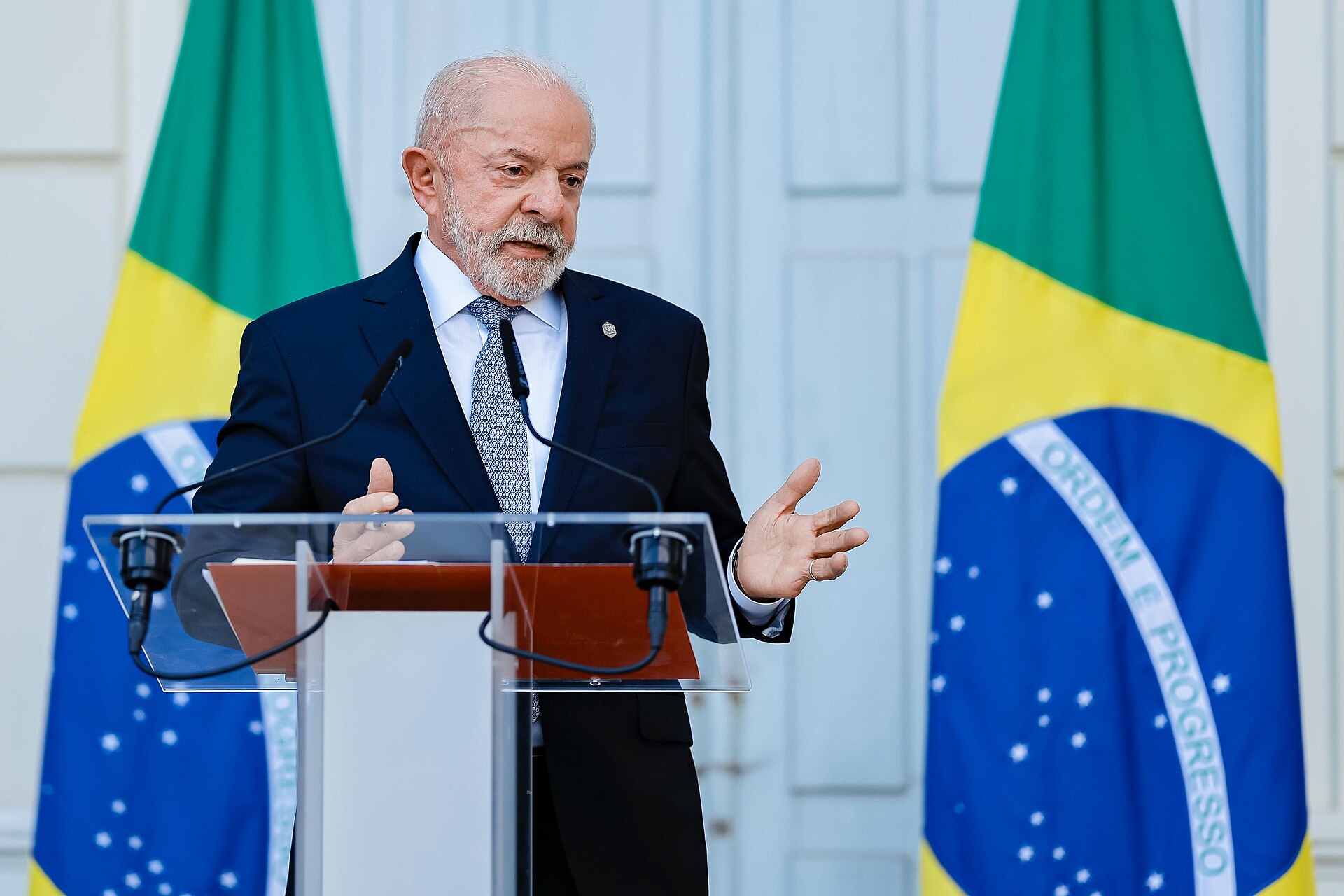
Lula and Trump at the UN spoke back to back on Tuesday 22 September 2026, and the contrast was hard to miss. Brazil’s president used the opening speech of the General Assembly’s annual debate to warn against foreign meddling in elections.
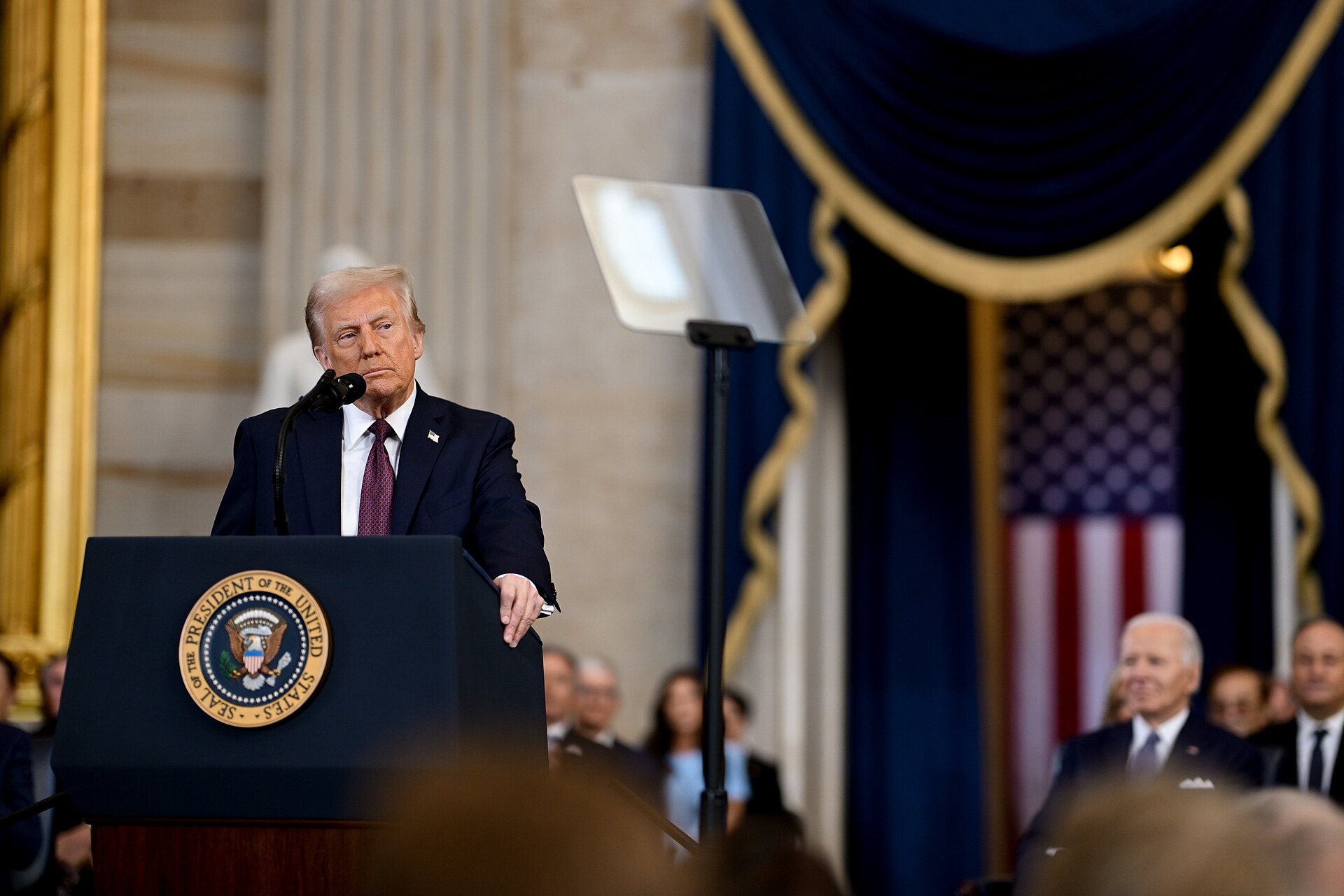
Donald Trump took the lectern straight after him, CNN Brasil reported. He opened with American strength and a stark warning to Iran.
Brazil has spoken first by tradition since 1955, and the United States, as host country, follows. This year the order carried extra weight, because Brazil elects its president on Sunday 4 October.
What Lula said about sovereignty and elections
Luiz Inácio Lula da Silva, 80, is seeking a fourth term. Quotations below come from the prepared Portuguese text released by his office and published by the g1 news site, in our translation.
He began by noting that this was his tenth time opening the debate. He called it the most critical moment for the United Nations since he first spoke there in 2003.
Turning to Latin America, the text spoke of living next to “a maior potência militar do mundo”, the world’s greatest military power. Then came the line Brazilian media led with: “O Brasil não cabe no quintal de ninguém.”
In English, that means Brazil fits in nobody’s backyard. As delivered, Folha de S.Paulo quoted him as saying “Não somos quintal de ninguém”, or we are nobody’s backyard.
The text went on: “Voltamos a presenciar a ingerência externa em processos eleitorais.” That is, we again see outside interference in elections.
He did not name the United States, Folha de S.Paulo noted, but he referred repeatedly to the actions of Trump’s government. He closed on the vote itself.
Some abuse free speech “para se associar a interesses estrangeiros contrários ao país”, he said: to side with foreign interests against Brazil. Near the end came a short line: “A democracia brasileira pertence aos brasileiros.” Brazilian democracy belongs to Brazilians.
Crime, tariffs and a payment system
Lula also answered Washington’s push on organised crime. In late May, the US State Department designated two Brazilian gangs as terrorist groups.
They are the PCC, or First Capital Command, and the CV, or Red Command. The move came days after Lula’s election rival visited the White House, Estadão reported.
“Não precisamos de porta-aviões vigiando nossas águas,” the text read: we do not need aircraft carriers watching our waters. Brazil needs cooperation to stop flows of guns and money, he argued.
He said he had personally handed that proposal to the US president. Lula visited Trump in Washington in May, when they discussed tariffs, the São Paulo daily Estadão reported.
On trade, he condemned tariffs used as “armas de coerção e chantagem”, weapons of coercion and blackmail. Despite the US tariffs, he predicted record Brazilian exports this year.
He also defended Pix, Brazil’s free instant-payment system run by the central bank. He said Brazil would not yield to multinationals that want to “privatizar o nosso PIX”, privatise our Pix.
Trump turns to Iran and American strength
Trump opened by praising the US economy and the American military, CNN Brasil and the Brasília news site Metrópoles reported. He then defended the war with Iran, now in its seventh month, NBC News reported.
“I have a big decision to make,” he said, according to NBC News. He asked whether to allow a deal that lets Iran rebuild, or to “annihilate the Islamic Republic and do it quickly”.
He called Iran the “bully of the Middle East”, NBC News reported. To applause, he said the priority was ensuring that “Iran will never have a nuclear weapon.”
Yet he predicted an agreement after the US midterm elections on 3 November. “They’re waiting to see how I do in the midterm election,” he said, as quoted by Reuters and NBC News.
Most of Iran’s delegation walked out about ten minutes into the speech, The Independent reported. Cuba’s delegation left later, as Trump called the island a failed state.
On Latin America, he cited the January US operation that removed Venezuela’s Nicolás Maduro, g1 and CNN Brasil reported. He likened drug cartels to the Islamic State.
White House excerpts said the US “will no longer permit threats to America to gain a foothold anywhere in the Western Hemisphere”. Later on Tuesday he was due to meet Gulf leaders and the leaders of Britain and Japan.
Lula and Trump at the UN, with no meeting backstage
The two presidents did not meet before their speeches, sources told CNN Brasil. Trump reached the leaders’ waiting room only once Lula was already speaking, Lula’s aides told the Metrópoles news site.
Lula stayed in the hall to watch Trump, the same aides said. The US delegation did not applaud Lula, Folha reported, though it later clapped for Trump.
That was a change from September 2025, when they hugged and talked for about a minute in an anteroom, CNN Brasil recalled. Trump then told the Assembly the two had excellent chemistry.
No bilateral meeting had been requested by either side, Metrópoles reported, citing sources at the Planalto, the presidential palace. On Monday, Lula met Uruguay’s President Yamandú Orsi, New York Mayor Zohran Mamdani and Senator Bernie Sanders.
Why the two governments are at odds
Trade is the sharpest strand. The Office of the US Trade Representative announced a 25% tariff on certain Brazilian goods on 15 July 2026.
It took effect on 22 July under the 1974 Trade Act, after a probe into digital payments, ethanol and deforestation. A separate 12.5% forced-labour duty on Brazil and dozens of other economies took effect on 24 July.
Brazil’s trade ministry says coffee, meat, orange juice and aircraft are spared. It calculates that 23.1% of exports to the US face the new duties, and 16.5% pay both, or 37.5%.
The second strand is the election, where Senator Flávio Bolsonaro, son of former president Jair Bolsonaro, is Lula’s main challenger. Trump received him at the White House in May, g1 reported.
In an interview with CNN International on Monday, Lula again called Trump an “imperador”, an emperor, Estadão reported. He said there were signs of interference, including the use of artificial intelligence.
What it means for Brazil’s 4 October election
A speech changes no rule by itself. But it gave Lula a world stage to frame the campaign as a choice between democracy and what he called denialism.
Estadão described his New York trip as a quick visit aimed mainly at voters at home. A Datafolha poll published on 17 September put Lula on 39% and Flávio Bolsonaro on 36% in the first round.
Datafolha is one of Brazil’s main pollsters, and the gap sits within its two-point margin of error. The first round is on 4 October, with a runoff on 25 October if nobody wins a majority.
For foreign businesses watching Lula and Trump at the UN, the practical item is the tariff talks. Brazilian ministers hope to meet US Trade Representative Jamieson Greer in person.
The venue could be a G20 finance meeting in Milwaukee on 30 September and 1 October. O Tempo, a Belo Horizonte daily, reported the plan.
More: Brazil coverage, every day from The Rio Times.
Why does Brazil always speak first at the UN General Assembly?
It is a tradition kept since 1955, according to the g1 news site and CNN Brasil. The United States, as host country, speaks second, which is why Lula and Trump addressed the Assembly back to back on 22 September 2026.
Did Lula mention Trump by name?
No. In his speech, Lula criticised foreign interference in elections and tariffs used as coercion without naming Trump. His prepared text referred to the US president only once, over a crime-fighting proposal he said he had handed over.
Did Lula and Trump meet in New York?
No. No bilateral meeting between Lula and Trump at the UN was requested, according to Brazilian reporting. The two leaders did not meet before their speeches, sources told CNN Brasil, and Lula stayed in the hall to watch Trump speak.
When is Brazil’s presidential election?
The first round is on Sunday 4 October 2026. If no candidate wins an absolute majority of valid votes, the two leading candidates meet in a runoff on Sunday 25 October, under dates set by the 1988 Constitution.
Sources: g1 with the full text of Lula’s speech released by the presidency, g1 on the speech and Trump’s May meeting with Flávio Bolsonaro, Folha de S.Paulo on Lula’s references to the United States, the presidency’s prepared text of the speech, via CartaCapital, CNN Brasil on the absence of a meeting, Metrópoles on the leaders’ movements backstage, g1 on Trump’s remarks on the Western Hemisphere, AFP, via Insider Paper, on the White House excerpts, CNN Brasil on Trump’s speech, Metrópoles on the opening session, Estadão on Lula’s New York trip and the May visits, Reuters, via Yahoo News, on Trump’s Iran remarks, NBC News on Trump’s description of Iran, NBC News on Trump’s speech, The Independent on the walkouts, CBS News on Trump’s schedule, USTR on the Section 301 action against Brazil, Federal Register notice on the 25% tariff, Global Trade Alert on the forced-labour tariffs, CNN Brasil on the trade ministry’s tariff breakdown, US Embassy in Brazil on the PCC and CV designation, g1 on Flávio Bolsonaro’s White House visit, CNN Brasil on the 2025 encounter, O Tempo on the planned tariff meeting, Gazeta do Povo on the 17 September Datafolha poll, Valor Econômico on the electoral court’s election dates
Frequently Asked Questions
Brazil Election 2026 — Our Full Coverage
This article was produced by The Rio Times’ automated newsroom system. How we use AI · Report an error · Editorial responsibility: Matthias Camenzind, Editor-in-Chief
In depth