Argentina · Politics
Key Facts
- —The decree Decree 735/2026, signed on 14 August 2026 and published in the Official Gazette on 18 August 2026.
- —The scope military secrecy now covers the export of material tied to the Air Force’s F-16 weapons system.
- —The kit aircraft parts, engines, spares and both live and training weapons, when they leave Argentina for repair.
- —The signatures President Javier Milei and Defence Minister Lieutenant General Carlos Alberto Presti.
- —The deal behind it 24 second-hand Danish F-16s bought in April 2024 for US$301.2 million, paid in five yearly instalments.
It is the fourth secrecy order layered on a US$301.2 million fighter deal since April 2024.
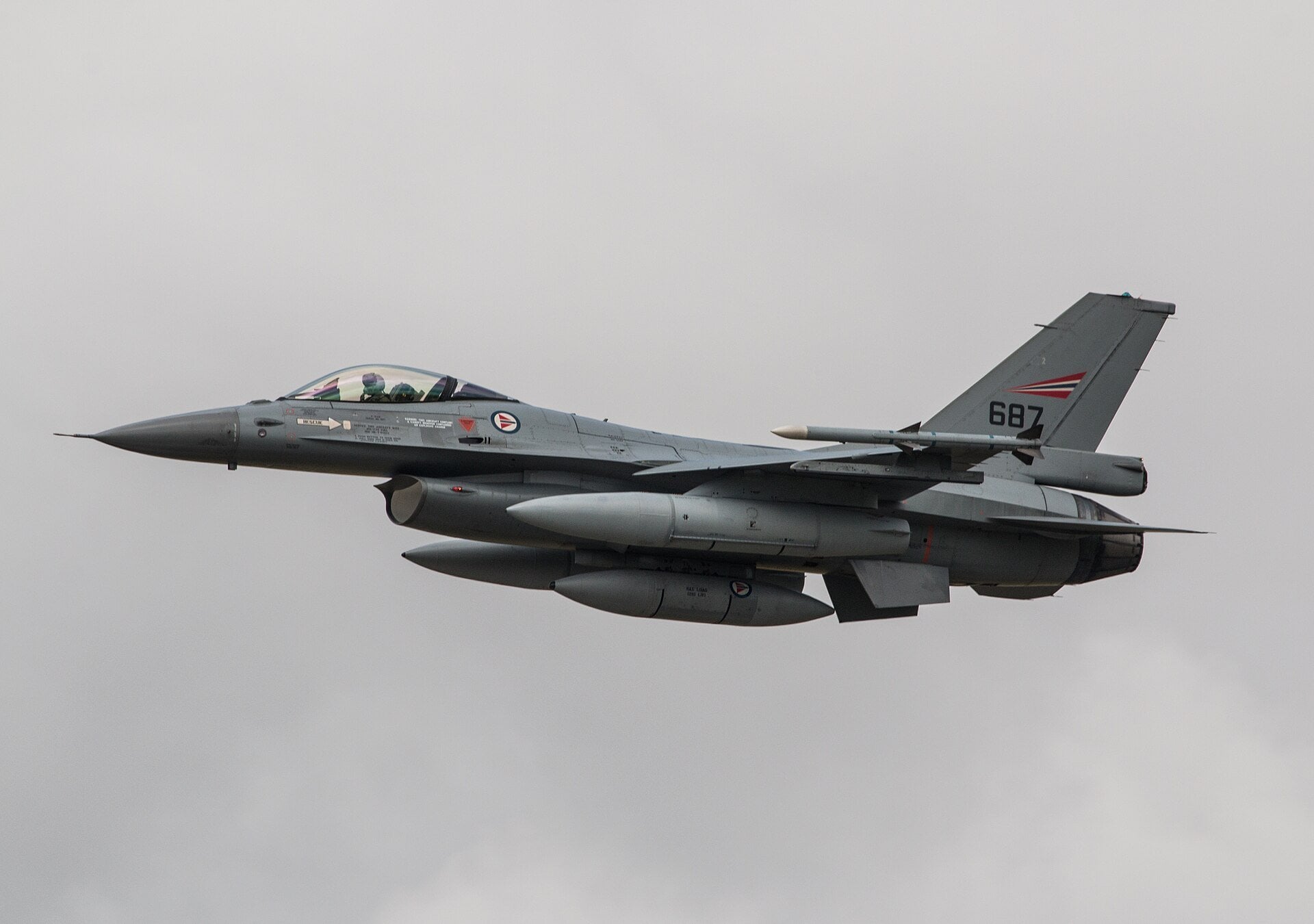
Argentina F-16 secrecy just got wider. President Javier Milei signed a decree classifying the export of material linked to the air force’s new fighter jets.
Because the jets need foreign workshops, that covers a lot of everyday traffic.
What Milei’s New Decree Actually Does
Decree 735/2026 runs to three short articles. In plain terms, it declares military secrecy over the export of material tied to the weapons system Argentina bought in 2024.
That system is the F-16 fleet. So the parts, engines, spares and munitions that travel with it are now shielded from public disclosure.
The Defence Ministry gets the job of putting the measure into practice. It will work through its Secretariat of Strategy and Military Affairs.
Why This Argentina F-16 Secrecy Order Is Not About Arms Sales
The word export does a lot of work here, and it is easy to misread. Argentina is not classifying weapons it sells to other countries.
Instead, the decree covers Argentine kit leaving the country and coming back. Engines go abroad for overhaul, and airframe parts go abroad for upgrades.
The decree says as much itself. It records that flight operations began at Rio Cuarto on 30 March 2026, making it necessary to arrange exports of material for maintenance and upgrade work.
That is normal for any F-16 operator, because the fleet depends on a global maintenance chain. However, the paperwork behind those movements is now off the public record.
The Secrecy Chain, Step by Step
This is the fourth link in a chain that started with the purchase itself. Decree 370, signed on 26 April 2024, classified the contract to buy the jets.
Decree 807, published on 10 September 2024, extended the shield to imports and to the building works for the bases. Then Decree 1073, signed on 4 December 2024, covered the extra contracts for complementary equipment and capabilities, including the jets’ weapons.
Decree 735/2026 closes the loop at the other end. In short, the Argentina F-16 secrecy net now covers the money in, the concrete, the imports and the outbound material.
The Jets at the Centre of It
Argentina signed for 24 used F-16s from Denmark on 16 April 2024. The approved spend was US$301.2 million, payable in five annual instalments.
The package included four flight simulators, eight engines and a five-year guarantee on spare parts. Pilot and mechanic training came with it.
The first six aircraft landed on 5 December 2025 at the Rio Cuarto material depot in Cordoba. A second batch of six is due in the second half of September 2026, brought forward from December.
Where the Fleet Will Live
The permanent home is the VI Air Brigade at Tandil, in Buenos Aires province. Yet the base is still a building site.
Reporting in mid-2026 found the Tandil works unfinished, with the jets flying from Cordoba in the meantime. Since those works were themselves classified in 2024, progress is hard to audit from outside.
For a country that let its fast-jet fleet wither for decades, the rebuild is real. Even so, the paper trail keeps shrinking.
Who Signed, and Why That Matters
The decree carries two signatures: Milei and Lieutenant General Carlos Alberto Presti. Presti took the defence portfolio on 10 December 2025, replacing Luis Petri, who moved to Congress.
He is a serving army officer and a former army chief of staff. That makes him the first uniformed officer to run the ministry since Argentina returned to democracy in 1983.
The appointment drew attention at the time for exactly that reason. As a result, every secrecy order he co-signs now lands in a louder political room.
The Law Behind the Label
The legal hook is Decree 9390, dating from 1963. It is the old framework that defines military secrecy and who may see classified defence material.
Argentina also has a modern access-to-information law, Law 27,275, passed in 2016. Although it is broad, Article 8 lets the state withhold material classified for defence or foreign-policy reasons.
Courts have already leaned that way. When a request sought the annexes to the F-16 contract, the ministry refused on the basis of the 2024 decree.
A federal appeals court upheld that refusal in December 2025, holding that the public interest in air defence outweighed the request.
The Wider Squeeze on Public Information
Defence is not the only area where the shutters came down. In September 2024, Decree 780 rewrote the rules for the access-to-information law and set a ten-year default for classified files.
More than 60 civil society groups signed a joint statement against it on 3 September 2024. Signatories included CELS, CIPPEC, Poder Ciudadano, the press association FOPEA and Amnesty International Argentina.
Their line was blunt. A regulation, they argued, cannot narrow a right that the law itself grants, and the change marked a serious regression.
What Critics Say Is at Stake
The objection is not that fighter jets have secrets. It is that the exception keeps growing until the rule disappears.
Argentine outlets covering the new decree framed it as the removal of ordinary civilian oversight from defence logistics. Because contracts, imports, building works and now exports are all classified, there is little left to check.
Supporters answer that suppliers and allied air forces expect discretion. Sensitive electronic-warfare and weapons data, they say, cannot sit in an open file.
What Happens Next
Watch three things. First, whether the second batch of jets lands in September as announced.
Second, whether Tandil is finished; third, whether Congress asks for a closed-door briefing. Money is the quiet constraint.
Argentina’s defence spending sits near 0.55 to 0.6 percent of GDP in 2026. Far below the two percent benchmark its own lawmakers have floated.
So the fleet grows while the budget stays thin and the file stays shut. For voters, that combination is the hard part to judge.
Frequently Asked Questions
Does the decree cover Argentine weapons sold to other countries?
No. The Argentina F-16 secrecy order covers material from the country’s own fleet that leaves for maintenance, repair or upgrade, and then returns.
Which decree is it, and when did it take effect?
Decree 735/2026. Milei signed it on 14 August 2026 and it was published in the Official Gazette on 18 August 2026.
How many F-16s does Argentina have so far?
Six of the 24 arrived on 5 December 2025 at Rio Cuarto in Cordoba. A second batch of six is due in the second half of September 2026, brought forward from December.
What did the jets cost?
The approved figure was US$301.2 million for 24 second-hand Danish aircraft. Paid in five annual instalments, with simulators, engines, spares and training included.
Connected Coverage
Sources: Boletin Oficial de la Republica Argentina; La Nacion; Infobae; CELS.
This article was produced by The Rio Times’ automated newsroom system. How we use AI · Report an error
In depth
Read More from The Rio Times