Oil Holds Rally as Diplomacy Fears Ebb; USO Tracks WTI
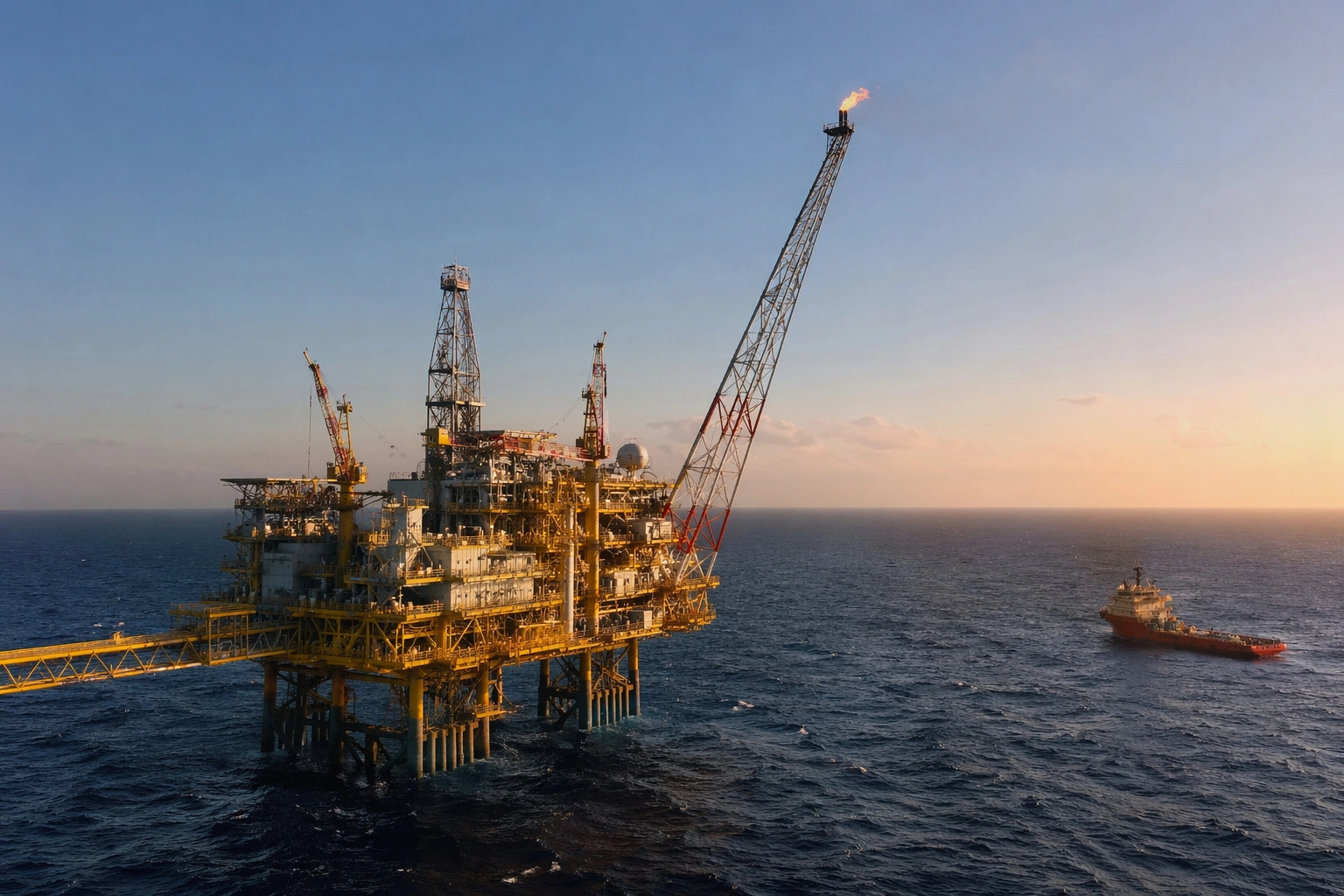
Key Facts
- WTI crude settled at US$102.00 a barrel, down 0.76% on Thursday, October 29, 2026, while global benchmark Brent closed at US$114.88, down 0.38%.
- The USO fund, which tracks WTI futures, closed at US$168.19, up 0.97% in New York trading, marking its second consecutive daily gain.
- Petrobras shares fell 0.59% to US$21.90 in New York even as the company reported record third-quarter production of 3.5 million barrels of oil equivalent per day.
- YPF, the main listed proxy for Argentina’s Vaca Muerta shale play, fell 3.12% in New York on Thursday, one of the worst performers among Latin American oil stocks.
- Ecopetrol, Colombia’s state-controlled oil company, dropped 2.26% to US$17.28 even as WTI extended its run of monthly gains to four consecutive months.
- European governments said they would release 42 million barrels of emergency oil stocks over the next three months, with France contributing 10 million barrels of diesel before winter.
Today’s Focus
Oil prices gave back a sliver of their war premium on Thursday, with WTI settling at US$102.00, down 0.76%, and Brent at US$114.88, down 0.38%. Renewed hopes for US-Iran diplomacy pulled prices lower, but attacks on Saudi infrastructure kept a floor under the market.
Yet the USO fund, which tracks WTI crude futures, still rose 0.97% to US$168.19 for its second straight up session. The divergence reflects how exchange-traded funds can lag or lead the physical benchmark.
Latin America watched from the sidelines: Petrobras fell 0.59% to US$21.90 despite record output, YPF dropped 3.12%, and Ecopetrol lost 2.26% to US$17.28. The continent’s producers are not fully participating in the crude rally.
For foreign investors, Thursday offered a lesson: the global crude story remains bullish, but local political and regulatory risk in Brazil, Mexico, Argentina and Venezuela is weighing on the value of the very companies that pump the oil.
What matters today. Global crude prices remain near their highs, but Latin America’s listed oil producers are trading as if the rally has already ended.
01 The session in one read
Crude prices ended Thursday with a rare split: the actual barrels got cheaper while the fund that tracks them got more expensive. WTI settled at US$102.00, down 0.76%, and Brent at US$114.88, down 0.38%.
Renewed hope for US-Iran talks cut the immediate risk of a supply hit, but new attacks on Saudi energy infrastructure kept sellers cautious. The USO fund, which tracks WTI futures, rose 0.97% to US$168.19 for its second consecutive daily gain.
For Latin America, the session told a different story. Petrobras fell 0.59% to US$21.90 despite record production, YPF dropped 3.12%, and Colombia’s Ecopetrol lost 2.26% to US$17.28.
The best-supported reading is that Middle East war fears are now balanced by diplomatic hopes, leaving crude prices at a high plateau rather than shooting higher. Europe’s release of 42 million barrels of emergency stocks, half of it diesel, also signals that governments are trying to cool fuel costs before winter.
For Latin American equities, however, the problem is not oil prices but company-specific and country-specific risk. Petrobras has fallen 14.52% over five sessions even as WTI gained 3.50%, a direct sign that investors are pricing in something other than crude.
The variable to watch is whether Petrobras can hold its recent lows or whether political headlines from Brasília, Mexico City and Caracas push the region’s energy stocks further away from the global crude story.
02 The board
The price board shows a global crude market still near its highs while the region’s producers lag. WTI’s USO tracker has gained 3.50% over five sessions and 12.11% over twenty, and it now sits just 0.8% below its 12-month high of US$169.53 set on October 23.
The contrast with Petrobras is stark. Its New York shares have fallen 14.52% over five sessions and 16.3% from their October 23 high of US$26.16, even though the company is pumping more oil than ever before.
Ecopetrol sits 5.4% below its 12-month high, and YPF’s 3.10% daily drop was the worst move among Latin America’s listed oil names on Thursday.
| Asset | Level | Change |
|---|---|---|
| WTI crude (USO) | US$168.19 | +0.97% |
| Petrobras | US$21.90 | -0.59% |
| Ecopetrol | US$17.28 | -2.26% |
| YPF | US$47.81 | -3.10% |
Source: RT close, 2026-10-29. Where a commodity has no spot feed, an exchange-traded tracker or leading producer is shown as a labelled proxy.
Live Market IntelligenceThe live market board
Rio Times · Live Market Intelligence
Latin America — Cross-Market Board
| Instrument | Last | Change | YoY | Prev. | High | Low | Volume |
|---|---|---|---|---|---|---|---|
| IBOV | 167,921.80 | -0.75% | +19.56% | 169,186.42 | 178,526 | 175,157 | — |
| IPSA | 10,253.96 | -2.76% | — | 10,545.26 | 10,722 | 10,633 | — |
| IPC MEX | 69,705.03 | -0.12% | +12.74% | 69,787.41 | 70,008 | 69,383 | 49,372,306 |
| MERVAL | 2,848,945 | — | +12.65% | 2,859,051 | — | — | — |
| COLCAP | 2,490.92 | +0.04% | — | — | — | — | — |
| USD/BRL | 5.34 | -1.32% | -0.84% | 5.42 | 5.42 | 5.30 | — |
| EUR/BRL | 5.95 | +7.53% | -4.87% | 5.54 | 6.04 | 5.92 | — |
| USD/MXN | 18.69 | +0.62% | +1.45% | 18.57 | 18.69 | 18.54 | — |
| USD/CLP | 983.47 | -0.57% | +5.64% | 989.13 | 991.87 | 979.07 | — |
| USD/COP | 3,149 | +3.06% | -18.02% | 3,056 | 3,173 | 3,111 | — |
| USD/PEN | 3.45 | +0.17% | +3.85% | 3.44 | 3.45 | 3.44 | — |
| USD/ARS | 1,537 | -0.28% | +3.77% | 1,541 | 1,541 | 1,537 | — |
| USD/UYU | 40.21 | +3.57% | +2.29% | 38.83 | 40.21 | 40.08 | — |
| USD/PYG | 5,803 | +3.78% | -16.54% | 5,592 | 5,803 | 5,735 | — |
| USD/BOB | 11.97 | +4.93% | +77.92% | 11.41 | 11.97 | 11.82 | — |
| USD/DOP | 60.54 | +1.83% | -4.34% | 59.45 | 61.14 | 59.85 | — |
| USD/CRC | 451.24 | +2.13% | -7.80% | 441.83 | 451.40 | 450.04 | — |
| USD/GTQ | 7.64 | +3.23% | +2.18% | 7.40 | 7.64 | 7.64 | — |
Live Company IntelligenceYPF Sociedad Anonima — the full investor dossier
Price & risk
$32.7452-wk high
$57.87
03 Why it moved
The first driver was diplomacy. Renewed hopes for a US-Iran agreement reduced the immediate fear of a disruption to flows through the Strait of Hormuz, the world’s most important oil chokepoint.
The second was counterbalancing supply fear. Attacks on Saudi energy infrastructure kept prices from falling further, while ExxonMobil and Chevron executives cancelled plans to attend next week’s Abu Dhabi oil conference over security concerns, according to news reports.
The third was government intervention. Europe said it would release 42 million barrels of emergency oil stocks over three months, with France alone contributing 10 million barrels of diesel, a clear signal that policymakers want cheaper fuel before winter. Our confidence in this ranking is HIGH for the global crude move, but the Latin American equity moves appear driven by company-specific and political factors rather than oil.
04 The trend behind it
Thursday’s modest pullback in WTI is a pause in a four-month rally, not a turn. WTI’s USO tracker is up 12.11% over twenty sessions and 46.4% over sixty, and it remains just 0.8% below its 12-month high.
Petrobras, by contrast, is moving the wrong way. It is down 16.3% from its October 23 high of US$26.16 and down for four consecutive sessions despite a record 3.5 million barrels of oil equivalent per day in the third quarter, up 11.7% from a year earlier.
This divergence between the commodity and the region’s biggest producer is the real story. Global crude is in a new phase of high prices, but Latin America’s equity investors have not bought into it.
05 What it means for Latin America
For Brazil, the good news is operational: Petrobras announced a third oil-bearing layer in the Morpho well, in the Amazon Mouth Basin off Amapá, at 2,886 metres of water depth, after Thursday’s close. The bad news is that investors did not reward the record output or the discovery.
For Argentina, YPF’s 3.10% drop shows that Vaca Muerta’s listed proxy is being sold even as crude prices hover near highs. For Mexico and Venezuela, no fresh production or company figures were available on Thursday.
For foreign investors, the lesson is clear: oil prices are high, but owning Latin American oil stocks requires carrying political, regulatory and currency risk that global crude funds like USO do not have.
06 The names to watch
Petrobras is the name to watch because it is the region’s largest producer and its shares are now moving against the oil price. The record 3.5 million barrels per day output and the Morpho well discovery give a fundamental floor, but political sensitivity around fuel pricing in Brazil remains the wild card.
Carlos Slim, Mexico’s richest man, has sold more than US$1.15 billion of US oil stocks this year as crude rallied, according to reports. The move shows that even the smartest Latin American money is taking profits into strength.
Sinopec, China’s top refiner, reported a 64% jump in third-quarter profit on higher oil prices, a reminder that Asian demand remains the silent engine of this rally.
07 What would end it
The first thing that would end the crude rally is a genuine US-Iran deal that removes the war premium. Watch the November 2-5 Abu Dhabi oil conference, where security concerns have already caused two top US executives to cancel.
The second is coordinated government action. Europe’s release of 42 million barrels shows the political pressure building; a larger International Energy Agency release or a US strategic reserve drawdown would hit prices faster than diplomatic headlines.
On the chart, WTI’s USO tracker has support at its recent lows and resistance at the 12-month high of US$169.53. A close above that high would open a new leg higher; a break below the five-day moving average would signal the first real crack in the rally.
The honest answer is that this rally does not have to stop soon. But it will not look like this forever: either diplomacy ends the fear, or the fear ends the diplomacy.
08 What to watch
- US-Iran diplomacy: A genuine deal would remove the war premium from crude prices and hit global and Latin American oil stocks.
- Abu Dhabi oil conference, November 2-5: Already clouded by security cancellations from ExxonMobil and Chevron executives; any attack or escalation there would spike prices.
- Strategic reserve releases: Europe’s 42 million barrel release is the first sign of coordinated government action; watch for the US to follow.
- Petrobras political headlines: The shares are down 14.52% over five sessions despite record output; any fuel-pricing intervention in Brasília would deepen the sell-off.
Frequently Asked Questions
Why did oil fall on Thursday if the Middle East is still at war?
Renewed hopes for US-Iran diplomacy reduced the immediate fear of supply disruption, but attacks on Saudi infrastructure kept the decline small.
Why is the USO fund up when WTI fell?
The USO fund tracks WTI futures and can lag the spot benchmark; it rose 0.97% to US$168.19 while the spot WTI price settled at US$102.00, down 0.76%.
Why is Petrobras falling when oil is near its highs?
Petrobras shares are down 14.52% over five sessions and 16.3% from their October 23 high, showing that investors are pricing in political and regulatory risk rather than the oil rally.
What should a foreign investor do?
Treat Latin American oil stocks as a separate bet from crude; global crude funds capture the rally without company-specific, currency and political risk.
Market data: RT
This article was produced by The Rio Times’ automated newsroom system. How we use AI · Report an error · Editorial responsibility: Matthias Camenzind, Editor-in-Chief
LatAm Markets: Live Signals → — real-time movers, turnover leaders and FX across Latin America.