PDVSA diluent imports from US fuel Venezuela’s heavy crude exports
Venezuela · Energy
Key Facts
- Heavy crude: Venezuela’s Orinoco Belt produces extra-heavy crude at 7-10 degrees API, too thick for pipelines or tankers without thinning.
- Blend grade: Once diluted, the mix becomes Merey 16 (about 16 degrees API), the export grade international buyers receive.
- Import volume: Reuters reported Venezuela imported about 81,000 barrels per day of heavy naphtha in July 2026 for dilution purposes.
- Legal basis: US Treasury OFAC General License 47 (GL 47), issued February 3, 2026, authorizes exports of US-origin diluents to Venezuela for blending and transport—not broad investment.
- Legal nuance: Compliance lawyers note GL 47 covers light hydrocarbon products, leaving it legally ambiguous whether a crude oil would qualify as an authorized diluent.
- Chevron’s role: Chevron produced about 293,000 bpd from its Venezuelan joint ventures in July under separate OFAC licenses—a distinct stream.
- Trade surge: US took about 786,000 bpd of Venezuelan crude in July 2026, a seven-year high, with bilateral trade up 113% to roughly $9.5 billion in H1 2026.
A closer look at how US-origin diluents are keeping Venezuela’s heavy crude flowing to global buyers under a targeted sanctions license.
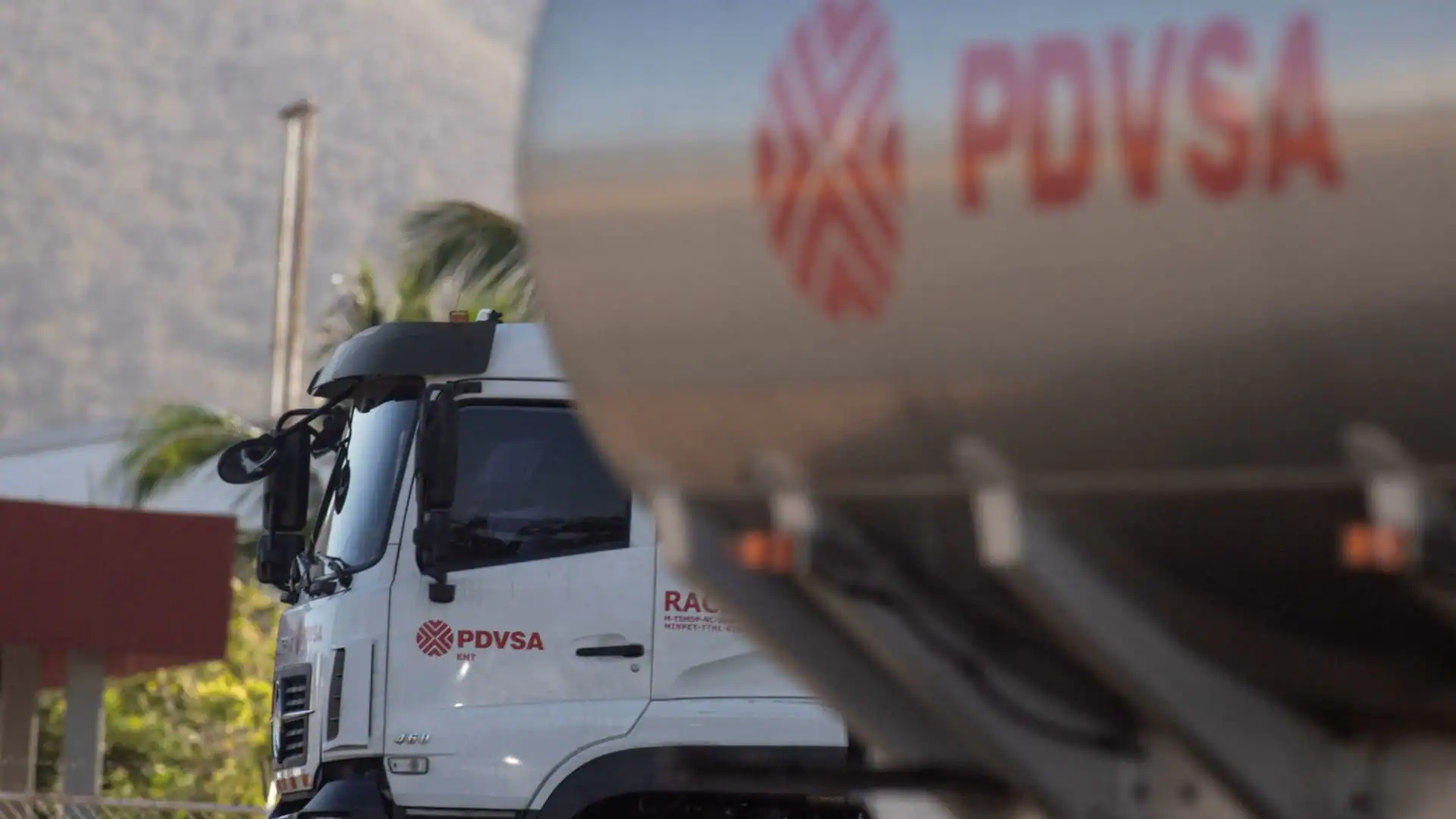
If you follow oil markets, you already know Venezuela’s crude is famously thick, but did you know its export lifeline depends on a steady flow of US diluents? PDVSA diluent imports are now a central piece of how Caracas keeps its heavy crude moving.
Why Venezuela needs diluents at all
The Orinoco Belt holds some of the world’s largest reserves, but the crude there is extra-heavy, with gravity around 7-10 degrees API. That’s a technical way of saying it’s nearly solid at room temperature—too dense to flow through a pipeline or into a tanker.
To move it, PDVSA must mix it with a lighter hydrocarbon called a diluent, often a light crude or naphtha. Once blended, the product becomes Merey 16, the export grade you see in shipping data; it’s this blend that foreign refiners actually buy.
Without a reliable diluent supply, production would literally grind to a halt. That’s why the US decision to allow these specific imports matters so much, not just for Caracas but for anyone trading or refining Venezuelan barrels.
The legal path: OFAC GL 47 and its limits
This trade happens under US Treasury OFAC General License 47, issued February 3, 2026. GL 47 specifically authorizes the export of US-origin diluents—light hydrocarbon products—to Venezuela, solely to support heavy-crude blending and transport; it is not an open door for investment or broader production deals.
Here’s the catch compliance lawyers flag: the license talks about diluents as products, not raw crude. So whether a crude oil like WTI would even qualify as an authorized diluent remains legally ambiguous—a reading shared by several law firms tracking the sanctions regime.
That distinction is more than academic; it means every cargo needs careful documentation to prove it fits the license’s narrow language. Traders and refiners are watching closely because any misstep could trigger enforcement actions.
PDVSA diluent imports in practice: what the data shows
So how big is this flow? Reuters reported that Venezuela imported roughly 81,000 barrels per day of heavy naphtha in July 2026 for dilution, which highlights the scale of the operation.
These imports are separate from the crude production streams Chevron manages under its own licenses.
To put that in perspective, Chevron’s Venezuelan joint ventures produced about 293,000 bpd in July under distinct OFAC authorizations—a different, independently licensed flow. Meanwhile, total US imports of Venezuelan crude hit about 786,000 bpd in July, a seven-year high, according to trade data.
That surge aligns with a broader reopening: US-Venezuela trade jumped roughly 113% to about $9.5 billion in the first half of 2026. It’s a clear sign that sanctions easing is translating into real barrels, but the complexity of licenses means each supply chain link must be vetted.
Who’s buying: refiners return and traders adjust
The market structure is shifting under your feet as PDVSA returns to a pre-2019 model of direct sales to refiners. For example, Phillips 66 resumed purchases in May and took three Merey 16 cargoes in July, while Reliance loaded a 2-million-barrel cargo in April, and Repsol loaded directly as well.
This change squeezes trading firms that had become the middlemen during the sanctions era. Trading houses Vitol, Trafigura, and Novum Energy shipped about 604,000 bpd in July, down from 775,000 in June—a clear sign that direct deals are eating into their volumes.
For you, this means pricing and supply contracts are becoming more opaque, as bilateral deals often carry different terms than spot trades. Refiners with US connections may have an edge, given the legal complexities of securing sanctioned barrels.
Why you should care about this trade
For Latin American investors and expats, PDVSA diluent imports are a bellwether for how far US-Venezuela rapprochement can go under the current policy. Every cargo is a test of whether sanctions can be managed without fully lifting the 2019 embargo, which was only eased, not removed, starting early 2026.
This matters because it affects regional oil supply, freight rates, and refinery economics across the Americas. If you hold assets in energy logistics, refining, or even port infrastructure, the flow of diluents shifts both product availability and pricing signals.
Moreover, the legal ambiguity over what counts as a permitted diluent creates compliance risks for anyone touching this trade. Staying informed on license interpretations is essential if you operate in this space, since surprises can hit balance sheets fast.
What’s next: watch for license updates and cargo data
The key variable is how OFAC and PDVSA adapt as volumes grow. Compliance lawyers at firms like Faegre Drinker and Seyfarth are already parsing GL 47’s language, and any amendments could either broaden or tighten the definition of diluents.
You should also track monthly export numbers, as any dip in US diluent imports would signal logistical or legal trouble. One caveat: there is unconfirmed trade chatter that PDVSA bought cargoes of US WTI crude, but no major wire—Reuters, Bloomberg, Argus, or S&P—has corroborated it, and at least one such light-crude cargo was reportedly ex-China rather than US WTI.
For now, the trade is working, but it depends on a fragile legal scaffold. As one compliance source put it, the system functions until a single cargo gets challenged—then everything pauses.
Frequently Asked Questions
What exactly is a diluent in oil production?
A diluent is a lighter hydrocarbon, like naphtha or light crude, that you mix with extra-heavy crude to reduce its viscosity. This thinning allows the heavy oil to flow through pipelines and into tankers for export.
Is it legal for the US to sell diluents to Venezuela?
Yes, under OFAC General License 47 issued in February 2026, US exports of diluent products to Venezuela are authorized for blending and transport. However, this license is limited in scope and does not cover broader investment or production activities.
What is Merey 16 and why does it matter?
Merey 16 is the export blend grade created when extra-heavy crude is mixed with a diluent, resulting in an API gravity around 16 degrees. It’s what international buyers actually purchase and receive from Venezuela.
How much diluent is Venezuela importing?
Reuters reported Venezuela imported about 81,000 barrels per day of heavy naphtha in July 2026 for dilution. This volume is a key input to sustaining the country’s heavier crude exports, which reached a seven-year high in the same month.
Connected Coverage
Batista Brothers Expand Venezuela Oil Bet With PDVSA Stake
Venezuela’s New Oil Rulebook Runs 29 Pages and Never Says PDVSA
Sources: Venezuela’s Oil Exports Fell Slightly in July as Cargoes to US Rose — Reuters; Refiners Elbow Traders to Take Larger Slice of Venezuela’s Oil — Reuters; Venezuela’s Commercial Reopening: New Oil Regulations, Expanded Sanctions Authorizations, and Heightened Compliance Expectations — Seyfarth; Update: Additional Changes to the Venezuela Sanctions Program Impacting the Energy, Minerals, Financial Services, and Aviation Sectors — Faegre Drinker; US-Venezuela Trade Jumps 113% in H1 2026 — The Rio Times
This article was produced by The Rio Times’ automated newsroom system. How we use AI · Report an error
Read More from The Rio Times