Peru Puts 893 Districts on El Nino Emergency Footing
Peru · PRACTICAL
Key Facts
- —The decree Supreme Decree 124-2026-PCM declares a 60-day emergency, published on 1 September 2026.
- —How wide 893 districts in 154 provinces across 22 regions, including Callao.
- —No new money The decree is paid for from existing budgets, without new Treasury funds.
- —Wider than July The July declaration covered 796 districts and expired at the end of August.
- —The forecast ENFEN puts the chance of an extraordinary coastal El Niño at 62% or more to January 2027.
- —Earlier this year Rains killed 92 people and displaced more than 23,000 by mid-March, on UN figures.
Almost 900 districts are on emergency footing for 60 days. No new money comes with it, and the rain everyone is bracing for arrives next year.
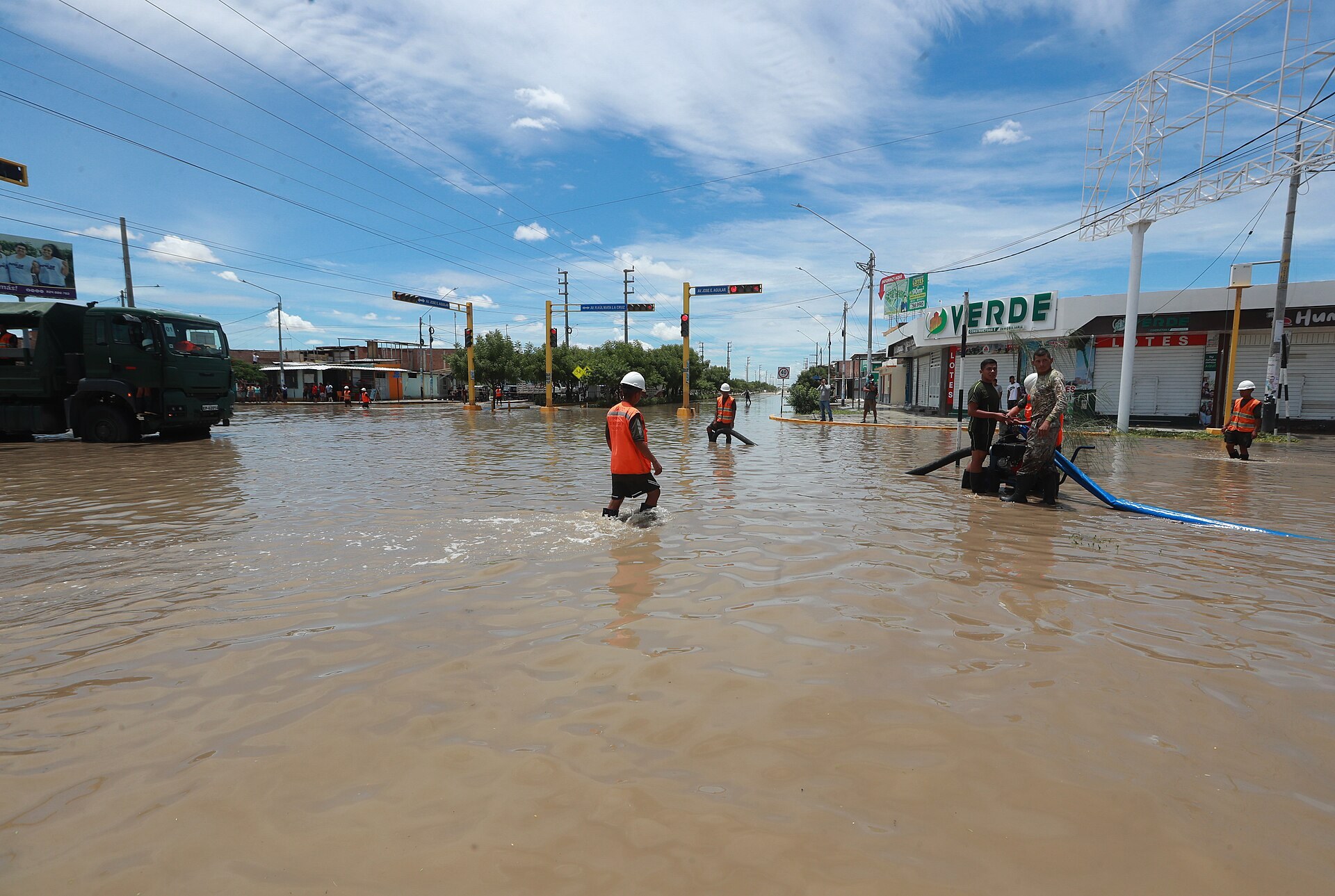
Peru has put 893 districts on emergency footing for sixty days, ahead of the rains expected with a coastal El Niño. The decree was published on 1 September 2026.
It comes with no new money. And the weather it prepares for is forecast to arrive in early 2027, not this month.
What the Decree Covers
Supreme Decree 124-2026-PCM declares a sixty-day state of emergency. It covers 893 districts in 154 provinces across 22 regions, together with the Constitutional Province of Callao.
The regions are Amazonas, Áncash, Apurímac, Arequipa, Ayacucho, Cajamarca, Huancavelica, Huánuco, Ica, Junín, La Libertad and Lambayeque. The list continues with Lima, Loreto, Madre de Dios, Moquegua, Pasco, Piura, San Martín, Tacna, Tumbes and Ucayali.
Lima has the most districts at 86, followed by Arequipa with 81 and Áncash with 75. Piura and Cajamarca, the historic flood corridor, have 65 and 68.
Two mainland regions are missing, and their absence is deliberate. Cusco and Puno are forecast to get below-normal rain and were covered instead by a separate water-shortage emergency in August.
This Is Not an Extension
A previous declaration in July covered 796 districts under Supreme Decree 097-2026-PCM. Its sixty days ran out at the end of August.
The new decree does not extend it and never mentions it. It is a fresh declaration covering 97 more districts.
Nineteen Districts of Lima
Metropolitan Lima has nineteen districts on the list. They are Ate, Carabayllo, Chaclacayo, Cieneguilla, Comas, El Agustino and Independencia.
The list continues with Lima, Los Olivos, Lurigancho, Lurín, Pachacámac and Pucusana. It ends with Punta Hermosa, Punta Negra, Rímac, San Bartolo, San Juan de Lurigancho and San Martín de Porres.
The pattern is the northern cone, the eastern river valleys and the southern beach districts. Central and coastal Lima is not covered.
Miraflores, San Isidro, Barranco, Surco, San Borja and Jesús María are all outside it. If you live there, this decree does not apply to your district.
A Different Emergency Also Covers Lima
Four days earlier a separate decree declared a state of emergency in Metropolitan Lima and Callao over crime and extortion. That one does suspend constitutional rights and deploys the armed forces.
The two are unrelated and easy to confuse. The El Niño decree suspends no rights, imposes no curfew and restricts no movement.
What It Authorises, and What It Does Not
The decree instructs regional and local governments to carry out immediate and necessary exception measures. Ten ministries take part, with the national civil defence institute coordinating.
Every action must have a direct causal link to the El Niño threat. That test is what auditors later examine.
The practical effect is procedural rather than financial. A declared emergency is what permits direct contracting without a full tender, so work can start faster.
That power comes from general procurement law, not from this decree. The decree is the gateway, not the grant.
The Money Question
Article 3 is explicit. The measures are financed from the existing budgets of the bodies involved, without demanding additional resources from the Public Treasury.
The same wording appeared in the July decree. Nearly 900 districts have new obligations and no new funding to meet them.
The Housing Budget Is Shrinking
Peru’s main housing subsidy programme spent 1.53 billion soles (US$455 million) in 2025. The budget approved for 2026 is 1.11 billion soles (US$329 million).
That is a cut of about 28%. The line funds the family housing bonds that put low-income households into formal homes.
The timing is awkward. The state is expanding disaster preparation while cutting the programme that builds the housing least likely to wash away.
What the Forecasters Actually Say
ENFEN, the multi-agency panel that monitors El Niño, issued its latest communiqué on 28 August 2026. It maintains a coastal El Niño alert.
It puts the probability of extraordinary magnitude at 62% or higher between September 2026 and January 2027. That is a floor, not an estimate.
Conditions are expected to run between strong and extraordinary in February and March 2027. That is when the damage usually happens.
For the next three months ENFEN expects unusually high coastal temperatures, with a high chance of new records. Rivers on the Pacific side are forecast to stay within normal flows.
What Happened Earlier This Year
Rains linked to the coastal El Niño had killed at least 92 people by 17 March 2026, on United Nations figures. More than 23,000 people were displaced.
The emergency footprint grew quickly. In mid-March it covered 283 districts across 20 regions, against 893 today.
The Last Comparable Event
The 2023 coastal El Niño gives the best benchmark. At its peak, official figures counted 171,041 homes affected, of which 24,503 were destroyed or left uninhabitable.
It damaged 2,414 kilometres of road and 822 bridges. Piura was worst hit with 141,570 people affected, then Lambayeque with 80,984 and La Libertad with 41,888.
If You Are Travelling
Places inside the declaration include Máncora, Piura, Tumbes, Chiclayo, Trujillo and Huanchaco, Huaraz and the Callejón de Huaylas. Also listed are Ica, Nasca, Arequipa city, Puerto Maldonado, Yurimaguas and Pucallpa.
Outside it are Cusco and Machu Picchu, Puno and Lake Titicaca, Chachapoyas, Iquitos, Tarapoto and Paracas. Those are the bulk of Peru’s tourist circuit.
Two corridors have the worst history. One is the Panamericana Norte through Piura, Lambayeque and La Libertad; the other is the Carretera Central east of Lima.
Both have washed out repeatedly in El Niño years. Plan overland travel in the north with that in mind.
For September itself the declaration is a risk designation, not a report of damage. The decree’s own trigger is imminent danger rather than an event that has happened.
If You Own Property
The declaration changes what state bodies may do. It does not by itself alter any private contract, insurance policy or property right.
Anyone with property in the covered districts should check their own cover for flood and landslide exclusions directly with their insurer. That is a question for a policy document, not a decree.
More: Peru news in English, every day from The Rio Times.
Frequently Asked Questions
What does the state of emergency actually do?
It lets national, regional and local bodies act and buy faster, under civil defence coordination. It suspends no constitutional rights and adds no money.
Which parts of Peru are covered?
893 districts across 22 regions plus Callao. Cusco and Puno are the two mainland regions left out, because they are forecast to get less rain rather than more.
Is Lima affected?
Nineteen districts of Metropolitan Lima are listed, mostly in the northern cone, the eastern river valleys and the southern beaches. Central districts such as Miraflores and San Isidro are not.
When is the risk highest?
Not now. ENFEN expects weak to moderate rain episodes on the north coast from November, with the strongest conditions in February and March 2027.
Should travellers change plans?
Not for September. The declaration is precautionary and Cusco, Machu Picchu, Puno, Iquitos and Paracas are outside it.
Connected Coverage
Sources: Decreto Supremo Nº 124-2026-PCM, El Peruano, 1 September 2026; Decreto Supremo Nº 097-2026-PCM of 2 July 2026; ENFEN Comunicado Oficial Nº 15-2026 of 28 August 2026; Peruvian Ministry of Economy budget execution data for programme 0146; UN OCHA via the EU ECHO daily flash of 24 March 2026; OCHA regional figures for the 2023 coastal El Niño. Converted at 3.367 soles to the dollar.
Related: Moving to Peru: Visa to First 90 Days
This article was produced by The Rio Times’ automated newsroom system. How we use AI · Report an error
Read More from The Rio Times