Rubio Reaches Lima on a Tour of Governments That Are All New
PERU · DIPLOMACY
Key Facts
- —The visit United States Secretary of State Marco Rubio arrived in Lima on 10 September.
- —The host President Keiko Fujimori, sworn in on 28 July 2026.
- —The tour Lima follows stops in Colombia and Ecuador.
- —The context Peru joined the Escudo de las Américas security coalition earlier this month.
- —The year Peru had Dina Boluarte removed in 2025, José Jerí censured in February, José María Balcázar as interim president, Fujimori elected on 7 June.
- —The agenda Security cooperation, migration and the region’s relationship with China.
Rubio’s South American tour reaches its third capital in a week. The Peruvian president he is meeting has been in office for six weeks.
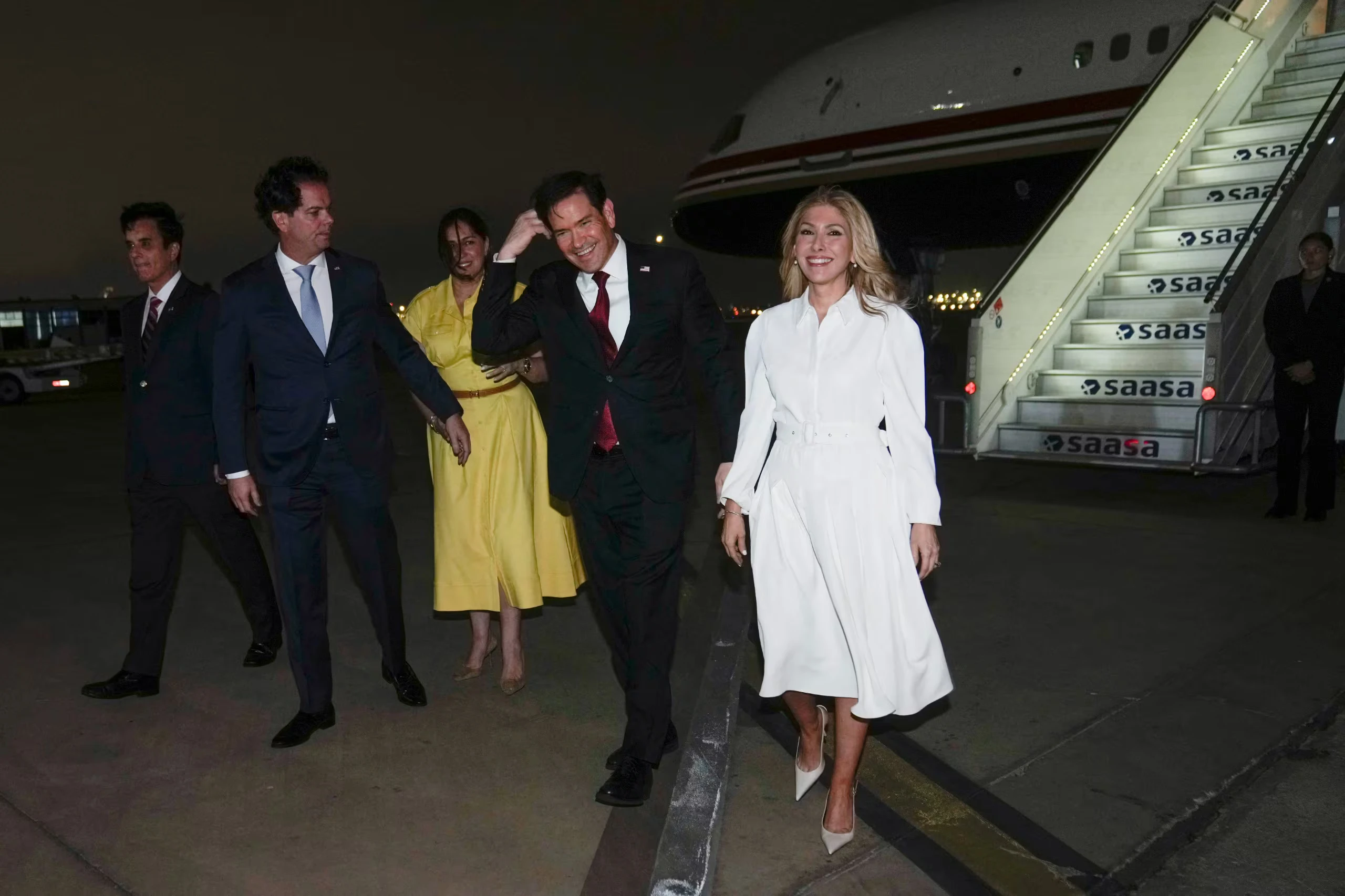
United States Secretary of State Marco Rubio arrived in Lima on Thursday to meet President Keiko Fujimori, the third stop on a South American tour after Colombia and Ecuador.
Who He Is Meeting
Keiko Fujimori was sworn in as president of Peru on 28 July 2026, having won the presidential runoff on 7 June with around 50.1 percent of the vote.
The path to that election was turbulent even by recent Peruvian standards. Dina Boluarte was removed in 2025. Her successor José Jerí was censured by Congress on 17 February 2026. José María Balcázar governed as interim president from 18 February until the handover.
Fujimori has been in office for six weeks.
The Pattern of the Tour
Rubio has now visited three South American governments, and every one of them is recent. Colombia’s Abelardo De la Espriella took office on 7 August. Peru’s president took office on 28 July.
That is not coincidence so much as opportunity. A wave of new administrations across the region has produced a set of governments whose foreign policy positions are still being set, and Washington is arriving early.
What Is on the Table
Security cooperation is the visible agenda. Peru joined the Escudo de las Américas coalition earlier this month, a United States-led security arrangement, and that decision is the most concrete alignment on offer.
Migration and counter-narcotics follow from it. So does the less-stated question of Chinese infrastructure in Peru, where the port at Chancay has been the central point of friction between Washington and Lima for two years.
Nothing in the public framing of the visit suggests that friction has been resolved. Chancay is operating and Chinese-controlled, and no American visit changes that.
Why Peru Is a Difficult Stop
Peru is a United States security partner and a Chinese commercial one, and the two relationships have been pulling in opposite directions for several years.
The port at Chancay, north of Lima, is the sharpest example. It is a deepwater facility built and majority-controlled by COSCO Shipping, designed to move South American commodities to Asia without transhipment, and Washington has objected to it publicly since before it opened.
The objection has never had much purchase, because the port is a straightforward commercial benefit to Peru and because no alternative financing was offered.
Rubio arrives into that unresolved position rather than one he can change in a day of meetings.
What Escudo de las Américas Actually Is
The coalition is a United States-led regional security framework that several Latin American governments have joined through 2026. Peru signed on earlier this month.
Its stated remit covers counter-narcotics, transnational organised crime and maritime interdiction, which are the areas where Peruvian and American interests overlap most cleanly.
Peru’s domestic security situation gives the government its own reasons to join. Extortion and organised crime have been the dominant political issue in Lima for two years, and successive governments have fallen partly over their failure to address it.
A new president six weeks into office has an obvious incentive to accept external assistance on the problem that removed her predecessors.
The Regional Pattern
Rubio’s tour has taken in Colombia, Ecuador and Peru, and the governments in all three are recent. Colombia’s Abelardo De la Espriella took office on 7 August. Peru’s president was sworn in on 28 July.
That clustering reflects a broader turn across the region, in which several electorates have replaced incumbents with governments running on security and on closer alignment with Washington.
For the United States it is an opening that did not exist two years ago. For the governments concerned it is leverage, because a Washington that wants alignment is a Washington that can be asked for things.
What either side extracts from the moment will be visible in trade and security agreements over the coming months rather than in the communiqués issued this week.
More: Peru news in English, every day from The Rio Times.
Frequently Asked Questions
When did Rubio arrive in Lima?
10 September 2026, after stops in Colombia and Ecuador.
Who is Peru’s president?
Keiko Fujimori, sworn in on 28 July 2026 after winning the 7 June runoff with around 50.1 percent.
What is on the agenda?
Security cooperation, migration and counter-narcotics, with Chinese infrastructure in Peru as an unstated backdrop.
What is Escudo de las Américas?
A United States-led regional security coalition that Peru joined earlier in September 2026.
Why does the timing matter?
Every government Rubio has visited on this tour took office within the past two months.
Sources: Infobae, Gestión, La República, TV Peru.
This article was drafted with automated assistance and reviewed before publication. How we use AI · Report an error
Read More from The Rio Times