Santa Marta Armed Strike Disrupts Road to Colombia’s Tayrona Park
Colombia · Security
Key Facts
- What happened — Colombia’s National Police killed alias Cholo, second in command of the ACSN armed group, near Santa Marta on Monday 21 September.
- The response — a communiqué attributed to the group declared a 48-hour armed strike across Santa Marta, the Troncal del Caribe highway and the Zona Bananera.
- On the ground — two city buses were burned on the highway on Monday, and blockades were reported at 11 de Noviembre, Calabazo and Marquetalia.
- Travel impact — the US Embassy in Bogotá issued a security alert naming Route 90, the road every visitor uses to reach Tayrona and Palomino.
- Local measures — for Tuesday, the city suspended in-person classes in five risk areas and banned motorcycle pillion passengers district-wide. There is no curfew.
- Why it matters — a Bogotá think tank found in July that about 95 percent of tourism businesses from Santa Marta to Palomino pay the ACSN.
A single police operation in the Sierra Nevada has put Colombia’s best-known Caribbean tourist corridor under a 48-hour shutdown order from an armed group.
Visitors to Santa Marta and Tayrona National Park this week need to plan around the Santa Marta armed strike. It was declared on Monday, hours after police killed the second in command of the group that extorts businesses on this coast. It targets the one road that runs east out of the city. That road is how visitors reach the beaches.
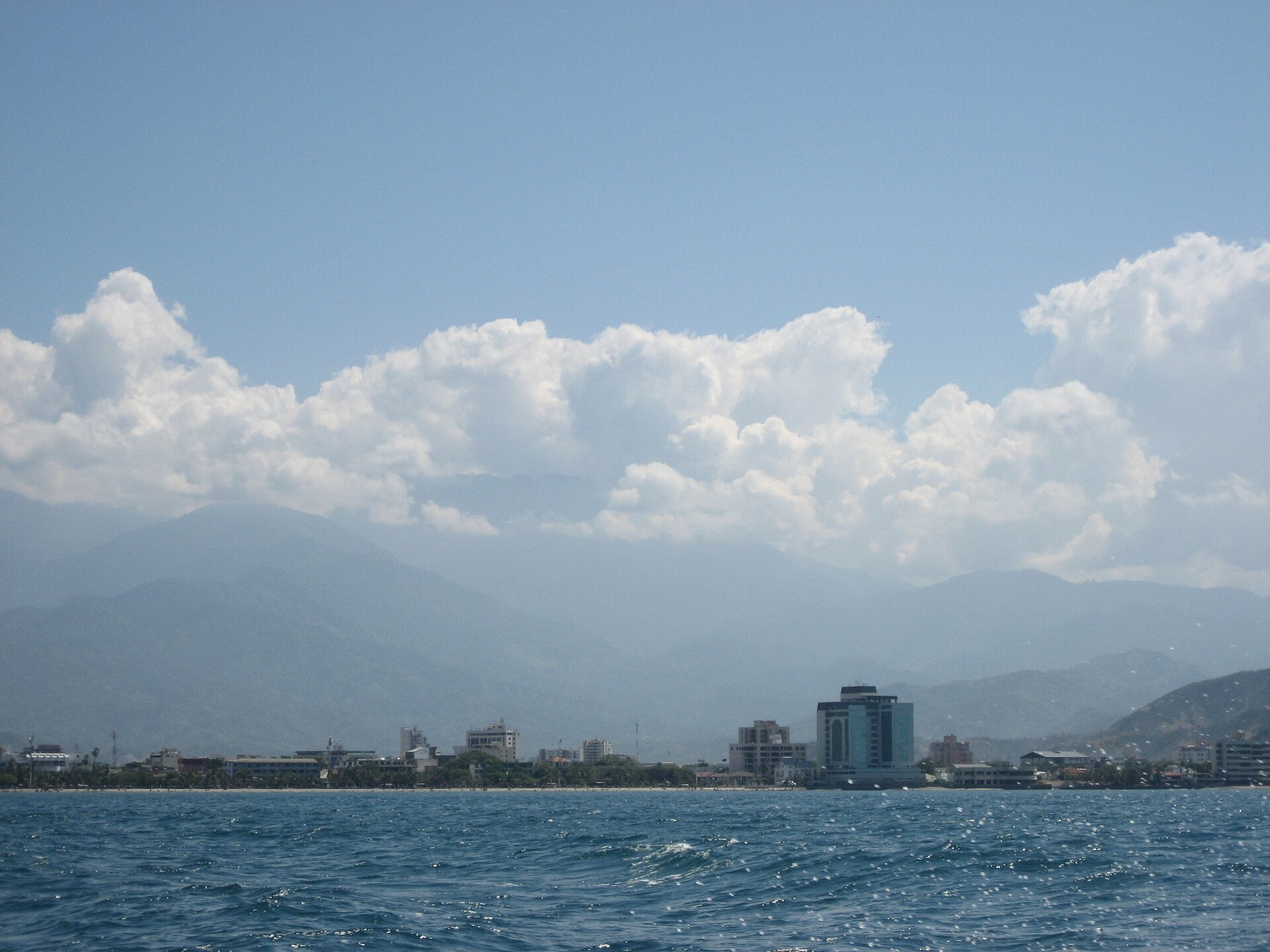
What the Santa Marta armed strike actually restricts
An armed strike, or paro armado, is not a government measure. It is an order from an illegal group telling people to stay home and shut their businesses. It is backed by the threat of violence. This one was declared for 48 hours in a communiqué attributed to the group’s leadership. The group is the Autodefensas Conquistadoras de la Sierra Nevada (ACSN), known locally as Los Pachenca.
The area named is a corridor rather than a list of towns. It covers Santa Marta itself, the Troncal del Caribe coastal highway and the Zona Bananera, a banana-growing area to the south. Tuesday is the second day of the order.
The damage so far is narrow but real. Two city buses belonging to Consorcio Ziruma were burned on Monday. It happened on the Troncal del Caribe near the bridge at Barrio 11 de Noviembre.
Armed men ordered the passengers off first, and no injuries were reported. Blockades were reported at 11 de Noviembre, Calabazo and Marquetalia, and residents near Guachaca reported gunfire and military helicopters.
The operation that set it off
The Antinarcotics Directorate of the National Police (DIRAN) ran the operation on Monday afternoon. The Attorney General’s Office and the Colombian Air Force took part. Local media placed the fighting in the Quebrada del Sol area of Guachaca, in the foothills above the city.
Seven people were killed and three captured. Ten rifles were seized, including a Barrett .50 calibre, along with two grenade launchers, two pistols and eight 40mm grenades.
Among the dead was José Luis Pérez Villanueva, alias Cholo. President Abelardo de la Espriella described him as the group’s second leader and the man who ran its finances.
He was reported to have stepped up after police killed another senior commander, alias Bendito Menor, on 4 September. According to the Barranquilla daily El Heraldo, the president also confirmed that a son of the group’s top leader died on Monday.
De la Espriella spoke at a cabinet meeting in Bogotá on Monday, according to the news agency EFE. “Vamos por todos esos bandidos y el que no se someta va a terminar como el Cholo y los otros seis bandidos dados de baja: en una bolsa y muertos,” he said.
That is: “We are going after all those bandits, and whoever does not submit will end up like Cholo and the other six bandits killed: in a bag and dead.” He flew to Santa Marta that night to chair an extraordinary security council.
By early Tuesday, police and army units were deployed at key points across Magdalena to prevent new blockades, El Heraldo reported.
Why a tourist city is worth fighting over
The ACSN traces back to the paramilitary blocs that demobilised in 2006 and never really went away. The Bogotá newspaper The Bogotá newspaper El Espectador puts its strength at more than 700 members in over 14 municipalities across three Caribbean departments.
The Fundación Ideas para la Paz, a Bogotá think tank, counted 594 in a July report. Other security estimates run from 800 to 1,000.
Cocaine moving through Caribbean ports is part of the business. The other part is the city itself.
In March, El Espectador reported that the group controls about 95 percent of the extortion business in Santa Marta. Tourism is hit hardest. The think tank found that about 95 percent of tourism businesses between Santa Marta and Palomino pay.
Businesses were charged registration fees of roughly 300,000 to 1 million Colombian pesos (COP), about US$95 to US$315. That uses a rate of about 3,170 pesos to the US dollar, from ExchangeRate-API on 22 September 2026.
Mototaxi drivers paid COP 100,000 (about US$32) to sign up, then COP 20,000 (about US$6) every week.
That is the reason this fight is being waged on a highway used by backpackers. The Clan del Golfo, Colombia’s largest drug-trafficking group, has been pushing into the same territory. The revenue at stake is generated by visitors.
What it means for travellers and residents
The US Embassy in Bogotá issued a security alert on Monday naming the Troncal del Caribe, Route 90. It covers the stretch from Barrio 11 de Noviembre through Guachaca toward the Magdalena–La Guajira boundary. It notes that this corridor is how people reach Tayrona National Park and the coastal towns east of the city. It advises avoiding the affected stretch for now.
The road is disrupted rather than formally closed. Similar bus burnings followed operations in this area in June. Tayrona also closes on a fixed schedule agreed with the Indigenous peoples of the Sierra Nevada. The next closure runs from 19 October to 2 November.
In the city, Mayor Carlos Alberto Pinedo Cuello signed Decree 431 on Monday. In-person classes are suspended on Tuesday in Guachaca, Calabazo, Bonda, Minca and 11 de Noviembre. Any other school flagged by risk assessment also closes. Minca is a place a lot of visitors stay. Carrying a passenger on a motorcycle is banned across the district for the same 24 hours. No curfew has been imposed.
The practical steps are simple. Stay in the city, postpone the trip east by a day or two, and do not try to drive through a blockade.
The wider bet the government is making
President Abelardo de la Espriella took office on 7 August. He has spent his first weeks dismantling the negotiated approach of his predecessor, Gustavo Petro. Arrest warrants that had been suspended for peace talks are active again. The government has announced a submission law, setting terms for armed groups to surrender. It offers reduced sentences, but no political recognition and no release for those already in prison.
The group’s top leader, Fredy Castillo Carrillo, alias Pinocho, told Semana magazine this month he was willing to turn himself in. On 12 September the president gave his defence and justice ministers a week to secure that, and ruled out negotiating. The deadline passed. After Monday’s operation the president posted three words at him: “Sigues tú, ‘Pinocho’” (“You’re next, ‘Pinocho’”).
For anyone living or investing on this coast, the key question is whether an armed strike still works. If the corridor reopens quickly, the group has lost the ability to shut a city down. Its extortion income rests on that ability.
Frequently Asked Questions
Is it safe to travel to Santa Marta right now?
The city itself has not been placed under curfew. The problem is the highway east toward Tayrona and Palomino, which the US Embassy has advised avoiding. Plan around that corridor rather than cancelling outright.
How long is the Santa Marta armed strike meant to last?
The communiqué declared 48 hours from Monday 21 September. Whether it ends on schedule depends on how quickly the blockades are cleared. Similar bus burnings followed operations in the same area in June.
Can I still get to Tayrona National Park?
The access highway is the obstacle, and the embassy alert specifically mentions approaches to the park by that route. The park also has scheduled closure periods including 19 October to 2 November, so confirm with Parques Nacionales before travelling.
Who are the ACSN and why do they matter to visitors?
They are a successor to the paramilitary groups that demobilised in 2006, operating across the Sierra Nevada in three Caribbean departments. Their income comes partly from cocaine routes and substantially from extortion of hotels, restaurants and transport in Santa Marta itself.
Connected Coverage
- Colombia Puts Three Clan del Golfo Bosses Back on the Wanted List
- De la Espriella Dismantles What Is Left of Paz Total
- Colombia Tourism Revenue Now Tops Coffee and Coal Exports
- Colombia President De La Espriella Launches Iron Fist Crackdown
This article was produced by The Rio Times’ automated newsroom system. How we use AI · Report an error
Read More from The Rio Times
Rotate for Best Experience
This report is optimized for landscape viewing. Rotate your phone for the full experience.
You've reached your free article limit
Subscribe to The Rio Times for unlimited access to expert analysis, market intelligence, and daily briefings on Latin America.