South Africa’s Unemployment Rate Climbs to 33.6% in the Second Quarter
South Africa · ECONOMY
Key Facts
- Official unemployment rate South Africa’s official unemployment rate rose to 33.6 percent in the second quarter of 2026, up from 32.7 percent in the first quarter.
- Unemployed people The number of unemployed people increased by 345,000 quarter-on-quarter to 8.481 million, according to Statistics South Africa.
- Employed people The number of employed people fell by 16,000 to 16.739 million in the same period.
- Expanded unemployment rate The expanded unemployment rate, which includes discouraged work seekers, reached 43.8 percent, up from 43.7 percent.
- Four-year high The latest print takes joblessness back to a four-year high and came in above economists’ expectations.
- Regional divergence The Western Cape remains below 20 percent unemployment while the Eastern Cape is near 50 percent.
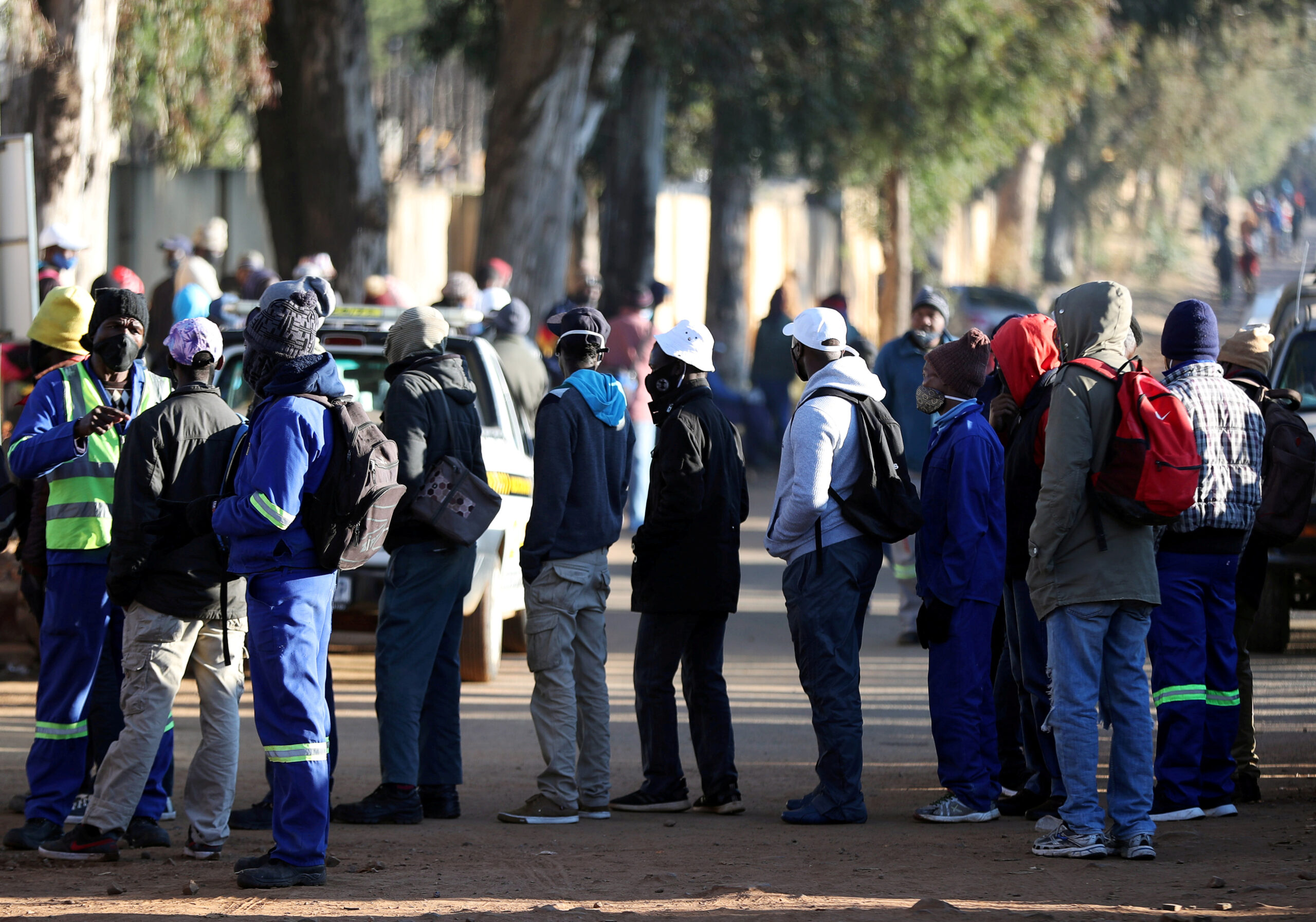
South Africa unemployment has deepened again, with the official jobless rate climbing to 33.6 percent in the second quarter of 2026 as global shocks hit a structurally weak economy and the political cost keeps rising.
The numbers behind the South Africa unemployment rise
Statistics South Africa’s Quarterly Labour Force Survey shows the official unemployment rate rose to 33.6 percent in the second quarter of 2026, up from 32.7 percent in the first quarter. The number of unemployed people increased by 345,000 quarter-on-quarter to 8.481 million, while employment fell by 16,000 to 16.739 million.
The expanded unemployment rate, which includes people who have given up looking for work, reached 43.8 percent, up slightly from 43.7 percent. Reuters reports that unemployment has now been above 30 percent for more than five years, and Bloomberg notes the latest print came in above economists’ expectations.
Job losses were broad-based, with community and social services, mining, agriculture, and manufacturing all shedding positions. Trade, construction, and finance posted gains, but not enough to offset the deterioration elsewhere.
A structural crisis, not a cyclical blip
The World Bank says South Africa’s growth slowed to 0.6 percent in 2023, with unemployment averaging 32.4 percent that year and youth unemployment at 44.9 percent. The bank projected unemployment would remain around 32 percent in 2024 to 2026 without stronger growth and reform.
The Organisation for Economic Co-operation and Development (OECD) says South Africa has the lowest employment rate and highest unemployment rate among OECD and Group of 20 (G20) countries. It attributes this to weak growth plus labour- and product-market constraints.
Young people and Black women remain the hardest hit, according to Reuters. The regional divergence is stark: the Western Cape remains below 20 percent unemployment, while the Eastern Cape is near 50 percent.
Global energy shocks and external pressure
A South African economist quoted by Xinhua said rising first-quarter 2026 unemployment reflected the impact of the global energy crisis and Middle East instability on an economy already under strain. Reuters likewise ties the 2026 labour-market deterioration to broader global tensions.
South Africa is a major net importer of crude oil, so higher oil prices typically transmit quickly into transport, food, and household costs. That channel can worsen domestic unemployment and squeeze the South African Reserve Bank’s policy room, especially when growth is already weak.
The coalition government formed in 2024 has struggled to boost job creation despite reforms and modest growth, Reuters notes. Investor caution and fiscal limits narrow the room to maneuver while social stability remains under pressure.
Who gains and who loses from the South Africa unemployment crisis
The clearest losers are the 8.481 million officially unemployed South Africans, particularly young people and Black women. Communities in the Eastern Cape, where unemployment is near 50 percent, face the deepest exclusion from the formal economy.
Sectors such as trade, construction, and finance posted job gains, offering some pockets of resilience. But the losses in community and social services, mining, agriculture, and manufacturing show the weakness is spread across the economy.
For investors and businesses, the print reinforces the challenge of operating in a market where more than one in three job seekers is officially unemployed. The political cost for the coalition government is rising as reforms have yet to translate into meaningful job creation.
The wider Africa and BRICS read-through
South Africa’s labour-market crisis matters beyond its borders because the country is the most industrialised economy in Africa and a key member of the BRICS grouping alongside Brazil, Russia, India, and China. Persistent unemployment weakens domestic demand and limits South Africa’s ability to act as a growth engine for the region.
The external shock exposure from energy-price volatility and Middle East conflict spillovers shows how global tensions feed directly into African labour markets. This is part of the broader pattern covered in Africa: The New Scramble, where great-power competition and resource pressures shape economic outcomes across the continent.
For Brazil and other BRICS partners, South Africa’s struggle highlights the shared challenge of turning external partnerships into domestic jobs. The South-South cooperation agenda faces a credibility test when unemployment remains this high in one of the bloc’s core economies.
What to watch next
The next Quarterly Labour Force Survey will show whether the second-quarter deterioration was a one-off or the start of a deeper slide. Economists will watch whether trade, construction, and finance can sustain their gains and offset losses in mining, agriculture, and manufacturing.
Energy prices and Middle East stability will remain key external variables for a net oil importer like South Africa. Any further escalation could transmit quickly into transport and food costs, squeezing household budgets and the Reserve Bank’s policy space.
The coalition government’s ability to accelerate reforms and fixed investment will determine whether the World Bank’s projection of unemployment around 32 percent holds or worsens. The political pressure to show results is now acute.
Frequently Asked Questions
What is South Africa’s official unemployment rate in 2026?
South Africa’s official unemployment rate rose to 33.6 percent in the second quarter of 2026, up from 32.7 percent in the first quarter.
How many people are unemployed in South Africa?
The number of unemployed people increased by 345,000 quarter-on-quarter to 8.481 million, according to Statistics South Africa.
Which South African provinces have the highest and lowest unemployment?
The Western Cape remains below 20 percent unemployment, while the Eastern Cape is near 50 percent.
Connected Coverage
South Africa’s labour-market crisis sits inside the wider story of resource competition and great-power pressure covered in Africa: The New Scramble.
Sources
This article was produced by The Rio Times’ automated newsroom system. How we use AI · Report an error
LatAm Markets: Live Signals → — real-time movers, turnover leaders and FX across Latin America.
Read More from The Rio Times