What Is Happening in Sudan in 2026, and Who Is Fighting

SUDAN’S WAR · EXPLAINER
Updated 3 times · Latest: 23 October 2026
Sudan’s army and a paramilitary group called the Rapid Support Forces have fought for control of the country since April 2023, and UN agencies now call it the world’s largest hunger crisis.
What is happening in Sudan is a war between two forces that once ruled together: the national army of General Abdel Fattah al-Burhan and the Rapid Support Forces (RSF), a paramilitary group led by Mohamed Hamdan Dagalo, known as Hemedti. The army now holds the capital, Khartoum, and the east of the country, while the RSF holds almost all of Darfur in the west.
For Americans the war is a sanctions, migration and Red Sea story, and a test of President Donald Trump’s pledge in November 2025 to help end it. On Wednesday, 21 October 2026, international mediators met in Geneva to line up their peace efforts, but neither the army nor the RSF took part. This week the army chief cancelled a ban on imports of dozens of goods as prices climbed.
Key Facts
- —Who is fighting Sudan’s army against the Rapid Support Forces (RSF), a paramilitary group, since 15 April 2023.
- —Who holds what The army holds Khartoum, the centre and the east; the RSF holds almost all of Darfur.
- —The toll 11.3 million people have fled their homes, and 33.7 million need humanitarian aid.
- —Hunger Famine was confirmed in El Fasher and Kadugli in November 2025, and the risk is rising again.
- —Peace No ceasefire; a mediators-only meeting in Geneva on 21 October produced no truce, and the army kept up air strikes this week.
- —Prediction markets Polymarket: 8% chance of a ceasefire by 31 December 2026 (23 October, 11:39 p.m. ET)
The Short Answer
Sudan’s war began on 15 April 2023, when fighting broke out in Khartoum between the army and the RSF over who would control the country and its guns. The two commanders had seized power together in a coup in October 2021, ending a civilian-led transition that began after the fall of the long-time ruler Omar al-Bashir in 2019.
Three and a half years later the country is split in two. The army and its government control the north, the centre and the east, including Khartoum and Port Sudan on the Red Sea, while the RSF and its allies hold the west and run a rival administration there.
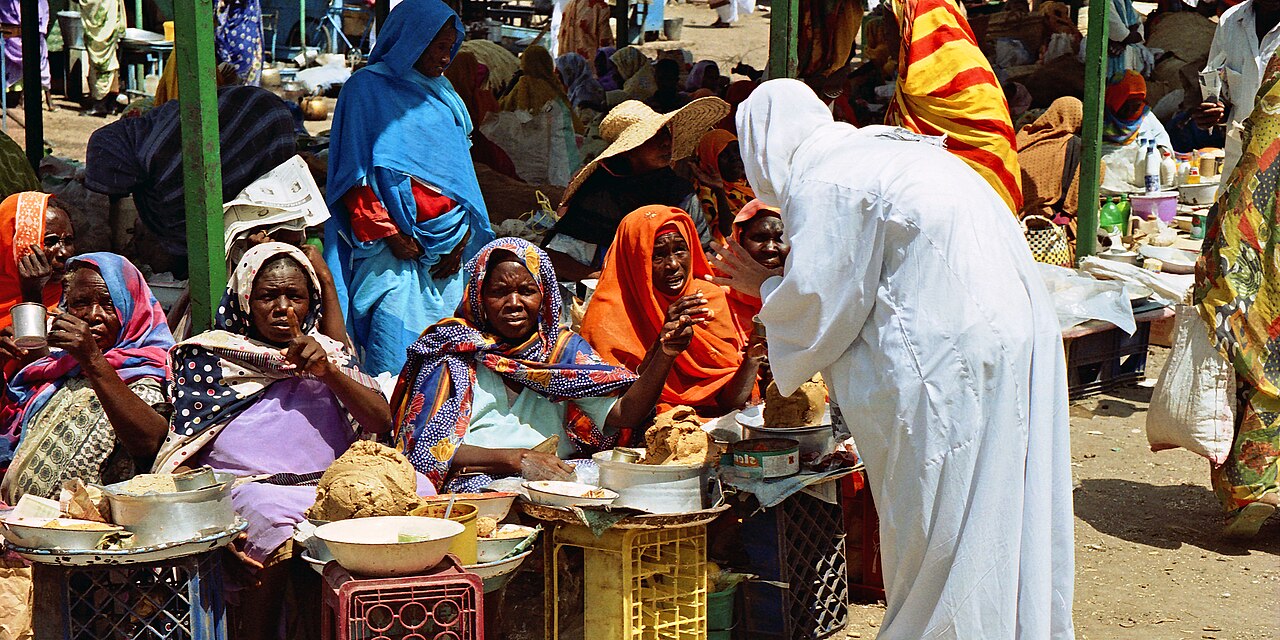
Civilians pay the price on both sides of the line. Drone strikes on markets and camps have killed hundreds of civilians this month alone, and the UN counts 33.7 million people in need of aid in a country of about 51.7 million.
In Plain English
- The army (SAF) The Sudanese Armed Forces, led by General Abdel Fattah al-Burhan, who also chairs the ruling Sovereign Council.
- RSF The Rapid Support Forces, a paramilitary group that grew out of Darfur’s Janjaweed militias, led by Hemedti.
- Darfur Sudan’s vast western region of five states, scene of mass atrocities in the 2000s and again now.
- Kordofan The central belt between Darfur and the Nile, now the main battlefield.
- Tasis The RSF-led coalition that set up a rival government in 2025.
- IPC The UN-backed scale that grades hunger; its worst phase means famine or catastrophe.
- The Quad The United States, Saudi Arabia, the United Arab Emirates (UAE) and Egypt, the main group of mediators.
How the War Began
Omar al-Bashir, who ruled Sudan for three decades, was overthrown in April 2019 after months of street protests. A civilian-led government followed, but in October 2021 the army and the RSF jointly removed Prime Minister Abdalla Hamdok and suspended the constitution.
The two generals then fell out over how and when the RSF should merge into the regular army. On 15 April 2023 explosions and gunfire shook Khartoum, and the power struggle became a nationwide war.
The RSF grew out of the Janjaweed, the militias that fought for Bashir’s government in Darfur in the 2000s. It became a formal security force under Hemedti, and in January 2025 the US State Department determined that RSF members had committed genocide.
- April 2019 Omar al-Bashir is overthrown after months of protests.
- October 2021 The army and the RSF remove the civilian-led government in a coup.
- 15 April 2023 Fighting between the two forces breaks out in Khartoum.
- January 2025 Washington declares RSF atrocities a genocide and sanctions Hemedti, then Burhan.
- March to May 2025 The army retakes the capital in March and declares all of Khartoum state clear in May.
- 30 August 2025 Hemedti is sworn in as head of the RSF-led rival government in Nyala, Darfur.
- 26 October 2025 The RSF takes El Fasher after an 18-month siege.
- November 2025 Famine is confirmed in El Fasher and Kadugli.
- 11 January 2026 The army-backed government announces its return to Khartoum.
- 19 October 2026 Drone strikes on a market near Abyei kill at least 153 people, local officials say.
Who Controls What in October 2026
The army controls slightly more than half of Sudan, according to a British Home Office assessment updated on 7 September 2026. It retook the capital in March 2025 and cleared Khartoum state in May, and Prime Minister Kamil Idris, whom Burhan appointed on 19 May 2025, announced on 11 January 2026 that the government was moving back to the capital from Port Sudan.
The RSF holds almost all of Darfur and large parts of Kordofan, the same assessment says. The fall of El Fasher in October 2025 gave it the last of Darfur’s five state capitals, and in December 2025 it took the army base at Babanusa and the Heglig oil field in West Kordofan.
The front now runs through Kordofan and Blue Nile state. The army has pushed the RSF out of much of North Kordofan and holds its capital, El Obeid, while the RSF and an allied rebel group, the Sudan People’s Liberation Movement-North (SPLM-N), say they have taken areas of Blue Nile near the Ethiopian border, where the town of Kurmuk has changed hands several times this year.
The Map in Three Lines
Army Khartoum, Port Sudan, the north and east, Gezira, El Obeid and the road from El Obeid to the capital.
RSF and allies Almost all of Darfur, including El Fasher, and most of West Kordofan.
Contested North and South Kordofan, Blue Nile around Kurmuk, and the skies everywhere, where both sides fly drones.
Latest Developments
Reported on 22 October 2026, army chief General Abdel Fattah al-Burhan, who also chairs the ruling Sovereignty Council, has cancelled a cabinet ban on imports of dozens of goods, imposed in April (our full report). Radio Dabanga counts 46 goods in the cancelled ban.
Finance Minister Jibril Ibrahim said that the decision considers consumers’ needs while protecting local producers. The National Importers’ Chamber welcomed the move but wants Prime Minister Kamil Idris to put it in a written decision, because no official list of freed goods has been published.
The Sudanese pound keeps sliding. On 22 October dealers sold the US dollar for 10,300 pounds on the parallel (street) market, up 100 from the day before, and the statistics bureau says annual inflation reached 28.29% in September, up from 26.14% in August.
On the front line, the army kept up near-daily air strikes on RSF positions in Darfur and Kordofan this week, in a campaign now about two weeks old, Sudan Tribune reports (our full report). No verified casualty figure for that day is available, and the UN human rights office says drone strikes killed more than 1,000 civilians in Sudan in the first five months of 2026.
A Week of Deadly Drone Strikes
On Sunday, 18 October, a drone hit a transport hub near the market of Al-Dibab, an RSF-held town in West Kordofan. A medical source quoted by France 24 said 80 people died, local community groups put the toll at about 150, and the RSF-led administration blamed the army, which has not published its own account.
On Monday, 19 October, a series of strikes hit Amiet market near Abyei (our full report), a border area claimed by both Sudan and South Sudan. Abyei’s information minister, Yohana Akol Ngor, said at least 153 people were killed, up from an early count of 73, and South Sudan summoned Sudan’s ambassador after local officials blamed the Sudanese army.
The army issued no official statement, but a senior officer, speaking anonymously to the Associated Press, said the army had struck fuel tankers bound for the RSF and that the dead were RSF fighters and fuel smugglers. The UN called the drone attacks across Sudan relentless, and news agency tallies put the toll of strikes in recent days above 250.
Earlier in the month, on Friday, 9 October, a drone strike near a displacement site in Blue Nile state killed 31 civilians, mostly women and children, the UN humanitarian coordinator for Sudan, Denise Brown, said. Local sources blamed the RSF, while the UN statement named no one.
The war is also crossing borders. The UN said on 20 October that violence in the east of the Central African Republic is partly driven by Sudan’s war, after armed groups attacked the border town of Am-Dafock on 30 June and held it for five days before pulling back into Sudan.
El Fasher and the Genocide Findings
El Fasher, the capital of North Darfur, fell to the RSF on 26 October 2025 after an 18-month siege. The UN human rights office documented more than 6,000 killings between 25 and 27 October and said the real toll was undoubtedly significantly higher.
On 19 February 2026 the UN’s Independent International Fact-Finding Mission for the Sudan said the RSF’s siege and takeover of the city bore the hallmarks of genocide against non-Arab communities. In the same month the US Treasury sanctioned three RSF commanders over the killings in El Fasher.
These are findings by investigators and governments, not verdicts of a court, and no RSF leader has stood trial. The only Darfur conviction so far is that of Ali Kushayb, a former militia leader whom the International Criminal Court sentenced to 20 years in December 2025 for crimes committed two decades ago.
The Human Toll in Numbers
No one knows how many people have died, but the Armed Conflict Location and Event Data project (ACLED), a conflict monitor, had recorded 52,904 deaths of fighters and civilians by June 2026, a count it calls conservative. Other estimates cited by the British government range from 20,000 to 150,000, and one former US envoy has put the toll above 400,000.
Displacement is the war’s largest measurable cost. The UN refugee agency (UNHCR) counted 11.3 million people forced from their homes by 5 October 2026: 6.4 million inside Sudan and 4.6 million who crossed into neighbouring countries, including South Sudanese who went back home.
Hunger has become a second front. In November 2025 the Integrated Food Security Phase Classification (IPC), the UN-backed hunger monitor, confirmed famine in El Fasher and in Kadugli, the capital of South Kordofan, and its update of May 2026 found 19.5 million people in crisis-level hunger or worse.
On 12 October 2026 the IPC warned of a growing risk of famine in Darfur and Kordofan, where drought now covers more than half of Sudan. In two camps in Eastern Jebel Marra, surveys found acute malnutrition among children of 38% and 30.8%, above the famine threshold.
Sudan’s War in Five Numbers
- 33.7 million people need humanitarian aid in 2026, the UN’s response plan says.
- US$2.9 billion is what the UN asked donors for this year; 40.8% had arrived by 13 August.
- 19.5 million people faced crisis-level hunger or worse through May 2026.
- 11.3 million people have been forced from their homes since April 2023.
- 37% of Sudan’s health facilities had stopped working this year, the World Health Organization says.
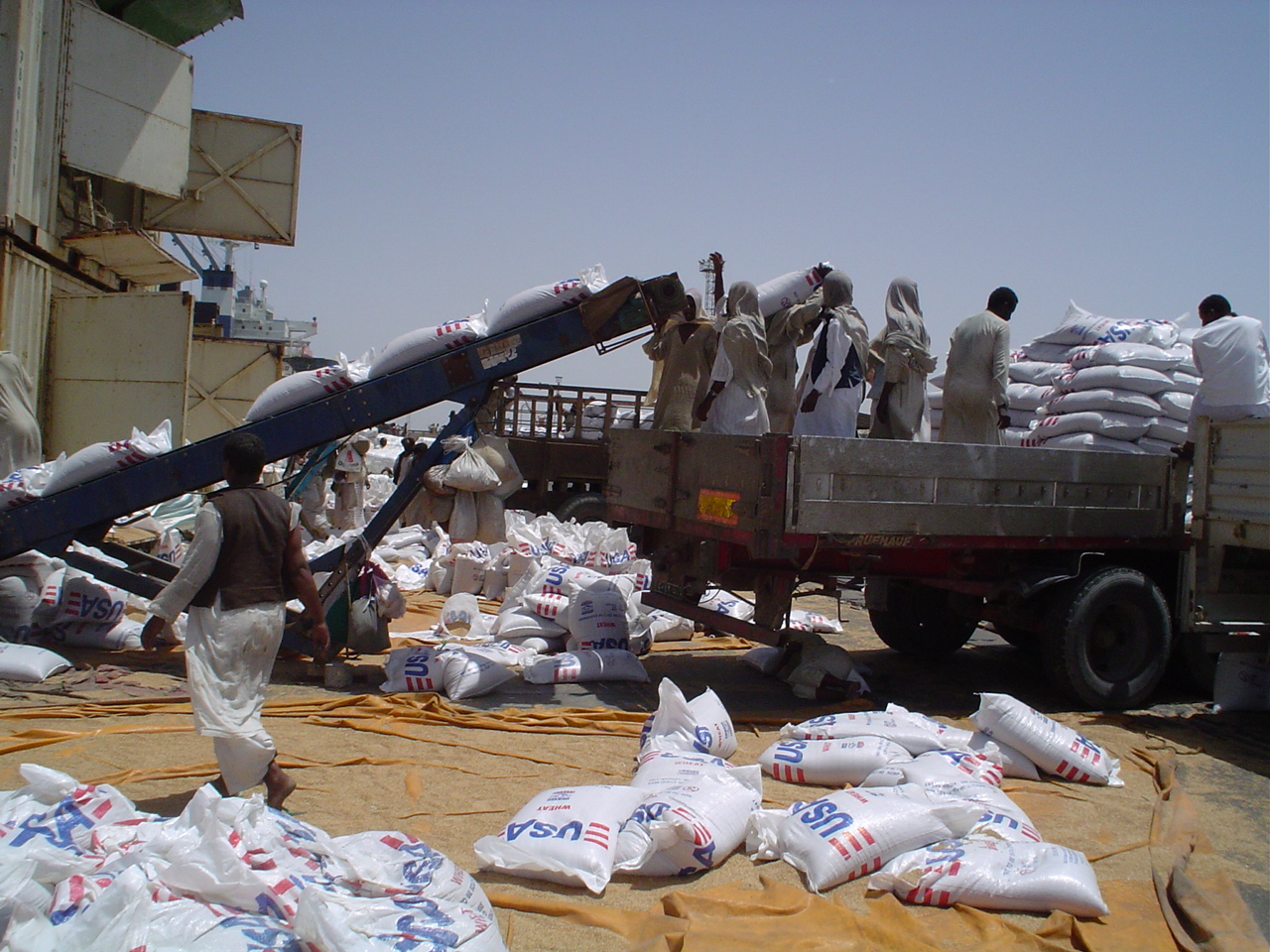
The money to respond is short. The UN’s 2026 plan asks for US$2.9 billion to help 20.4 million people, and less than half of it had been funded by 8 October.
Who Backs the Army and the RSF
Outside help keeps both sides fighting, UN investigators said on 3 September 2026. Their fact-finding mission reported that foreign suppliers had substantially enhanced the drone forces of both the army and the RSF.
The mission found reasonable grounds to believe that recruiters and private firms operating from countries including Colombia and the UAE supplied the RSF through Chad, southeastern Libya and Bosaso in Somalia. It documented up to 2,000 former Colombian military contractors operating drones, artillery and other weapons alongside RSF units.
The UAE denies giving the RSF direct support. When the International Court of Justice threw out Sudan’s genocide case against the UAE on 5 May 2025 for lack of jurisdiction, the UAE called the case utterly baseless.
On the other side, research cited in the British assessment names Egypt, Saudi Arabia, Iran, Turkey, Eritrea, Russia and Pakistan among the countries that have sided with or supported the army. The UN mission also found reasonable grounds to believe that the army used foreign-supplied drones in attacks that harmed civilians.
The Outside Players
With the army Egypt, Saudi Arabia, Turkey, Iran and Eritrea, among others, according to research cited by the British government.
Accused of arming the RSF Networks in the UAE and Colombia, routed through Chad, Libya and Somalia, according to UN investigators; the UAE denies it.
Mediators The Quad, plus the Quintet of the African Union, the EU, the East African bloc IGAD, the Arab League and the UN.
Peace Talks and the Ceasefire Question
The main peace plan comes from the Quad, which on 12 September 2025 proposed a three-month humanitarian truce, then a permanent ceasefire and a nine-month transition to a civilian-led government. The RSF said in November 2025 that it accepted a humanitarian truce, but Burhan rejected the plan and called it the “worst yet”.
President Trump said on 19 November 2025 that he would work to end the war after Saudi Crown Prince Mohammed bin Salman asked him to. In June 2026 Washington proposed an immediate 90-day humanitarian truce, and the army has demanded that the RSF first leave every city it has taken since May 2023.
On 15 October 2026 Burhan said he had written to Trump, pledging to work “in good faith” for a just and lasting peace, but he did not accept the truce. On 21 October nearly two dozen countries met in Geneva at talks hosted by Switzerland and the UN, a coordination meeting reserved for mediators, so neither the government nor the RSF attended. It announced no ceasefire, as our explainer on why the Geneva talks failed again sets out.
The UN Security Council has an arms embargo on Darfur but not on the rest of Sudan. On 8 October 2026 it renewed the Darfur measures only until 11 December, and a US draft from August to extend the embargo to the whole country, including drones, was not adopted.
What Prediction Markets Say
Traders on Polymarket, an online prediction-market exchange, gave an official ceasefire between the army and the RSF by 31 December 2026 a chance of about 8% on the morning of 21 October, down from about 13% a week earlier. The series of deadline markets has drawn about US$120,000 in bets since November 2025, about US$15,000 of it on the December deadline, and earlier deadlines at the end of 2025, March 2026 and June 2026 all passed without a ceasefire.
The market counts only a publicly announced, mutually agreed halt to the fighting, so a humanitarian pause would not settle it. The live card below updates every 20 minutes, and Kalshi, the US-regulated exchange, had no market on Sudan when we checked.
Prediction markets · Sudan’s war
The implied chance of a ceasefire, from traders’ prices on Polymarket.
Official ceasefire in Sudan's war by...
Polymarket: US$120,000 traded on this question, US$15,000 of it on the nearest deadline. It counts only a publicly announced, mutually agreed halt to the fighting between the army and the RSF; humanitarian pauses do not count.
Earlier deadlines of 31 December 2025, 31 March 2026 and 30 June 2026 passed without a ceasefire.
As of 23 October, 11:39 p.m. ET (04:39 Lisbon), updated every 20 minutes. Prices are bets, not polls, and can move fast.
Why we show this: prediction markets turn real-money bets into a live probability that moves within minutes of the news, which is why investors, campaigns and newsrooms in the United States now follow them closely. We show them next to polls and official results, never instead of them.
What It Means for Americans
Sudan is a sanctions story for US banks and companies. The Treasury has sanctioned Hemedti, Burhan, RSF commanders and a Colombian network that recruited fighters for the RSF, and on 23 June 2026 the State Department added penalties over its 2025 finding that the army-led government used chemical weapons, which Khartoum denies.
It is also a migration story. Sudanese in the United States have held Temporary Protected Status, a shield from deportation, under a designation that ran to 19 October 2026, and the Department of Homeland Security has not announced a decision but says current holders keep their protection.
Sudan’s money is under strain too. On 21 October 2026 dealers in Khartoum sold the US dollar for 10,105 Sudanese pounds (about US$1) on the parallel market, Sudan Tribune reported, as our report on the pound passing 10,000 shows.
The Sudanese news site said importers and fuel buyers were driving demand for dollars and that prices of essential goods were rising. For Sudanese families in the United States who send money home, the gap between street and bank prices shapes what each transfer buys.
The army is also tightening its hold on oil. On 21 October 2026 Burhan issued a decree reviving the Sudanese Petroleum Corporation, a state oil body dissolved in 2019, and rebuilding a Petroleum Council that includes the oil, finance and justice ministers and the intelligence chief, Sudan Tribune reported, as our report on the revived oil corporation explains. The Treasury has sanctioned Burhan, so any company weighing a fuel or investment deal would need legal advice on US sanctions first.
Sudan’s coast matters for shipping, because Port Sudan sits on the Red Sea route between the Suez Canal and the Bab el-Mandeb strait. A wider war on that shore would add risk to a route that ships between Asia and Europe depend on.
What Is Not Known
There is no verified death toll, and the full chain of arms supplies to both sides is not public. No independent inquiry has yet examined October’s deadliest drone strikes, and neither side has given a full public account of them.
It is unclear whether the army will accept a truce while the RSF holds cities, and whether the RSF would give any of them up. It is open whether the Geneva meeting leads to direct talks, and what happens to the Darfur arms embargo, which runs to 11 December.
For the human side of the crisis, read our guides to Sudan’s hunger crisis and how to help and to where Sudan’s refugees have gone. Our explainers on Sudan’s neighbours and the Horn of Africa and on Sudan as a country give the wider picture.
Frequently Asked Questions
What is happening in Sudan right now?
Sudan’s army and the paramilitary Rapid Support Forces have fought since April 2023, and the country is split between them. On 18 and 19 October drone strikes killed at least 80 people in West Kordofan and 153 near Abyei, a medical source and local officials say.
Who is fighting in Sudan?
The Sudanese army, led by General Abdel Fattah al-Burhan, is fighting the Rapid Support Forces, led by Mohamed Hamdan Dagalo, known as Hemedti. The two ruled together after a coup in 2021 before turning on each other.
What are the Rapid Support Forces?
The RSF is a paramilitary group that grew out of Darfur’s Janjaweed militias and became a formal security force under Hemedti. It holds almost all of Darfur and leads a rival government there.
What happened in El Fasher?
The RSF captured El Fasher, the capital of North Darfur, on 26 October 2025 after an 18-month siege. The UN human rights office documented more than 6,000 killings in three days, and UN investigators found in February 2026 that the takeover bore the hallmarks of genocide.
Is there a ceasefire in Sudan?
No ceasefire is in force, and a mediators-only meeting in Geneva on 21 October did not bring either side to the table. Polymarket traders put the chance of an official ceasefire by 31 December 2026 at about 8% on 23 October.
Is there famine in Sudan?
Famine was confirmed in El Fasher and Kadugli in November 2025. On 12 October 2026 the UN-backed IPC warned that the risk of famine is growing again across Darfur and Kordofan.
Has Sudan lifted its ban on food imports?
Yes. Reported on 22 October 2026, army chief Abdel Fattah al-Burhan has cancelled a ban on 46 imported goods, Radio Dabanga says. Importers still want a written government decision.
How can I help people in Sudan?
UN agencies, international charities and local volunteer groups called Emergency Response Rooms all run appeals for Sudan. Our guide to the hunger crisis explains where donations go and how to check a charity before you give.
Sources: UN News, Abyei attack (19 October 2026); Radio Tamazuj, South Sudan summons Sudan’s envoy (19 October 2026); France 24, Al-Dibab strike (19 October 2026); Darfur24, Blue Nile strike (11 October 2026); ABC News Australia, Abyei toll and army officer (21 October 2026); UN News, Geneva talks (21 October 2026); UN News, Central African Republic (20 October 2026); UK Home Office, Sudan security situation (updated 7 September 2026); Council on Foreign Relations, conflict tracker (August 2026); BusinessDay, Kamil Idris appointed (19 May 2025); government’s return to Khartoum (11 January 2026); Sudan War Monitor, Babanusa (December 2025); Radio Dabanga, Blue Nile (24 March 2026); Jamestown Foundation, RSF rival government (20 November 2025); UN Fact-Finding Mission, A/HRC/61/77 (February 2026); ASIL, US genocide determination (January 2025); US Treasury, sanctions on Burhan (16 January 2025); The Reporter, US sanctions on RSF commanders (19 February 2026); Arab News, Colombian recruitment network (9 December 2025); Federal Register, chemical weapons sanctions (20 July 2026); Radio Tamazuj, ICC sentence (9 December 2025); FAO, famine confirmed (November 2025); IPC special snapshot (14 May 2026); UN News via allAfrica, IPC alert (12 October 2026); OCHA, Sudan key facts (13 August 2026); UNHCR, regional update (5 October 2026); WHO via allAfrica (12 October 2026); UN News, outside forces fuel Sudan war (3 September 2026); International Court of Justice, Sudan v. UAE; Aletihad, UAE reaction (5 May 2025); Radio Tamazuj, Quad roadmap (12 September 2025); RSF truce statement via allAfrica (6 November 2025); Burhan rejects the plan (24 November 2025); Trump statement via allAfrica (19 November 2025); US 90-day truce proposal (10 July 2026); Radio Tamazuj, Burhan’s message to Trump (16 October 2026); UN Geneva press briefing (16 October 2026); Security Council Report (15 October 2026); US embargo draft via allAfrica (25 August 2026); CBS News, TPS (18 October 2026); Federal Register, TPS Sudan extension (17 January 2025); WFP, Sudan; Sudan Tribune, dollar rate (21 October 2026); Sudan Tribune, Petroleum Corporation decree (21 October 2026); Swissinfo, Geneva coordination meeting (16 October 2026); Sudan Tribune, import ban cancelled (22 October 2026); Radio Dabanga, 46 imports and dollar rate (22 October 2026); UN drone deaths, January to May 2026 (15 June 2026); Polymarket public market data (23 October 2026). As of 23 October 2026.
More: Sudan’s War: the dossier, with every story, the live odds and the latest developments.
This article was produced by The Rio Times’ automated newsroom system. How we use AI · Report an error · Editorial responsibility: Matthias Camenzind, Editor-in-Chief
Part of our ongoing coverage
Africa: The New Scramble — the great-power contest over the continent.
Horn of Africa and the Red Sea
- Horn of Africa 2026: Why It Matters and Who Backs Whom
- Ethiopia’s Neighbors Explained, Ports, Eritrea, Somalia
- Eritrea Explained 2026, a Red Sea Country Guide
- Somalia Explained: Al-Shabaab, Somaliland, the Ports and the Fight Over a 2026 Vote