USA & Canada Intelligence Brief — Tuesday, October 27, 2026
Executive Summary
USA & Canada Intelligence Brief for October 27: Washington and Ottawa weigh pre-election tariff relief on steel and autos; Alberta shifts to affordability.
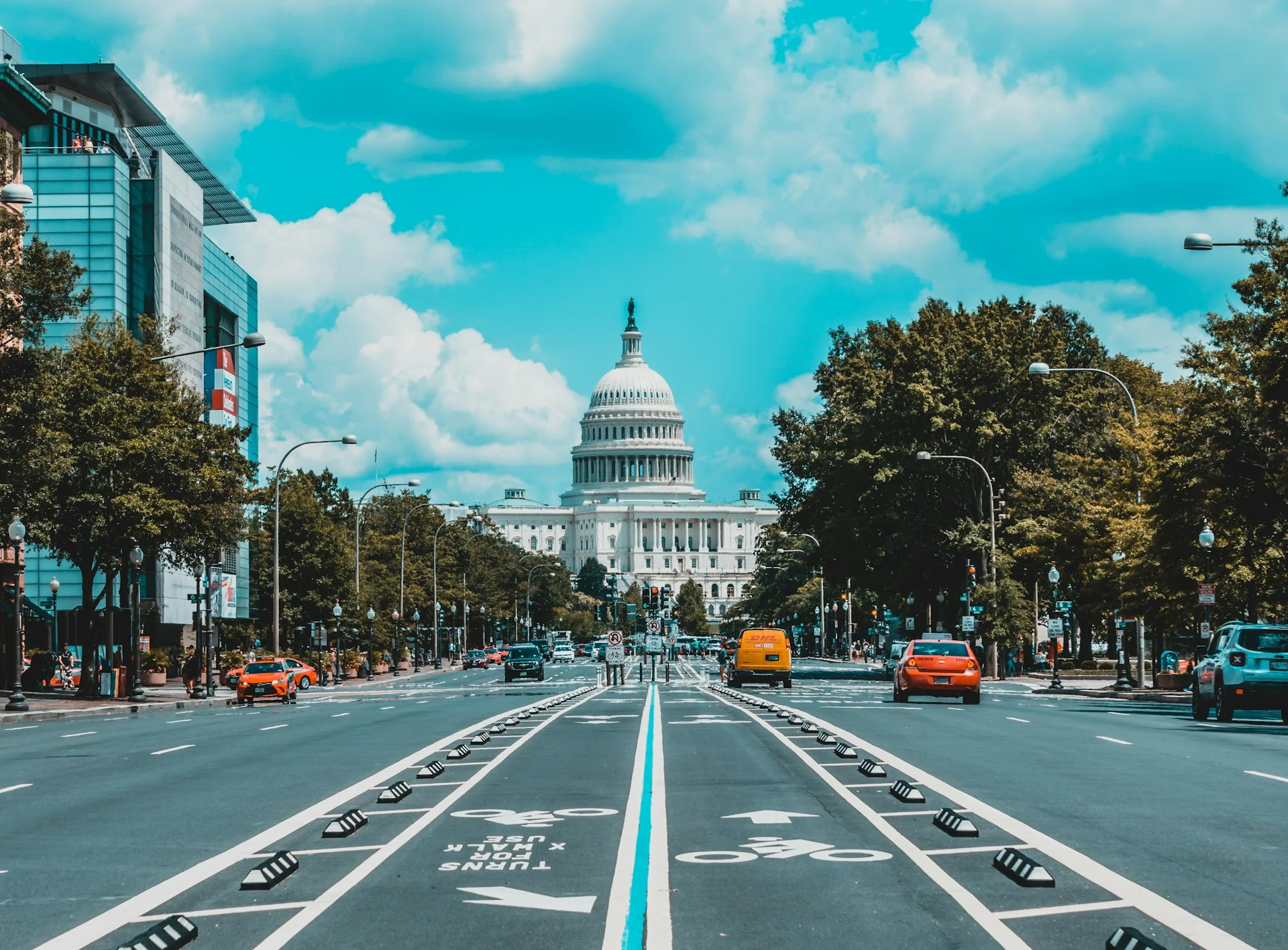
North America’s temper on Tuesday is suspended between a hurried search for pre-election economic relief and a deliberate refusal to show public surrender, with Washington and Ottawa exploring reductions in steel and automobile tariffs while Canadian premiers and mayors turn to affordability, education and local competence. The same hours carry a Federal Court climate trial in Vancouver, a reconvened Alberta legislature after a separatism vote and a fresh round of medical-assistance-in-dying debate, leaving both countries to manage domestic pressures that are increasingly inseparable from bilateral friction.
The register is transactional yet guarded, with President Donald Trump predicting a quick end to the Canada trade dispute while Prime Minister Mark Carney says talks have intensified only slightly and that Washington may be moving toward Canada’s position. Leaders speak of settlement, sovereignty and practical management, but their actions, selective tariff relief, a possible pre-election arrangement and municipal continuity, reveal a relationship in which economic policy is being read as national defence and local governance as a test of trust.
The through-line is that both countries are converting economic anxiety into political leverage, with Washington using tariffs as an election instrument and Ottawa absorbing pressure while projecting strategic patience. The border is no longer a line on a map; it is the stage on which both governments perform strength for domestic audiences, and the midterm elections are the deadline that gives the performance its urgency.
Key Facts
Tariff relief talks. Washington and Ottawa are exploring reductions of up to 50% on Canadian steel and 25% on automobiles before 3 November.
Trump approval. President Donald Trump’s approval figure stood at 32% ahead of the 3 November midterm elections.
Ottawa mayor. Mark Sutcliffe was projected to win another four-year term with 42,246 votes and 24% of ballots counted.
Ontario results. Olivia Chow retained Toronto, Patrick Brown won Brampton with 54.9%, and Scott Hamilton defeated Cambridge incumbent Jan Liggett with 56%.
Alberta legislature. Premier Danielle Smith said the separatism debate was settled and the government would focus on affordability and education.
Washington: Pre-Election Tariff Relief As Political Lifeline
The Japan Times reported on 27 October that Washington and Ottawa were examining possible reductions in Section 232 tariffs of up to 50% on Canadian steel and 25% on Canadian automobiles before the 3 November midterm elections. The reported approval figure of 32% for Trump, without an identified pollster, frames the negotiation as an attempt to secure a visible economic win while the Republican Party faces the possibility of losing control of Congress.
For a US reader, the timing matters as much as the substance, with the midterms one week away and the administration seeking to convert a trade dispute into a pre-election achievement. The Hub reported on 27 October that Trump had predicted a quick end to the dispute, while Carney indicated only that Washington might be moving toward Canada’s position, a gap that leaves the outcome uncertain even as the political deadline approaches.
Ottawa: Guarded Patience And Ethical Debate
Carney’s statement that talks had intensified only slightly and that Canada’s negotiating stance had not changed, as reported by the Japan Times on 27 October, reveals a government determined to avoid the appearance of concession. The same day, Vernon Matters reported that the federal government was due to introduce amendments to medical-assistance-in-dying legislation that would exclude people whose sole condition is mental illness and permit advance directives, a policy shift that touches deep social and provincial divisions.
CTV News reported on 27 October that dementia physicians and provinces disagreed over advance requests for medical assistance in dying, while Senator Pamala Wallin discussed opposition to the relevant committee’s approach. For a US reader, Ottawa’s posture is defensive but deliberate, absorbing trade pressure while managing a domestic ethical debate that tests federal-provincial trust and the limits of individual autonomy.
Alberta: Separatism Settled, Affordability Returns
Alberta’s legislature reconvened on 27 October after a province-wide vote on remaining in Canada, and CTV News reported that Premier Danielle Smith regarded the separatism debate as settled. The government planned to focus on affordability and education, alongside consumer-protection rules for event-ticket sales, auto-insurance changes and tighter standards for artificial-intelligence data centres.
For a US reader, Alberta’s shift from constitutional grievance to pocketbook policy signals a province seeking stability after a period of national tension. The emphasis on affordability and education suggests that energy-sector and sovereignty debates are being subordinated, at least temporarily, to the practical concerns of voters who have lived through inflation and political uncertainty.
Ontario: Municipal Continuity And A Cambridge Upset
Olivia Chow was re-elected in Toronto, Patrick Brown won a third term in Brampton with 54.9%, and Berry Vrbanovic won a fourth term in Kitchener with 24,153 votes, or 55%. The same results showed Scott Hamilton defeating Cambridge incumbent Jan Liggett with 56% against Ryan Bolender’s 23% and Liggett’s 11%, a reminder that incumbency is conditional even in a broadly continuity-minded electorate.
For a US reader, the Ontario results reveal a performance-driven local mood in which voters reward competent management and punish visible failure, without a clear ideological realignment. The breadth of the results, from Toronto to Dryden, where Jack Harrison was re-elected with 1,351 votes against Derek Ouellette’s 1,197, suggests that affordability, infrastructure and public safety are the dominant local anxieties.
British Columbia: Youth Climate Litigation And Charter Claims
A Federal Court trial began in Vancouver on 26 October in La Rose v. His Majesty the King, with GlobeNewswire reporting that 15 young Canadians allege federal climate conduct violates Charter protections of life, liberty and security of the person. The evidentiary phase is scheduled to continue until 20 November, making the case a sustained legal challenge to federal environmental policy.
For a US reader, the trial matters because it tests whether courts will treat climate inaction as a rights violation, a question with implications for climate litigation across North America. The case also reveals a generational tension within Canada, where young plaintiffs are using the Charter to demand a different relationship between government and the environment.
What This Means From Latin America
The reported US–Canada exploration of steel and automobile tariff relief demonstrates that Washington is willing to use selective duties and threatened escalation as negotiating instruments even against its closest ally, a precedent that Latin American governments should read carefully. Any pre-election arrangement that rewards Canadian patience could embolden the administration to apply similar pressure to trade partners in the hemisphere, particularly in sectors such as steel, automobiles and manufactured goods.
The reported figure that US steel accounts for more than half of Canada’s imports of galvanised and coated steel, as noted by Vernon Matters on 27 October, illustrates how deeply North American industrial supply chains are integrated, with indirect effects on Latin American suppliers of raw materials and intermediate goods. The region’s exporters will feel the pressure through shifting North American demand and the broader uncertainty created by election-driven trade policy.
What We Are Watching
- Tuesday 27 October, 10:00 a.m. ET: US CB Consumer Confidence — October forecast 81 against 81.9 prior; a gauge of household sentiment under tariff and inflation pressure.
- Wednesday 28 October, 8:30 a.m. ET: US Goods Trade Balance — September forecast -130 against -132.1 prior; a measure of trade flows before any Canadian tariff changes take effect.
- Wednesday 28 October, 9:45 a.m. ET: Bank of Canada interest rate decision — forecast 2.5% against 2.25% prior; a decision that follows the Alberta referendum and trade uncertainty.
- Wednesday 28 October, 2:00 p.m. ET: Federal Reserve interest rate decision — forecast 4.00% against 4.00% prior; a test of how the US central bank reads inflation and election-driven trade policy.
- Thursday 29 October, 8:30 a.m. ET: US GDP Growth Rate — Q3 forecast 3.2% against 2.2% prior; a measure of economic momentum one week before the midterms.
- Tuesday 3 November: US midterm elections — the political event that has framed the tariff timing, approval pressure and diplomatic caution.
Background: USMCA 2026 Trade Pact Guide.
Background: Oil and Energy in Latin America 2026: A Guide.
Frequently Asked Questions
What are the US and Canada discussing on steel and automobile tariffs?
The Japan Times reported on 27 October 2026 that Washington and Ottawa were exploring possible reductions in Section 232 tariffs of up to 50% on Canadian steel and 25% on Canadian automobiles before the 3 November midterm elections. Prime Minister Mark Carney said talks had intensified only slightly and that Canada’s negotiating stance had not changed.
What did the Ontario municipal elections show?
Olivia Chow was re-elected in Toronto, Patrick Brown won Brampton with 54.9%, and Berry Vrbanovic won Kitchener with 24,153 votes, or 55%. Scott Hamilton defeated Cambridge incumbent Jan Liggett with 56%, showing that voters rewarded continuity where it appeared competent and changed leadership where dissatisfaction was stronger.
What is Alberta’s political focus after the separatism vote?
CTV News reported on 27 October 2026 that Premier Danielle Smith regarded the separatism debate as settled and that the government planned to focus on affordability and education. The legislature reconvened that day after the province-wide vote on remaining in Canada.
What is the youth climate case in British Columbia?
GlobeNewswire reported on 26 October 2026 that a Federal Court trial began in Vancouver in La Rose v. His Majesty the King, with 15 young Canadians alleging federal climate conduct violates Charter protections of life, liberty and security of the person. The evidentiary phase is scheduled to continue until 20 November 2026.
This article was produced by The Rio Times’ automated newsroom system. How we use AI · Report an error · Editorial responsibility: Matthias Camenzind, Editor-in-Chief